
Puppy teeth and curiosity collide in ways that can catch new owners off guard. You want play and bonding time, not sore fingers or ruined slippers, and with consistent, kind methods you can teach your puppy what is okay to bite and what is not.
In this guide you'll find clear, humane puppy training tips for biting that focus on bite inhibition, safe redirection, and stage-appropriate strategies so you and your pup both enjoy training time.
Why puppies bite, and when it’s normal
Puppy mouthing is normal. Puppies explore with their mouths, play with littermates, and go through teething stages where chewing relieves discomfort. That said, you do want to shape this natural behavior into gentle play so no one gets hurt.
Key reasons puppies bite or nip:
- Teething pain and exploration.
- Play and excitement, especially during roughhousing.
- Attention-seeking when movement or noise rewards the behavior.
- Under-stimulation or excess energy.
Evidence-based dog trainers and organizations recommend teaching bite inhibition early, using brief time-outs, and consistent redirection rather than punishment. For practical reference and trusted guidance, see the American Kennel Club and ASPCA resources on puppy mouthing and bite inhibition (American Kennel Club, ASPCA).
Top Puppy Training Tips for Biting
These steps are simple to practice and easy to remember, organized by what to do in the moment and the routines that prevent biting.
1. Teach bite inhibition, gently and consistently
- When your pup nips too hard, let out a high-pitched "ouch" or "ow" like a littermate would, then stop play for 5 to 20 seconds. This communicates that hard bites end fun.
- If the yelp makes your puppy more excited, calmly turn away or step out of the room for a short time-out instead.
2. Always redirect to an appropriate chew object
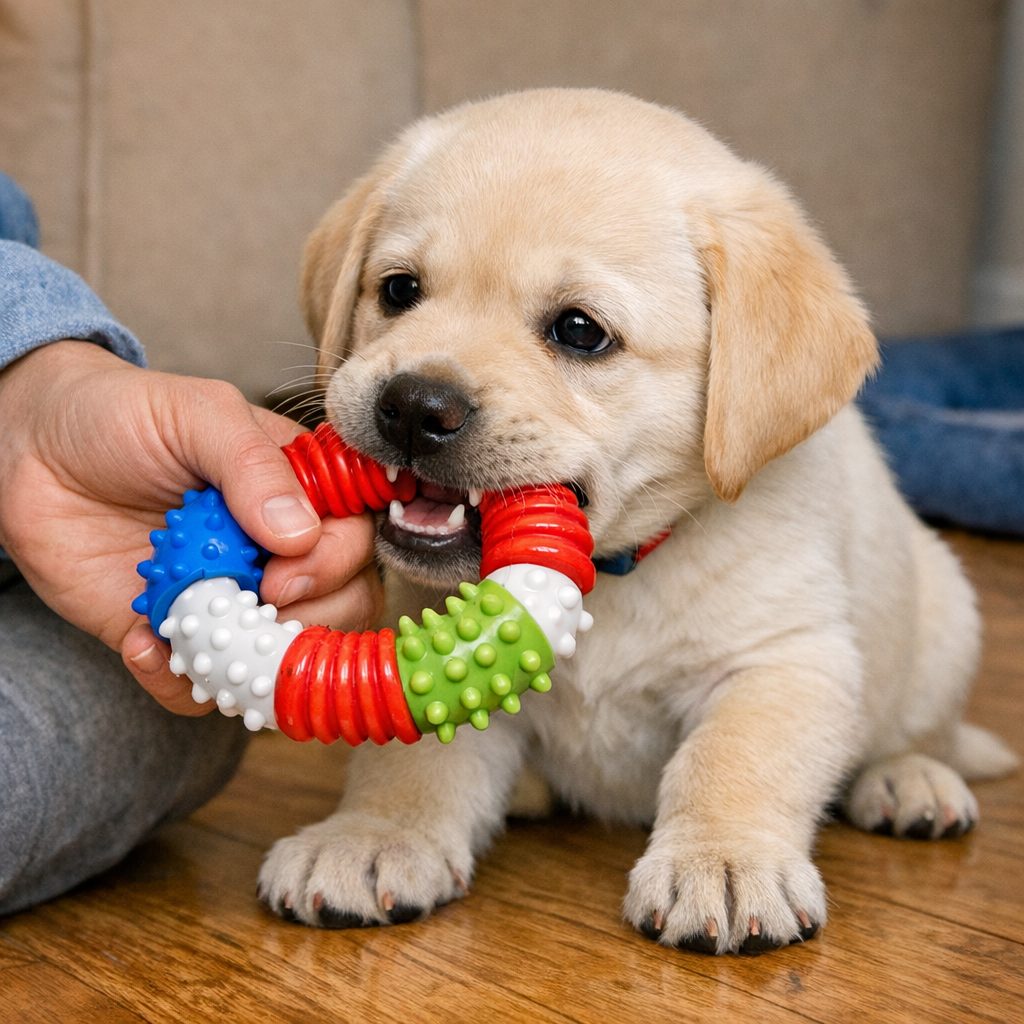
- Keep several chew toys handy during play. When mouthing starts, offer a toy and praise the swap.
- Use a variety: frozen stuffed Kongs for teething, textured rubber toys for chewing, and soft plush for gentle play.
3. Use time-outs correctly
- Time-outs should be brief and unemotional. Remove attention for 10 to 30 seconds after a hard bite.
- Repeat as needed and be consistent so your puppy learns cause and effect.
4. Burn off energy before play sessions
- A tired puppy mouths less. Short walks, play fetch, or a quick training session before interactive play can reduce overexcitement.
5. Reinforce calm behavior
- Reward quiet, hands-off moments with treats, praise, or a favorite game. Teaching "sit" and rewarding calmness builds alternatives to mouthing.
6. Avoid reinforcing bad habits
- Don’t roughhouse with hands or feet, avoid jerky movements that look like play, and never use physical punishment. These can increase fear or reactive biting.
7. Stage-appropriate expectations
- 8 to 16 weeks: Highest mouthing and teething, expect lots of chewing and focus on redirection and short time-outs.
- 4 to 6 months: Begin lowering tolerance for gentle mouthing, continue consistent feedback.
- 6+ months: Most puppies learn to keep mouths soft with steady training, but maintain routines and supervision.
Practical session you can try today
- Put chew toys within reach. Start a five-minute supervised play session.
- If the puppy mouths your hand, give a quick high-pitched "ow!", stop movement, and sit quietly for 10 seconds.
- Offer a chew toy. When the puppy takes it, praise and reward with a small treat.
- Repeat 3–5 short sessions daily. Gradually reduce tolerance for even gentle mouthing as months pass.
When to get professional help
If biting is aggressive, escalates, or your puppy shows fear-based behaviors, consult a Certified Professional Dog Trainer (CPDT) or veterinary behaviorist. Professional trainers can assess triggers and create tailored plans.
Tips for families with children
- Supervise all interactions and teach children to be still and quiet if the puppy mouths them.
- Show kids how to offer a toy and reward the puppy for choosing it over hands.
- Use age-appropriate language like "gentle" and reward calm interactions immediately.
Frequently Asked Questions
How long will puppy biting last?
Most puppies reduce mouthing between 4 and 6 months with consistent training, though teething and play needs can continue. Consistency shortens the phase.
Does yelping really teach bite inhibition?
Yes, many trainers and shelters recommend a high-pitched yelp because it mimics littermate feedback. If that increases excitement, switch to a calm time-out.
Are taste deterrents safe to use?
Bitter sprays or diluted safe household deterrents can help with clothing or furniture mouthing, used sparingly and according to product instructions. Always check safety for pets.
Is tug-of-war okay while a puppy is learning bite control?
Tug can be safe if rules are taught: release-on-command, no teeth on skin, and stopping play if mouthing starts. Use tug to teach impulse control, not encourage rough play.
When should I enroll in puppy classes?
After your puppy has the first set of vaccinations and your vet gives the go-ahead, group classes or puppy socials help teach bite inhibition and social skills with professional guidance.
Can punishment stop biting?
Physical punishment or yelling often backfires, increasing fear or aggression. Positive reinforcement and consistent time-outs are proven, humane approaches favored by behavior experts.
Ready to make training easier and publish helpful content?
If you create pet-care content for a blog, or want proven, SEO-optimized articles about puppy care, learn how ContentBeast automates high-quality posts and publishing with automated internal linking and images by visiting the ContentBeast homepage. Explore pricing plans or integrations to see how automated articles can scale your site with less work: visit ContentBeast home, pricing details, or integrations for platforms like WordPress.
Conclusion
Teaching a puppy to stop biting is mostly about clear communication, consistent routines, and patience. Use bite inhibition signals, offer chew alternatives, and remove attention when needed. Over weeks and months you’ll see real progress if you stay consistent and kind. When in doubt, seek a certified trainer to personalize the plan for your pup.