Bringing home a puppy can feel like a joyful family milestone, but your resident dog may see it quite differently. An older dog has routines, favorite resting places, and a well-earned preference for peace and quiet. The goal is not to force an instant friendship, it is to create safety, trust, and calm coexistence from day one.
The best ways to introduce a new puppy to an older dog combine preparation, patient supervision, and respect for both dogs’ boundaries. A few thoughtful decisions before the first sniff can prevent avoidable tension and give your puppy a much better model for polite canine behavior.
Set Up the First Meeting for Success
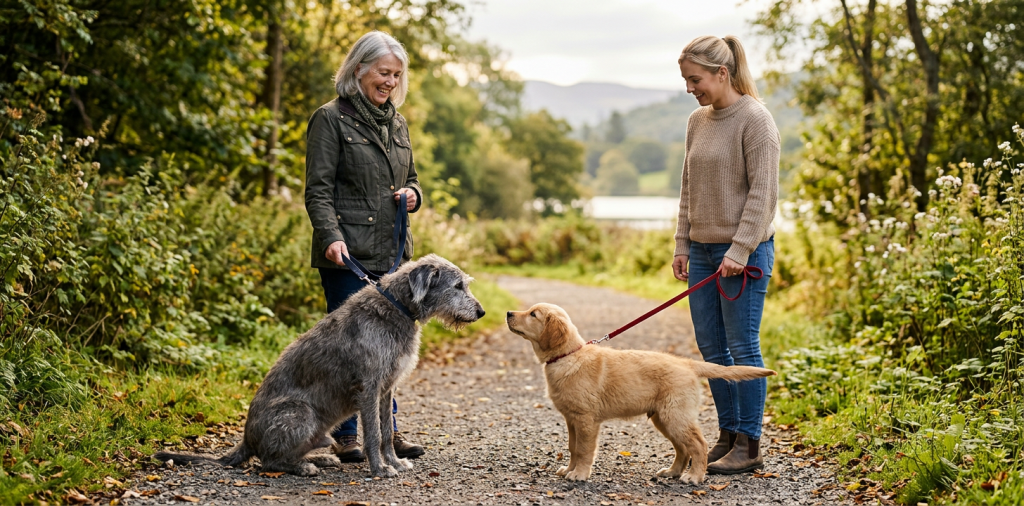
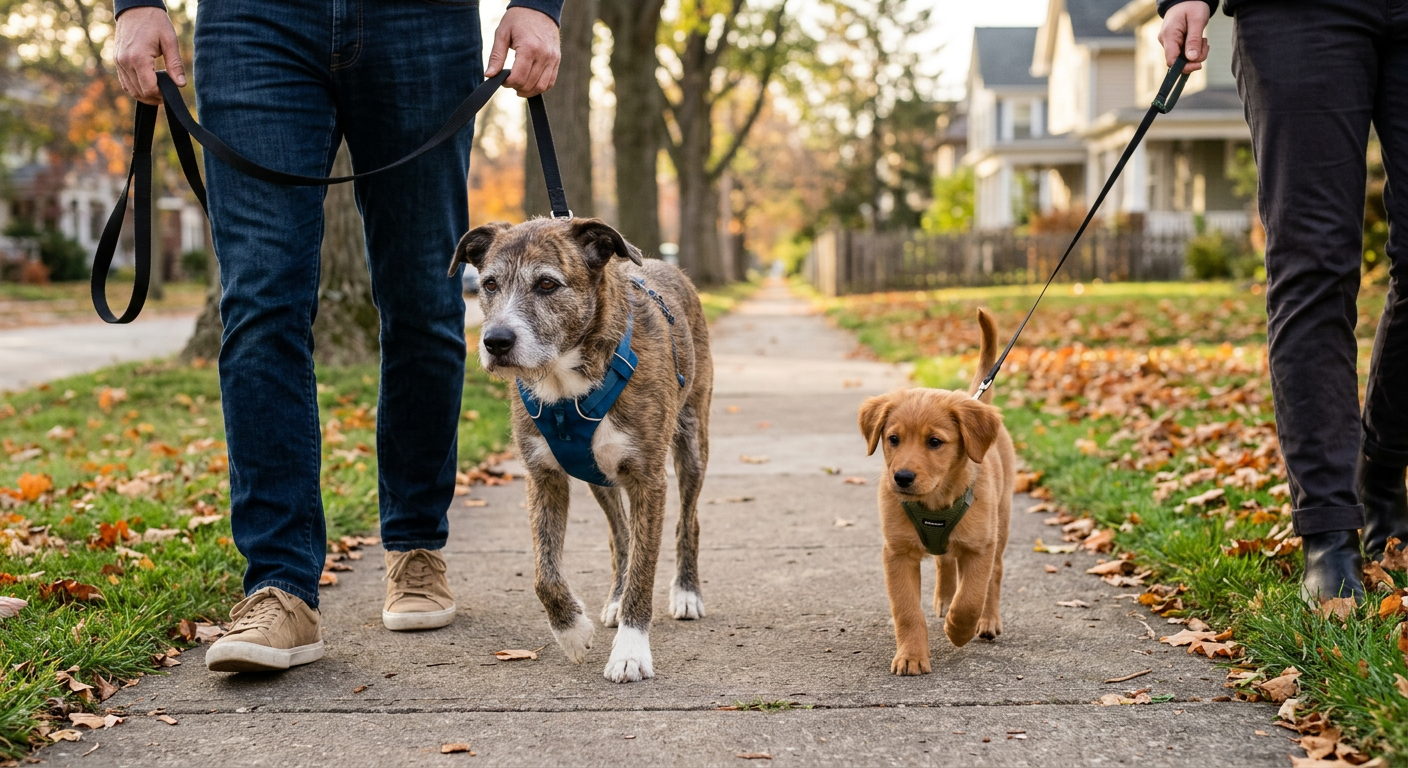
A successful first meeting should happen before the puppy walks into your older dog’s main living space. We recommend choosing a quiet, neutral area such as a calm sidewalk, a neighbor’s yard, or a low-traffic park. Avoid crowded dog parks, where unfamiliar dogs, noise, and tight spaces can make it harder to read either dog’s comfort level.
Bring one adult handler for each dog. Start with a parallel walk, keeping the dogs far enough apart that both can sniff, observe, and move comfortably. Gradually close the distance if their bodies stay loose and relaxed. Let them investigate in short bursts, then keep walking rather than asking them to stand face-to-face for too long.
The American Kennel Club notes that the dogs can meet outside and then walk into the home together, which helps the puppy feel less like an unexpected intruder in the older dog’s territory. American Kennel Club guidance on introducing dogs
Look for relaxed body language
A loose wag, soft eyes, curved bodies, casual sniffing, and the ability to look away are encouraging signs. Your older dog does not need to play enthusiastically or act thrilled. Calm indifference is often a fantastic start.
Slow down if you see freezing, hard staring, repeated lip lifting, tucked posture, raised hackles, lunging, or intense attempts to escape. These signals mean one or both dogs need more space, not more pressure.
Prepare Your Home Before the Puppy Arrives
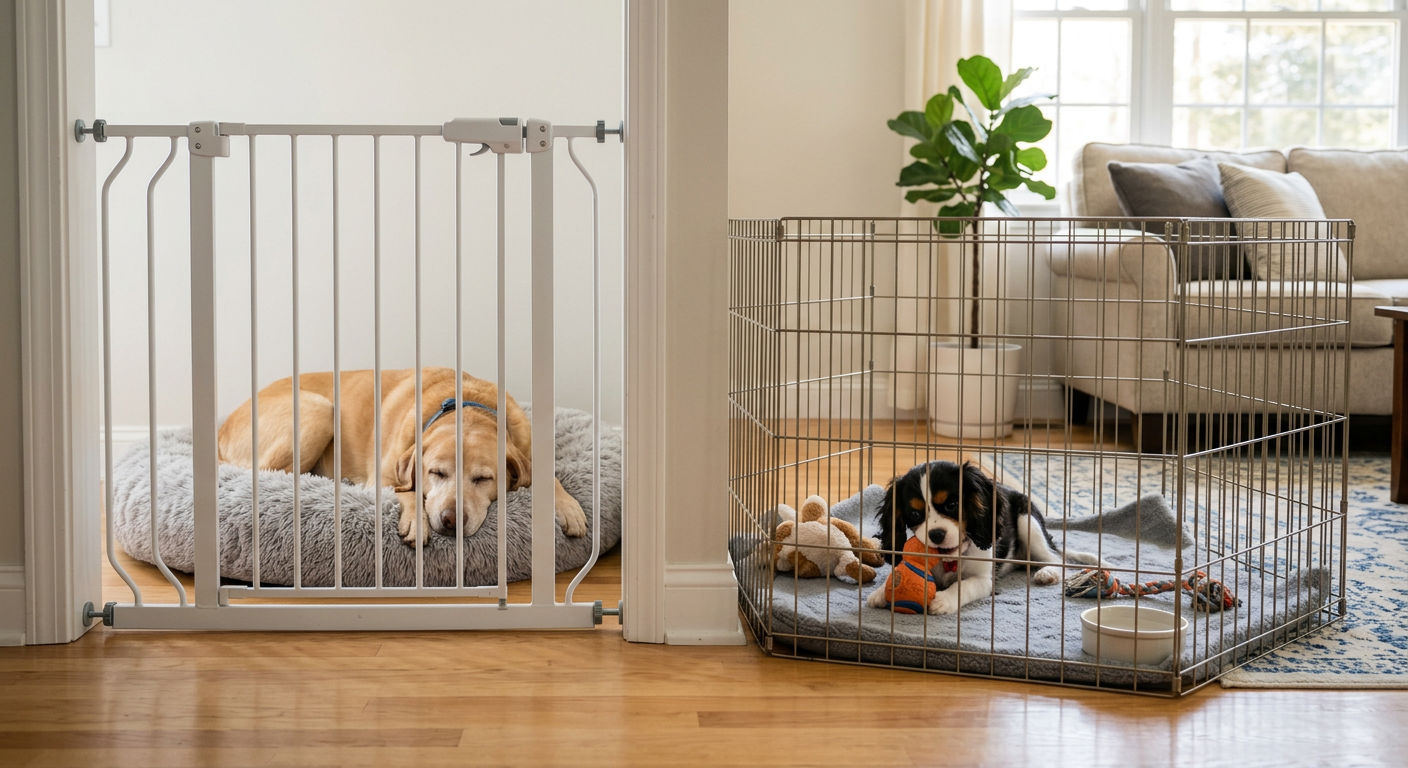
The first days at home should feel predictable, not chaotic. Before the puppy arrives, set up management tools that let each dog rest without being bothered. Baby gates, an exercise pen, a crate, and separate beds are practical tools, not punishments.
Create a puppy zone where the newcomer can nap, chew, and settle safely. Just as important, preserve a puppy-free retreat for your older dog. This could be their usual bed, a room behind a gate, or a quiet corner where the puppy cannot follow.
Remove common sources of conflict
For the first several weeks, feed the dogs separately and pick up bowls after meals. Keep high-value chews, favorite toys, and food puzzles separated until you understand how both dogs behave around resources. Offer multiple water stations so neither dog feels pressured to guard access.
We also suggest temporarily reducing competition for your attention. Greet your older dog warmly, maintain their usual walks and cuddle time, and avoid making every household moment revolve around the puppy. Consistency helps an older dog understand that they have not been replaced.
Use Short, Supervised Interactions Indoors
Once the dogs have had a calm outdoor meeting, bring them inside together. Keep the first indoor interaction brief, ideally just a few minutes. Let them sniff, move around, and disengage naturally while you stay nearby and keep your own energy low.
Do not encourage wrestling, chasing, or nonstop puppy play simply because it looks cute. Puppies can be relentless, especially when they are overtired, and an older dog may have arthritis, reduced vision, hearing changes, or far less patience than they once did.
Rachel Lane, a trainer and behavior consultant quoted by the American Kennel Club, puts expectations in perspective: “Relationships between two dogs take time to develop, and it’s rarely love at first sight.” Read the full expert guidance
Interrupt the puppy before the older dog has to
This is one of the most important habits we can build. If the puppy repeatedly jumps on, mouths, follows, or pesters the older dog, cheerfully redirect the puppy to a toy, a short training session, or a rest break behind a gate.
Your older dog should not have to serve as the puppy’s full-time teacher. A brief growl can be normal canine communication, especially when it tells a puppy to back off. Never punish a growl, because doing so may suppress a valuable warning sign while leaving the discomfort behind.
Instead, listen to the message. Calmly separate the dogs, give the older dog space, and help the puppy practice a different choice.
Protect Your Older Dog’s Routine and Comfort
A puppy changes the pace of a household, but your older dog still needs familiar rituals. Keep meal timing, walks, sleep routines, and one-on-one affection as steady as possible. If your older dog normally enjoys a quiet morning stroll, continue that activity without the puppy sometimes.
This matters even more for senior dogs with mobility limits or pain. Schedule a veterinary checkup if your older dog has become irritable, avoids touch, limps, startles easily, or reacts more strongly than usual. Pain can make normal puppy behavior feel overwhelming.
Match activity to each dog’s needs
The puppy needs safe outlets for energy, brain games, chew time, and age-appropriate training. The older dog may prefer sniff walks, gentle play, or an undisturbed nap in a sunny spot. Meeting each dog’s needs separately reduces the chance that the puppy treats the older dog as a constant entertainment source.
The American Veterinary Society of Animal Behavior identifies the first three months of life as the primary socialization period for puppies. That makes it especially valuable to teach your puppy that calm behavior around an older dog earns rewards, while pestering never becomes a fun game. AVSAB puppy socialization statement
Reward Calm Coexistence, Not Constant Interaction
Many people assume success means two dogs playing together all afternoon. In reality, the best outcome may be two dogs who can relax in the same room, walk together peacefully, and choose occasional interaction on their own terms.
Keep treats handy during supervised sessions. Reward the puppy for noticing the older dog and then looking away, settling on a mat, responding to their name, or choosing a toy. Reward your older dog for calm tolerance, soft body language, and choosing to rest nearby.
Build useful puppy skills early
A few basic cues make daily life much easier in a multi-dog home:
- Name response, so you can redirect attention quickly.
- Come, for safely calling the puppy away from the older dog.
- Leave it, for disengaging from toys, food, or a resting dog.
- Settle on a mat, for teaching calm downtime.
- Go to bed, for creating a positive separation routine.
Use food, praise, toys, or access to something your puppy enjoys as rewards. The AVSAB recommends reward-based methods for dog training, including behavior concerns, because clear and humane reinforcement helps dogs understand what to do next. AVSAB guidance on humane dog training
Know When to Pause and Get Professional Help
A gradual adjustment can take days, weeks, or longer. That is normal. Keep interactions short, end them while both dogs are still calm, and use gates or separate rooms whenever you cannot actively supervise.
Some situations need expert support sooner. Contact your veterinarian and a qualified reward-based trainer or veterinary behavior professional if you see repeated attacks, bites that break skin, intense guarding, frequent lunging, sustained fear, or an older dog that cannot rest because the puppy constantly pursues them.
Do not wait for a serious incident to happen. Early guidance can protect both dogs and help you avoid the stressful cycle of repeated conflict.
Common Questions About Puppy and Older Dog Introductions
Should we let the puppy and older dog work it out themselves?
No. Dogs do communicate boundaries, but it is our job to manage the environment and prevent the puppy from overwhelming the older dog. Supervision and quick, calm redirection are safer than expecting the older dog to tolerate endless puppy behavior.
Is growling at a new puppy always a bad sign?
Not necessarily. A growl can be an appropriate warning that says, “Please give me space.” Stay calm, move the puppy away, and assess what caused the discomfort. Escalating behavior, repeated lunging, or any bite warrants professional guidance.
How long should the first meeting last?
Keep it brief and positive. A few minutes of calm walking and sniffing may be enough at first. You can repeat short sessions rather than trying to create one long, high-pressure encounter.
Should the dogs share toys right away?
No. Begin with separate toys and remove high-value items when the dogs are together. After you have seen consistently relaxed behavior, you can carefully introduce lower-value toys while supervising.
Can an older dog and a puppy sleep in the same room?
They can if both dogs are comfortable and safely separated. A crate, pen, or gate gives the puppy a secure sleep space and lets the older dog rest without surprise interruptions.
What if the older dog ignores the puppy?
That can be excellent. Your older dog may simply be setting a boundary or choosing peace over play. Reward calm behavior and avoid pushing interaction just because you hoped for an immediate bond.
Build a Calmer, Happier Pet Household
Practical pet care gets easier when you have trustworthy guidance for the everyday moments that matter. Explore more helpful articles at Content Beast for approachable ideas on pet care, healthy habits, money decisions, and better daily routines.
A Patient Start Creates the Best Long-Term Relationship
The best ways to introduce a new puppy to an older dog are not about one perfect first meeting. They are about a series of small, respectful choices: neutral introductions, safe spaces, separate resources, supervised time, and consistent attention for the dog who was there first.
Give both dogs room to adjust at their own pace. When we protect an older dog’s comfort while teaching the puppy calm manners, we create the foundation for a relationship that can grow from peaceful coexistence into genuine companionship.