

How to Create a Budget and Stick to It Without Feeling Deprived
Most budgets fail because they demand a perfect month from people living real lives. A bill arrives early, the car needs work, a pet has a vet visit, or a busy week leads to more takeout than planned. A budget that survives those moments is far more useful than one that looks impressive on a spreadsheet.
Learning how to create a budget and stick to it starts with a change in perspective. We are not building a punishment plan. We are giving every dollar a purpose, leaving room for real life, and reviewing the plan often enough to make small corrections before a money problem becomes a crisis.
The Consumer Financial Protection Bureau notes that about half of Americans do not have a budget. Its guidance also makes an important point: a useful spending plan begins with what you actually spend, not what you think you should spend. Read the CFPB budgeting guidance.
Start With a Budget That Matches Your Real Life
A workable budget reflects your current income, obligations, habits, and goals. Before cutting anything, build an honest snapshot of where your money has been going.
| Budget element | What to include | Why it matters |
|---|---|---|
| Net income | Pay after taxes, side income, benefits | Shows usable cash |
| Fixed bills | Rent, insurance, loans, subscriptions | Protects due dates |
| Flexible spending | Food, gas, household needs, fun | Reveals choices |
| Sinking funds | Vet care, travel, repairs, gifts | Handles irregular costs |
| Savings and debt goals | Emergency savings, extra payments | Builds progress |
Use take-home pay, not your salary
Your budget should use the money that lands in your checking account after taxes, retirement contributions, insurance, and other deductions. If your income changes from month to month, use a conservative estimate based on your lowest typical month, then treat any extra income as a decision to make on purpose.
For example, if you usually bring home between $3,400 and $4,000 each month, base core obligations on $3,400. This approach makes the budget sturdier when shifts are cut, freelance work slows down, or an expected bonus does not appear.
Track the last 30 to 90 days of spending
Review your bank and card activity, then group every expense into broad categories. Start simple: housing, utilities, transportation, groceries, dining out, health, pets, debt, entertainment, and miscellaneous.
Do not shame yourself over the numbers. A $60 streaming category or a higher-than-expected food-delivery total is useful information. It shows where a different plan could make your money serve you better.
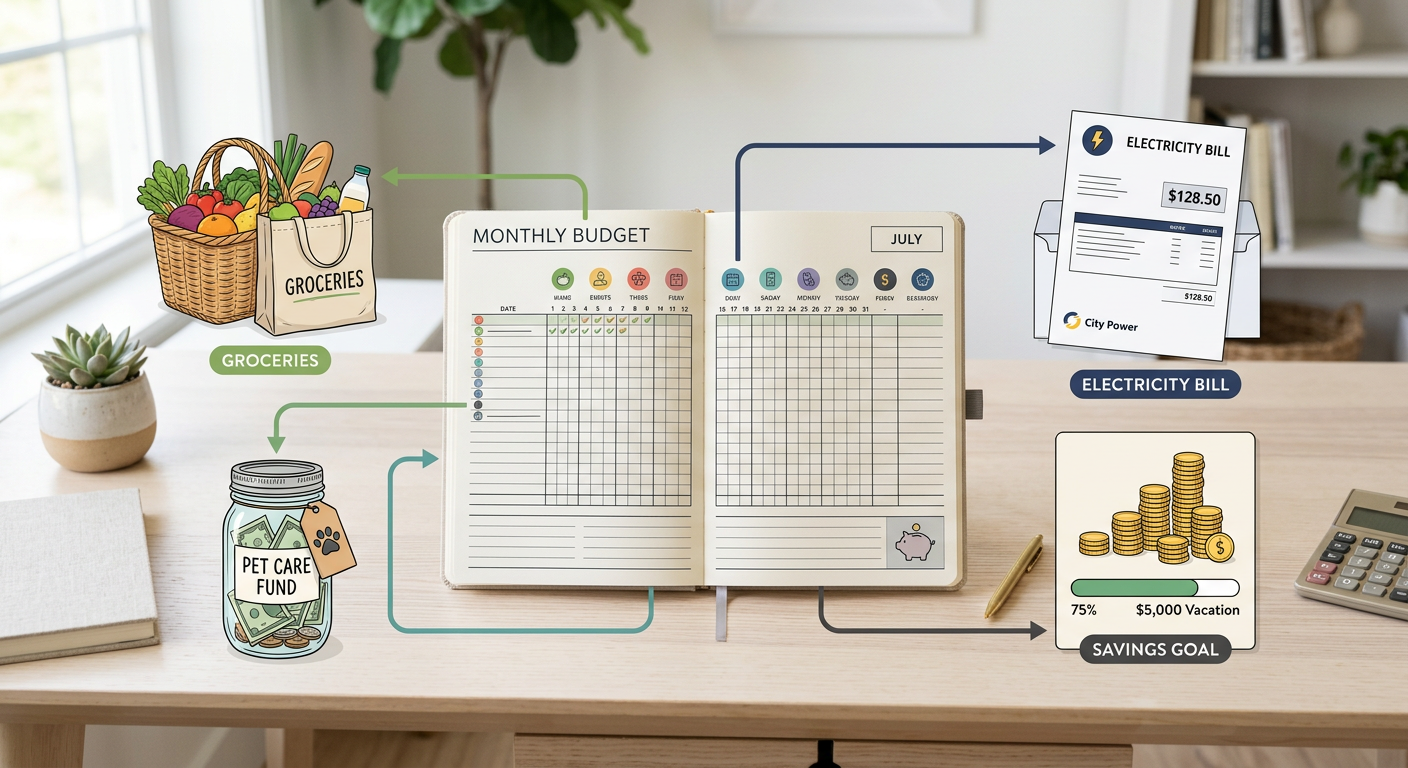
Give Every Dollar a Job Before the Month Begins
The most reliable way to stick with a budget is to decide where money goes before it disappears into daily purchases. That includes essentials, enjoyment, future expenses, and savings goals.
A percentage framework can help as a starting point. The CFPB teaches a version of the 50-30-20 framework: 50 percent for needs, 30 percent for wants, and 20 percent for savings goals. It is a useful benchmark, not a rule you must force onto an income or housing market that does not fit it. See the CFPB budgeting worksheet.
Build a simple monthly plan
Imagine a household with $4,000 in monthly take-home pay:
- Housing, utilities, insurance, minimum debt payments, groceries, and transportation: $2,450
- Savings, extra debt payments, and sinking funds: $750
- Dining out, hobbies, shopping, and entertainment: $500
- Flexible buffer: $300
That $300 buffer is not wasted money. It is protection against a higher electric bill, school expense, medication refill, or the normal surprises that make people abandon restrictive budgets.
Add sinking funds for expenses that are predictable but not monthly
Annual bills and occasional costs can ruin a monthly plan when they are treated like emergencies. Instead, divide each expected expense by the number of months until it is due.
If annual car registration costs $240 and is due in eight months, set aside $30 each month. If you spend about $600 yearly on routine vet care and pet supplies beyond food, move $50 monthly into a pet-care category. Small automatic contributions turn large future bills into manageable current decisions.
Make Your Plan Easy to Follow on Busy Days
A budget only works if we can use it in the moment we are deciding whether to spend. The best system is the one you will review consistently, not the most complicated app or spreadsheet.
The CFPB found that more than 90 percent of consumers interviewed were interested in tools that show how much would remain in their budget before making a purchase. That finding explains why a quick weekly check-in can be more powerful than a detailed plan reviewed only at month-end. Explore the CFPB research on spending decisions.
Pick one tracking method and keep it visible
Choose a method that matches how you already manage your life:
- Notes app or paper planner: Best for people who want a fast, low-tech weekly check.
- Spreadsheet: Helpful for households managing several goals, shared bills, or irregular income.
- Budgeting app: Useful when automatic transaction imports help you stay aware of category balances.
- Cash envelopes: Effective for categories that tend to run away, such as dining out, personal spending, or weekend activities.
We do not need to record every purchase forever. In the first few months, detailed tracking helps us see patterns. Later, a weekly review may be enough if core bills, savings transfers, and categories are stable.
Use a weekly money meeting
Set aside 15 minutes on the same day each week. Check your account balances, upcoming bills, category totals, and any unusual expenses ahead.
This is especially valuable for health-focused households balancing gym memberships, meal prep, prescriptions, or wellness spending. It also helps pet owners prepare for grooming, training, food replenishment, and vet appointments without using credit as the default backup plan.
Build Habits That Prevent Budget Burnout
Consistency comes from creating fewer difficult decisions, not from relying on motivation. Automate what you can, plan for enjoyment, and adjust quickly when the month changes.
Automate bills and goals
Schedule essential bills after payday whenever possible. Then automate transfers to an emergency fund, retirement account, debt payment, or dedicated savings account before casual spending begins.
Even $25 per paycheck builds the habit of paying your future self. The amount can grow later, but the routine is what makes progress repeatable.
Keep a guilt-free spending category
A budget with no room for pleasure often leads to rebound spending. Set a realistic amount for coffee runs, hobbies, dinners out, or small personal purchases, then spend it without second-guessing yourself.
The goal is not to eliminate all wants. It is to enjoy them without pulling money from rent, groceries, savings, or next month’s bills.
Create rules for your common spending triggers
Identify the moments that lead to unplanned purchases. Maybe it is late-night online shopping, stressful workdays, grocery trips without a list, or social plans that feel expensive.
Then use simple rules that remove friction:
- Wait 24 hours before nonessential online purchases over a set amount.
- Plan two low-cost meals before ordering takeout.
- Keep a separate fun-money card or cash amount for weekends.
- Unsubscribe from retail emails that trigger impulse buys.
- Move shopping apps off your phone’s home screen.
These rules work because they protect your priorities before willpower is tested.
Adjust the Budget Instead of Quitting It
A budget is a living plan, so changing it is a sign of attention, not failure. If a category is repeatedly too low, revise it and reduce something else, increase income, or rethink the goal timeline.
When spending exceeds the plan, avoid the all-or-nothing response. Ask three questions: What happened? Was it a one-time expense or a pattern? What needs to change before the next pay period?
For instance, if groceries are consistently $150 over budget because you are training for a race, feeding a growing family, or buying more convenient foods during a demanding season, the answer may be a higher grocery allocation. Cutting that category back to an unrealistic number only guarantees another frustrating month.
Common Questions About Building a Budget
How long does it take for a budget to feel normal?
Most people need at least two or three monthly cycles to see regular expenses clearly and make realistic category amounts. The first month is for observation, the second is for adjustment, and the third often feels more natural.
Should we budget if we already have money left over each month?
Yes, because leftover money can disappear without supporting a priority. A budget helps us direct that surplus toward savings, investing, debt reduction, travel, home repairs, or another goal we genuinely value.
What if our income changes every month?
Build the plan around a lower, dependable income level and cover essentials first. In higher-income months, divide the extra between sinking funds, savings, debt payoff, and a modest amount of flexible spending.
Is cash better than using a budgeting app?
Cash is helpful when a physical limit changes your behavior, while an app is helpful when convenience and transaction visibility keep you engaged. The stronger option is whichever method you will check consistently and understand at a glance.
What should we cut first when money is tight?
Start with expenses that are flexible and low-impact, such as unused subscriptions, convenience purchases, or impulse shopping. Protect housing, food, medication, transportation needed for work, insurance, and minimum required debt payments as much as possible.
Can couples use one budget with separate accounts?
Yes. Agree on shared bills, joint goals, contribution amounts, and a regular money meeting. Keeping some individual spending money can reduce conflict because each person has room for personal choices without seeking approval for every small purchase.
Put Your Financial Goals on the Calendar
A budget becomes more meaningful when it connects to the life you want to build. Explore more clear, everyday guidance on saving, healthy habits, and better decision-making at Content Beast, then choose one goal to fund in your next pay period.
Start with a small action: review your last month of spending, list every bill due before payday, and set one automatic transfer. Progress does not require a perfect spreadsheet. It requires a plan you can repeat.
The Budget That Works Is the One You Revisit
Creating a spending plan is not a one-time financial task. It is a weekly practice of noticing, choosing, and adjusting, especially when life changes faster than expected.
When we build room for savings, enjoyment, irregular expenses, and mistakes, budgeting stops feeling like deprivation. It becomes a practical way to protect our essentials, spend with more confidence, and make steady progress toward the goals that matter most.