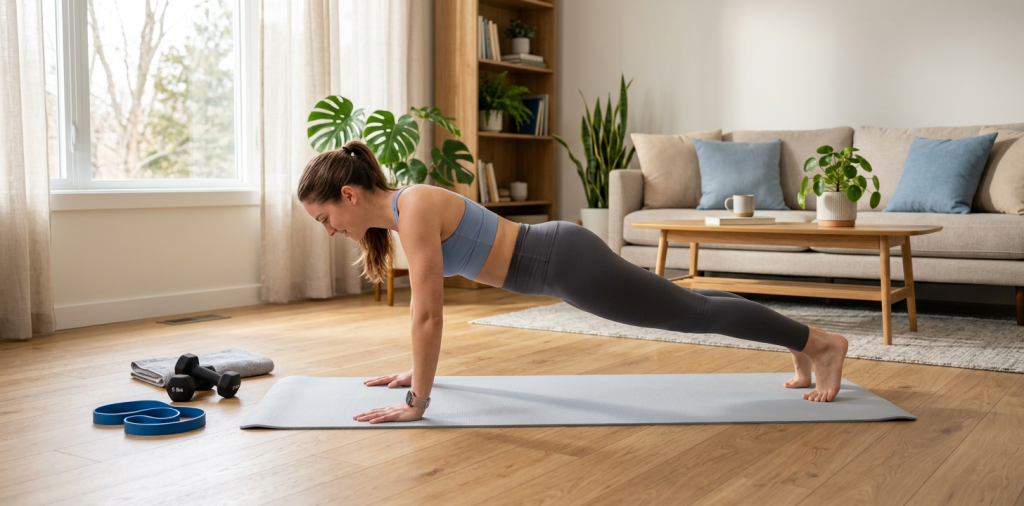
Starting a new workout routine can feel intimidating, especially when you think you need a full gym setup to make progress. The good news is that beginner strength training at home can be simple, effective, and budget-friendly from day one.
You do not need fancy equipment or long workouts to build strength. With a few key movements, a little structure, and consistency, you can create a routine that fits into real life and still helps you get stronger over time.
Why Home Strength Training Works
The biggest advantage of training at home is accessibility. When your workout space is only a few steps away, it becomes much easier to stay consistent.
Home training also gives you control. You can choose the time, music, pace, and equipment that works for you. That flexibility makes it easier to stick with the habit, which is often the real secret behind results.
What You Need to Get Started
You can begin with very little. In many cases, just your bodyweight is enough to create a solid foundation.
Helpful basics
- A small open space
- Comfortable shoes or a stable barefoot surface
- A mat, if you want extra comfort
- Optional light dumbbells or resistance bands
If you want to keep costs low, start with bodyweight exercises first. That is one reason beginner strength training at home is so approachable, especially for people trying to build a routine without spending much money.
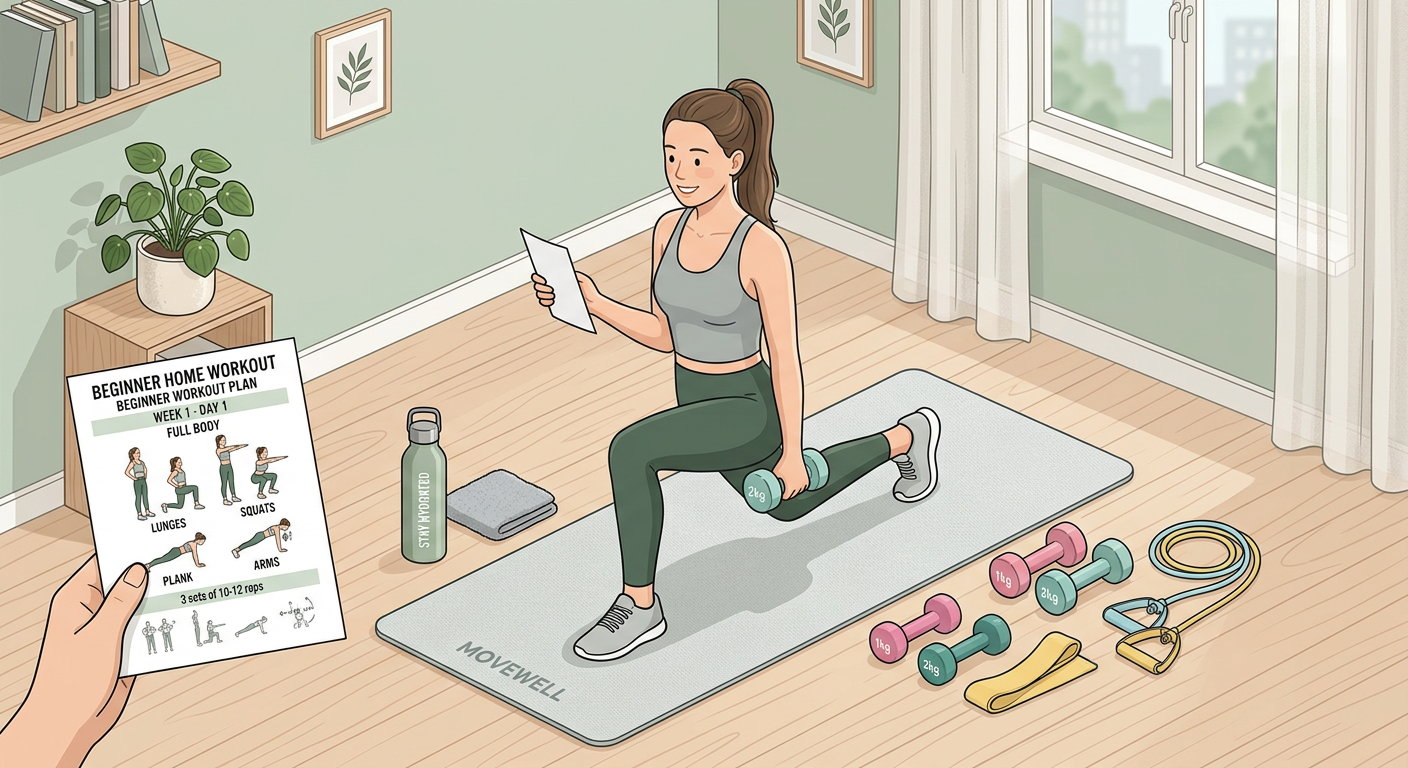
The Best Beginner Exercises
Focus on movements that train the major muscle groups and teach your body to move well. You do not need a complicated program.
Lower body
- Squats
- Glute bridges
- Reverse lunges
- Step-ups on a sturdy surface
Upper body
- Wall push-ups or incline push-ups
- Bent-over rows with dumbbells or bands
- Shoulder presses with light weights
- Dead bugs for core control
Core and stability
- Planks
- Bird dogs
- Side planks
- Marching glute bridges
The goal is not perfection. It is learning the patterns, improving form, and gradually adding challenge.
A Simple Weekly Plan
If you are new, start with two or three full-body sessions per week. That is enough to make progress without overwhelming yourself.
Sample plan
Day 1
- Squats, 2 sets of 8 to 12 reps
- Incline push-ups, 2 sets of 6 to 10 reps
- Glute bridges, 2 sets of 10 to 15 reps
- Plank, 2 rounds of 20 to 30 seconds
Day 2
- Reverse lunges, 2 sets of 8 reps per leg
- Bent-over rows, 2 sets of 8 to 12 reps
- Shoulder press, 2 sets of 8 to 10 reps
- Bird dog, 2 sets of 6 reps per side
Day 3
- Step-ups, 2 sets of 8 reps per leg
- Push-ups on a wall or counter, 2 sets of 8 to 12 reps
- Glute bridges, 2 sets of 12 reps
- Side plank, 2 rounds of 15 to 20 seconds per side
Keep rest periods short but manageable, usually 45 to 90 seconds between sets.
How to Progress Without Getting Lost
Progressive overload sounds technical, but the idea is simple. You make the workout a little harder over time.
Easy ways to progress
- Add a few reps
- Add another set
- Slow down the lowering phase
- Use a harder variation
- Add light resistance
A practical approach is best for beginners. Pick one small change at a time so you can see what is working.
Common Mistakes to Avoid
Many beginners quit because they try to do too much too soon.
Watch out for these issues
- Starting with workouts that are too hard
- Skipping rest and recovery
- Using poor form just to finish reps
- Changing the program every few days
- Expecting results after one week
Consistency matters more than intensity at the beginning. If you can stay steady for a few months, you are already ahead of most people who keep restarting.
How to Make It Stick
The easiest routine is the one you can repeat. Tie your workouts to something you already do, like after breakfast or before your shower.
It also helps to keep your setup simple. If your mat and bands are visible, you are more likely to use them. Small habits beat motivation when life gets busy.
FAQ
How often should a beginner strength train at home?
Two to three times per week is a great starting point. It gives your muscles time to recover while helping you build the habit.
Do I need weights to get stronger?
No. Bodyweight exercises can build a strong foundation. Weights can help later, but they are not required at the start.
How long should each workout be?
Most beginners can get a good session in 20 to 30 minutes. Short, focused workouts are often easier to maintain.
What if I am very out of shape?
Start with easier versions of each movement, like wall push-ups and chair squats. Progress slowly and keep the effort manageable.
Should I feel sore after every workout?
Not necessarily. Some soreness is normal, but it is not required for progress. The goal is gradual improvement, not constant fatigue.
Can I lose weight with home strength training?
Strength training can support fat loss by helping preserve muscle and improve overall activity. For best results, pair it with good nutrition and regular movement.
Build Momentum One Session at a Time
The best way to succeed with beginner strength training at home is to keep it simple enough that you will actually do it. Start small, stay consistent, and let the routine grow with you.
If you want more practical wellness and self-improvement guides, explore more helpful articles at https://contentbeast.com and keep building habits that support your long-term health.