

A dog with recurring loose stool, gas, vomiting, or poor appetite needs more than a bag labeled “gentle.” The best choice depends on the pattern of symptoms, your dog’s age and health history, and whether a veterinarian suspects a medical condition or food-related issue.
When we look for the best dog food for sensitive stomachs, we prioritize complete nutrition, digestibility, a sensible fat level, and a formula that fits the dog in front of us. A food that works beautifully for one dog may not suit another, so the goal is not to chase a trendy ingredient list. It is to make one careful change, monitor the outcome, and involve your veterinarian when symptoms persist.
For mild, occasional digestive sensitivity in an otherwise bright, hydrated dog, an over-the-counter digestive-support formula can be a reasonable first conversation. But ongoing diarrhea, repeated vomiting, weight loss, blood in the stool, pain, or lethargy calls for veterinary care rather than more food experimentation. Cornell University College of Veterinary Medicine advises contacting a veterinarian when diarrhea continues beyond 48 to 72 hours or occurs with vomiting, appetite loss, lethargy, or black or bloody stool.
Start With the Right Type of Food, Not the Loudest Label
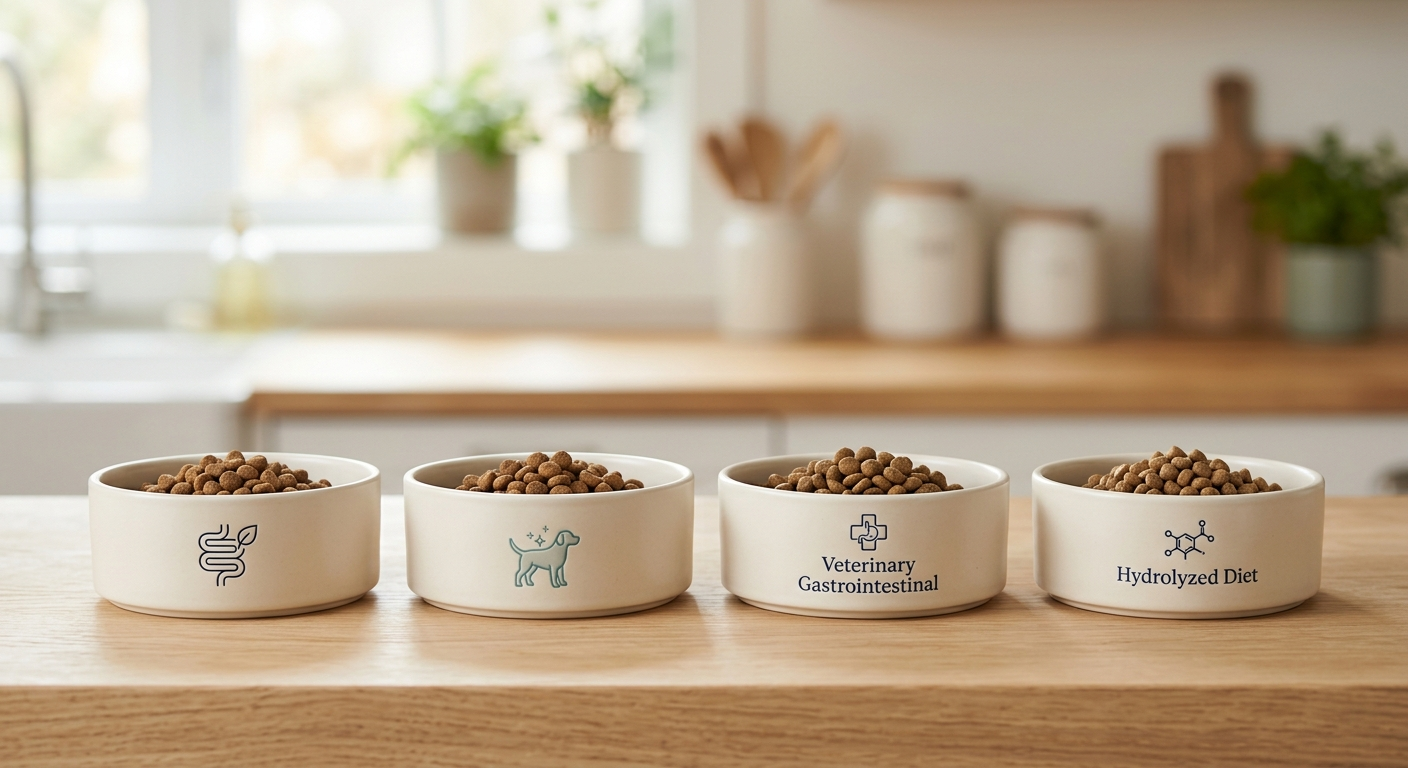
The best formula category is determined by your dog’s signs and medical needs. “Sensitive stomach” is a useful description, but it is not a diagnosis, and several very different approaches can fall under that label.
| Food type | Best fit | What to prioritize | Vet involvement |
|---|---|---|---|
| Digestive-support food | Mild, recurring soft stool or gas | Digestible ingredients, prebiotic fiber | Helpful |
| Sensitive skin and stomach food | Digestive upset plus itchy skin | Appropriate protein and omega fatty acids | Helpful |
| Prescription GI diet | Persistent or diagnosed GI disease | Highly digestible clinical nutrition | Required |
| Hydrolyzed diet | Suspected food reaction | Strict elimination trial | Required |
A complete and balanced food should always be the baseline. The World Small Animal Veterinary Association nutrition resources emphasize looking beyond ingredient-list marketing and considering the manufacturer’s nutritional expertise, quality control, and ability to answer meaningful questions about formulation.
Mild digestive sensitivity often responds to consistency
For a dog who is otherwise healthy but tends toward soft stools or extra gas, we would begin with a reputable, highly digestible formula and keep the routine steady. That means no rotating proteins every few days, no pile of new treats, and no table scraps during the trial period.
Consistency matters because it lets us see whether the food is genuinely helping. If five different foods and chews enter the picture at once, it becomes nearly impossible to identify the trigger.
Food intolerance is different from a picky stomach
Dogs with chronic gastrointestinal trouble, itching, ear inflammation, or symptoms that flare after particular foods may need a structured elimination diet. A veterinarian may recommend a novel-protein or hydrolyzed diet, fed exclusively, to determine whether food is contributing to the problem.
This is not the moment for a casual “limited ingredient” food from the shelf. A true diet trial only works when the prescribed diet is the only thing the dog eats, including treats, flavored medications, dental chews, and shared bites from the kitchen.
The Best Dog Food Options for Different Sensitive Stomach Needs
There is no single winner for every dog. These options stand out because they serve distinct needs, come from established manufacturers, and give owners a practical starting point for a veterinarian-supported decision.
Purina Pro Plan Sensitive Skin & Stomach
For healthy adult dogs with mild digestive sensitivity, Purina Pro Plan Adult Sensitive Skin & Stomach Salmon & Rice is a strong everyday option to discuss with your veterinarian. The formula uses salmon as its first ingredient and includes rice and oatmeal, along with prebiotic fiber for digestive support.
This choice can make particular sense for dogs whose stomach symptoms appear alongside dry or itchy skin. It is not a substitute for a diagnostic diet when a food allergy is suspected, but it is a reasonable over-the-counter formula for many adult dogs that need dependable daily nutrition.
Hill’s Science Diet Sensitive Stomach & Skin
Hill’s Science Diet Adult Sensitive Stomach & Skin is another established option for adult dogs with uncomplicated digestive sensitivity. Its purpose is straightforward: provide a complete daily diet designed around digestive comfort and skin support.
We like this category for owners who want a mainstream food that is easy to find and simple to feed long term. As with any food change, check that the formula matches your dog’s life stage and ask your veterinary team about portions, especially if weight management is also part of the picture.
Royal Canin Digestive Care
For dogs that need extra help with stool quality but do not require a prescription diet, Royal Canin Digestive Care offers size-specific formulas with prebiotics and fibers. The company reports stool-quality improvement of up to 97 percent in its large-dog formula, based on an internal study, so we should view that result as manufacturer evidence rather than independent proof.
The bigger benefit is the targeted approach. A toy breed, a medium dog, and a large dog do not necessarily need the same kibble size or feeding plan, and size-specific options can make daily feeding easier.
Prescription Gastrointestinal Diets
When a dog has persistent diarrhea, vomiting, pancreatitis concerns, inflammatory bowel disease, or another diagnosed gastrointestinal condition, prescription food may be the safest route. Options from veterinary lines such as Hill’s Prescription Diet, Purina Pro Plan Veterinary Diets, and Royal Canin Veterinary Diet are formulated for clinical situations and should be chosen with a veterinarian.
Prescription diets can cost more per bag, but they may reduce the expensive cycle of random food switches, supplements, and urgent appointments. More importantly, they are designed for dogs whose symptoms need medical management, not just a more appealing ingredient panel.
Hydrolyzed Protein Diets
For a medically supervised food trial, hydrolyzed diets are often more useful than a retail limited-ingredient formula. Hydrolyzed proteins are broken into very small pieces, helping reduce the chance that the immune system recognizes the protein in the same way.
These diets require discipline. If a dog receives a flavored chew, a chicken treat, or even another family member’s snack during the trial, the result may be unclear. Your veterinarian can tell you how long the trial should last and which approved treats or medications fit the plan.
How We Test a New Food Without Making Symptoms Worse
A thoughtful transition makes it easier to protect your dog’s gut and judge results accurately. Unless your veterinarian directs otherwise, change food gradually rather than replacing the entire bowl overnight.
Use a slow transition schedule
A common approach is to mix a small amount of the new food into the current food and increase it over about a week. Dogs with very sensitive digestion may benefit from an even slower pace.
Watch stool quality, vomiting, appetite, energy, itching, ear irritation, and bathroom frequency. If symptoms become noticeably worse, contact your veterinarian instead of pushing through the change.
Keep a simple food and symptom log
For recurring content in our pet-care series, the most useful habit is often the least glamorous one: write it down. Record the food name, amount fed, treats, supplements, medications, stool appearance, vomiting, skin changes, and any unusual exposures such as garbage raids or a visit to dog daycare.
A seven-day record can reveal patterns that memory misses. It also gives your veterinarian clearer information, which is especially valuable if your dog needs fecal testing, bloodwork, imaging, or a structured diet trial.
Control the extras
Treats, dental products, chews, rawhides, table food, and flavored supplements can all interfere with a sensitive-stomach plan. During the first few weeks on a new food, use part of the daily kibble allotment as treats or choose veterinarian-approved options that match the diet.
This approach also protects the household budget. Instead of purchasing several foods, toppers, and supplements at once, we can assess one well-chosen change before spending more.

Ingredients Matter, but Context Matters More
An ingredient list can help identify a known trigger, but it cannot tell the full story about food quality or digestibility. We should not assume that grain-free, raw, boutique, exotic-protein, or limited-ingredient automatically means gentler on a dog’s digestion.
Look for a food that is appropriate for your dog’s life stage and carries a complete-and-balanced nutritional statement. Then ask practical questions: Does the company employ qualified nutrition professionals? Do they conduct quality control? Can they explain how the diet is formulated and tested?
What about chicken and grains?
Chicken is not automatically bad for sensitive stomachs, and grains are not automatically harmful. Some dogs do well on chicken-and-rice foods, while others may have a genuine reaction to a particular ingredient or simply tolerate another formula better.
If you suspect a reaction, do not guess based on a single bad day. Work with your veterinarian on an elimination trial. That gives you a clearer answer and reduces the risk of unnecessarily restricting a balanced diet.
Should we add probiotics?
Veterinary probiotics can be useful in selected cases, but they are not a universal fix. The right product, dose, and timing depend on the dog’s symptoms and health history, especially if there is vomiting, chronic diarrhea, immune disease, or medication use.
Ask your veterinary team before stacking probiotics, pumpkin, fiber powders, digestive enzymes, and a new food all at once. Adding too many variables can worsen discomfort and obscure what is actually helping.
Frequently Asked Questions
How long does it take for sensitive stomach dog food to work?
Some dogs show firmer stools within several days, but we should usually assess the full response over a few weeks unless symptoms worsen. A true food-elimination trial may take longer and needs veterinary guidance.
Is wet food better than dry food for a sensitive stomach?
Wet food is not automatically better, but some dogs find it more palatable and easier to eat. The more important question is whether the formula is complete, appropriate for your dog, and tolerated consistently.
Can we feed bland chicken and rice long term?
No, a homemade bland diet is generally a short-term tool unless a board-certified veterinary nutritionist has formulated it for your dog. Long-term chicken and rice alone may not provide all required nutrients.
What is the best affordable food for a dog with a sensitive stomach?
An over-the-counter digestive-support food is often less expensive than a prescription diet and may work well for mild issues. Compare cost per day rather than bag price, since calorie density and feeding amounts differ widely.
Do sensitive stomach foods help with itchy skin?
They can help when a formula includes nutrients that support skin and when the dog’s digestive and skin issues are connected. Persistent itching, ear problems, or skin infections still deserve a veterinary exam because environmental allergies are common.
When should we stop trying different foods at home?
Stop food experiments and call your veterinarian if your dog has repeated vomiting, blood or black stool, pain, weakness, dehydration, weight loss, or symptoms that do not improve. Puppies, seniors, and dogs with chronic illness should be assessed sooner.
Make Your Next Bowl a More Informed Choice
We believe the best food is the one that supports normal digestion, meets your dog’s nutritional needs, fits your budget, and is selected with clear evidence rather than marketing pressure. Start with one appropriate formula, transition carefully, keep notes, and let persistent symptoms guide you to veterinary care.
For more practical, evidence-minded help with pet care, everyday wellness, and smarter household choices, visit Content Beast. We publish clear articles that help readers make confident decisions for the people and pets they care about.
The Bottom Line on Sensitive Stomachs
The best dog food for sensitive stomachs is rarely the bag with the most dramatic promise. It is the food that matches the reason behind your dog’s symptoms, provides complete nutrition, and produces steady results over time.
For a healthy dog with mild sensitivity, a reputable digestive-support formula may be enough. For recurring or serious symptoms, prescription nutrition or a veterinarian-led diet trial can save time, money, and discomfort. A calmer stomach begins with a clear plan, not another impulsive food switch.