
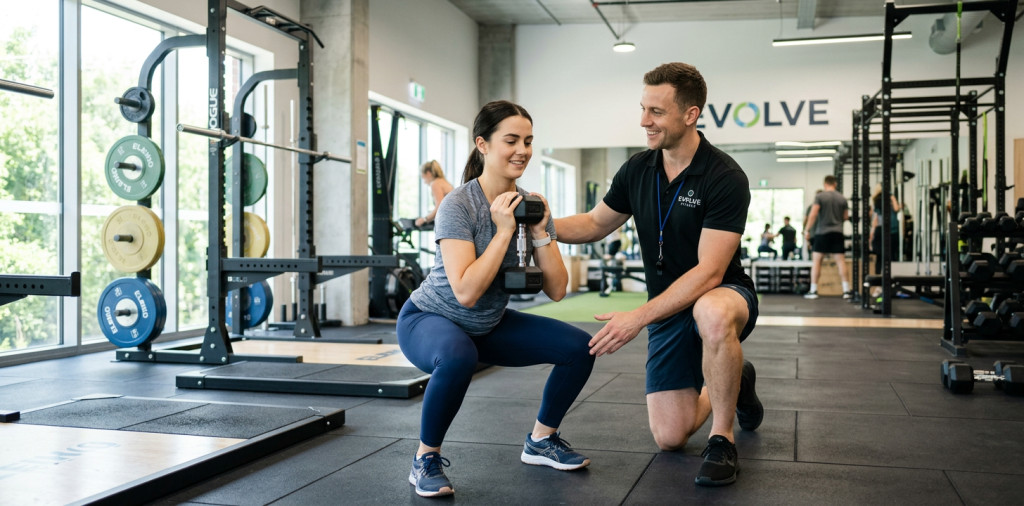
Starting strength training can feel intimidating, especially when you want to do it right the first time. The good news is that you do not need a perfect program, expensive gear, or advanced knowledge to get real results. You just need a simple plan based on what actually works.
That is where evidence based strength training for beginners makes a huge difference. Instead of chasing random workouts or internet hype, you focus on the basics, consistent practice, and steady progress. This approach is easier to stick with, safer for most people, and far more effective than constantly switching routines.
What Evidence Based Strength Training Means
Evidence based training is simply training that lines up with research, not trends. It uses proven principles like progressive overload, adequate recovery, and enough weekly volume to stimulate muscle and strength gains.
For beginners, that usually means a program built around a few compound lifts, moderate weekly frequency, and gradual increases over time. You do not need to train like a bodybuilder or powerlifter right away. You need a plan you can repeat.
The Core Principles
- Progressive overload means slowly increasing the challenge over time.
- Specificity means practicing the movements you want to improve.
- Recovery means giving your body time to adapt between sessions.
- Consistency means showing up long enough for the plan to work.
The Best Exercises For Beginners
If you are just starting, focus on movement patterns instead of dozens of isolated exercises. The goal is to build a solid base with exercises that train multiple muscles at once.
Useful Movement Patterns
- Squat variations like goblet squats or bodyweight squats.
- Hinge patterns like Romanian deadlifts or hip hinges.
- Push movements like push-ups or dumbbell bench press.
- Pull movements like rows or lat pulldowns.
- Carry and core work like farmer carries and planks.
These movements help develop strength efficiently and teach coordination, balance, and body awareness. If you keep them in your routine, you will usually progress faster than if you bounce between flashy exercises.
How Often Should Beginners Train?
Most beginners do well with two to three full-body sessions per week. That gives you enough practice to improve while leaving time to recover and build muscle.
A full-body approach is especially useful because it lets you train each major muscle group more than once per week without needing a complicated split. That can be easier to follow, and for beginners, easier usually means better.
A Simple Weekly Structure
- Monday: Full body
- Wednesday: Full body
- Friday: Full body
If three days feels like too much, start with two. The best plan is the one you can maintain consistently.
How Much Weight And Volume Do You Need?
You do not need to max out or train to exhaustion every session. Beginners often make excellent progress with 2 to 4 sets per exercise and 5 to 12 reps for most lifts.
A useful rule is to stop each set with a few reps left in the tank. That keeps technique cleaner and makes training more sustainable. You want hard work, not sloppy grinding.
Practical Progression Rules
- Start light enough to use good form.
- Add a rep or two when the weight feels manageable.
- Increase load gradually once you hit the top of your rep range.
- Keep a training log so you can track progress.
Why Form Matters, But Perfection Does Not
Good technique matters because it helps you train safely and effectively. But beginners often wait too long for “perfect form” and end up doing nothing.
A better goal is controlled, repeatable form. Small mistakes are normal early on. What matters is keeping the movement stable, pain free, and progressively stronger over time.
What To Prioritize
- Controlled tempo
- Full range you can manage safely
- Stable posture
- Smooth breathing
- No sharp pain
If you are unsure about a lift, record yourself or ask a coach for feedback. A little guidance can save months of guessing.
Recovery Is Part Of The Program
Training breaks the body down a bit. Recovery is when it comes back stronger. That means sleep, nutrition, hydration, and rest days are not optional extras, they are part of the process.
Beginners often underestimate this and assume more is always better. In reality, progress depends on what you can recover from.
Recovery Basics
- Sleep enough, ideally on a consistent schedule.
- Eat enough protein and overall calories.
- Stay hydrated.
- Take rest days seriously.
- Reduce volume if you feel constantly drained.
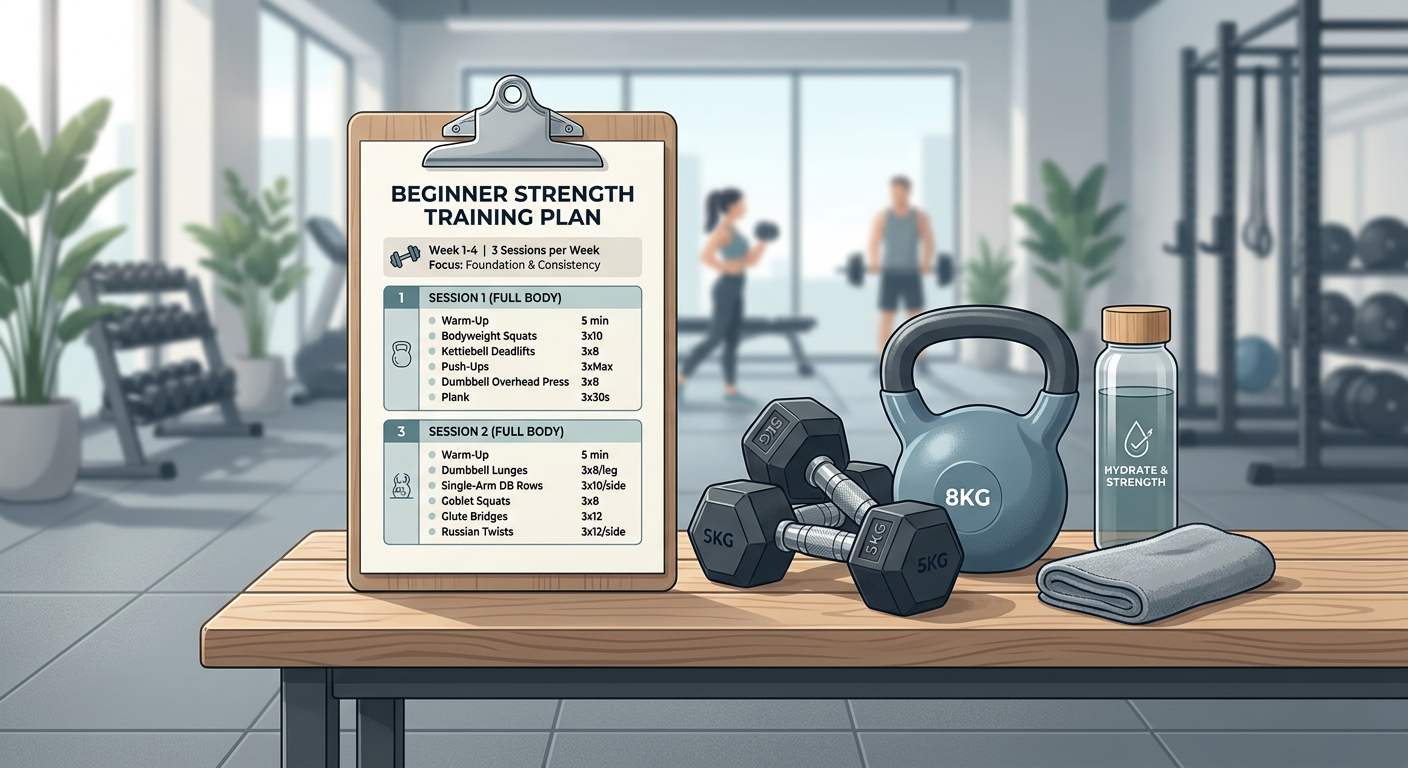
A Beginner Friendly Sample Workout
Here is a simple full-body template you can use as a starting point.
Workout A
- Goblet squat, 3 sets of 8 reps
- Dumbbell bench press, 3 sets of 8 reps
- Seated row, 3 sets of 10 reps
- Plank, 3 sets of 20 to 40 seconds
Workout B
- Romanian deadlift, 3 sets of 8 reps
- Push-up or incline push-up, 3 sets of 6 to 10 reps
- Lat pulldown, 3 sets of 10 reps
- Farmer carry, 3 rounds of 20 to 30 meters
Alternate Workout A and Workout B across the week. Once the reps feel easier, add a small amount of weight or another rep.
Common Beginner Mistakes To Avoid
Doing Too Much Too Soon
It is tempting to copy advanced lifters, but that usually leads to burnout. Start with a manageable workload and build slowly.
Changing Programs Constantly
If you switch workouts every week, you never give your body enough time to adapt. Stick with one plan long enough to measure progress.
Ignoring Recovery
If your sleep is poor and your calories are too low, progress stalls. Training works best when recovery is solid.
Chasing Soreness
Being sore does not automatically mean the workout was effective. Strength gains come from consistent, quality training, not from getting wrecked every session.
FAQ
How long does it take to see results?
Many beginners notice better coordination and strength within a few weeks. Visible muscle changes usually take longer, often a couple of months of consistent training.
Should beginners train to failure?
Not usually. Leaving a few reps in reserve is often a better choice because it reduces fatigue and helps you practice form more consistently.
Do I need supplements?
No, not to start. A solid diet, enough protein, sleep, and a good program matter more than supplements.
Is machine training okay for beginners?
Absolutely. Machines can be very helpful because they are stable, easy to learn, and great for building confidence.
What if I am starting later in life?
That is fine. Beginners of almost any age can build strength safely with the right plan and sensible progression.
Build A Routine You Can Stick With
The smartest way to start is not the hardest way. It is the simplest plan that helps you train consistently, recover well, and get a little stronger over time. That is the real power of evidence based strength training for beginners.
If you want more practical, easy to follow guidance like this, visit Content Beast for more helpful articles and ideas you can actually use.
Final Takeaway
You do not need a complicated setup to get stronger. Focus on a few proven lifts, train two to three times per week, progress gradually, and respect recovery. Do that long enough, and you will build a strong foundation that lasts.