

Tackling high-interest credit card debt feels overwhelming, but a clear plan turns anxiety into action. In the next 1,000 words you will get a straightforward, practical roadmap you can start using tonight to cut interest costs and pay down balances faster.
Start by making one simple commitment: pick one method and stick with it until you hit meaningful momentum. Below I bold the core focus so you always know what to come back to, High Interest Credit Card Debt Payoff Strategy, and I walk you through budget tweaks, payment order choices, consolidation options, negotiation tactics, and behavior changes that actually move the needle.
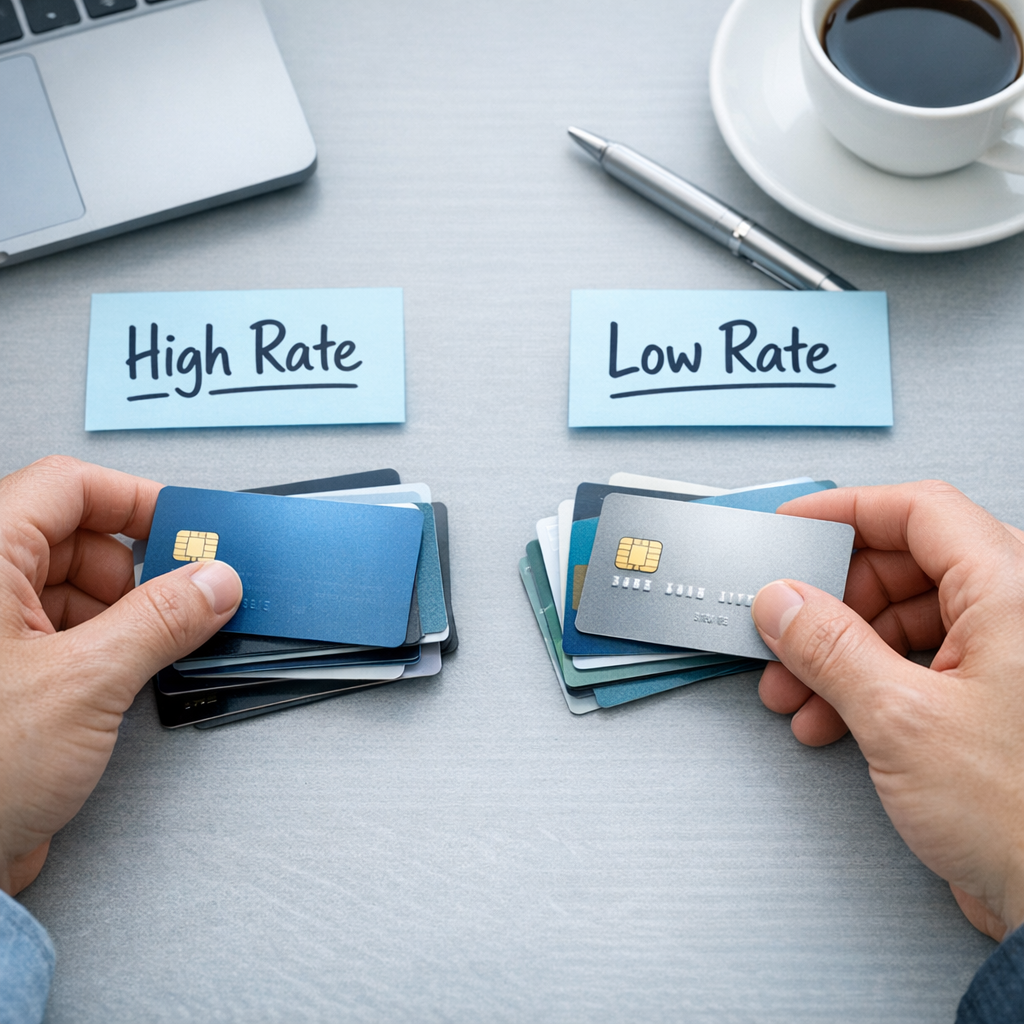
Why high-rate credit card debt needs a specific strategy
High annual percentage rates mean more of every payment goes to interest, not principal. That drags out payoff timelines and increases the total cost of borrowing. If you only make minimum payments, balances compound and you may feel stuck, even while paying for years. A targeted payoff plan focuses your dollars where interest savings are biggest, so you pay down principal faster and save on interest.
Quick overview: the approach that works
This strategy blends three proven tactics: prioritize high-rate balances, reduce interest through consolidation or transfers when safe, and automate payments so momentum builds without constant effort. It uses the avalanche method for interest savings, adds behavioral nudges to keep you consistent, and includes negotiation and hardship routes if cash flow is tight.
Step 1, get clarity: full-scope audit
- List each card, current balance, APR, and minimum payment. Use a simple spreadsheet or app.
- Calculate your total monthly minimums and how much you can free up by trimming nonessentials.
- Set a short-term emergency buffer, $500 to $1,000 if possible, so you don’t slide back into using cards when a small expense hits.
Actionable takeaway: know exactly where interest is burning your money, and free up an extra payment or two per month by cutting subscriptions, eating out less, or pausing discretionary spending.
Step 2, choose payment order: avalanche for math, snowball for psychology
- Avalanche method: pay minimums on all cards, then apply extra cash to the card with the highest APR. This minimizes total interest paid.
- Snowball method: pay the smallest balance first to win quickly and gain motivation. This helps people who struggle with persistence.
Here’s the thing, pick the method you’ll actually follow. If math motivates you, avalanche saves more money. If momentum and psychology keep you consistent, snowball can be better overall because persistence matters more than theoretical savings when you stay the course.
Step 3, reduce interest with smart consolidation options
- Balance transfer cards: can offer 0 percent promotional APR for a limited period. Use only if you can pay down the transferred balance before the promo ends, and watch for transfer fees.
- Personal loan: fixed monthly payments and often lower APR than credit cards, which simplifies payoff and reduces interest.
- Home equity or line of credit: lower rates but risk your home, so use cautiously and understand fees and terms.
Tip: don’t use consolidation as an excuse to rack up new card debt. Put paid-off cards on a short cooling-off period before reusing them.
Step 4, negotiate and use creditor options
Creditors will sometimes lower rates or offer hardship plans if you ask, especially if you have a recent history of payments. Ask for a lower APR, a waived late fee, or an enrollment in a hardship program. You may need to provide basic financial info, but a single successful negotiation can save hundreds of dollars.
Step 5, automate and protect progress
- Automate minimum payments plus one extra fixed amount each month. Automation prevents missed payments and speeds payoff.
- Reallocate windfalls (tax refunds, bonuses) to principal, not to lifestyle inflation.
- Track progress monthly and celebrate milestones. Replace a habit tied to spending with a small reward that does not cost money.
Safety checks and common mistakes to avoid
- Avoid opening multiple balance transfer cards at once, which can harm credit temporarily and lead to overspending.
- Read fine print on promotional offers, especially what the APR becomes after promotional periods.
- Don’t treat a personal loan as permission to keep charging; it should be a step toward simpler payments and lower interest.
Real-life example, a short story
A reader I coached had $18,000 across three cards, APRs between 19 and 28 percent, and was only paying minimums. We freed $150 per month by cutting recurring costs, chose avalanche to attack the 28 percent card, and moved debt to a short-term 0 percent transfer for one smaller balance. After 14 months she cut total interest costs and eliminated the highest-rate card, which unlocked confidence to finish the plan.
Frequently asked questions
How much extra should I pay each month to see real progress?
Even an extra $50 to $200 toward the highest-rate card can shorten payoff time and lower total interest. The exact number depends on balances and APRs, but consistency matters more than perfect amounts.
Is balance transfer always a good idea?
No. It helps when you can pay off the transferred balance during the promotional window and when the transfer fee does not erase savings. Avoid transfers if you’ll be tempted to run up new balances.
Should I close paid-off credit cards?
Not immediately. Closing cards can raise your credit utilization ratio and shorten credit history, which may lower your credit score. Keep cards open with zero balance unless there’s a compelling reason to close them.
What if I can’t cover minimum payments?
Contact your creditors proactively to explain your situation and request hardship assistance or a temporary lower payment plan. You can also seek help from a nonprofit credit counseling agency to explore structured options.
How do I stop using cards while paying them off?
Make cash or debit your default for daily spending. Freeze cards in a drawer or remove saved card info from online retailers. Build small wins to reinforce the habit change.
Will paying off cards improve my mental health?
Yes, many people report reduced stress and better sleep as balances shrink. Small, visible wins, like eliminating one card, compound psychologically and keep you motivated.
Next steps you can take tonight
- List your cards with balances and APRs.
- Choose avalanche or snowball.
- Automate minimum payments and one extra amount.
- Cut one recurring expense and redirect that money to debt.
Ready to move faster on your debt?
Start implementing these steps now and track the money you free up each month. For templates, editorial guidance, and content that helps you build a consistent payoff plan, check out ContentBeast to scale the process and stay motivated: https://contentbeast.com
Conclusion
High interest credit card debt is discouraging, but a focused strategy changes everything. Use clarity, pick a payment order you will stick with, reduce interest where possible, and automate payments to build momentum. Small, consistent actions add up faster than occasional large efforts. Pick one action from this article and do it today, then repeat next month. You will be surprised how quickly progress compounds.