

A reliable sleep schedule is built around one decision that comes before every other habit: choose a wake-up time you can keep most days, including weekends. Bedtime matters too, but a stable morning anchor gives your body clock the clearest signal about when to feel alert and when to become sleepy.
For many of us, the problem is not a lack of sleep advice. It is trying to overhaul everything at once, then abandoning the plan after one late night, an early workout, a demanding shift, or a social weekend. A better approach is to treat sleep consistency as a small daily system that gets easier through repetition.
The stakes are worth taking seriously. The CDC reports that more than one in three American adults do not get the recommended amount of sleep, while most adults need at least seven hours each night. Building a predictable rhythm can support energy, training recovery, mood, and safer day-to-day performance.
Start With Day 1: Set a Wake-Up Time We Can Actually Keep
The first day should be simple: pick one realistic wake-up time and protect it for the next seven days. We do not need a perfect bedtime on night one, but we do need a morning target that fits our work, family, commute, and exercise commitments.
Begin by working backward from the earliest time we regularly need to be functional. If we need to be out of bed by 6:30 a.m. on weekdays, setting an 8:30 a.m. weekend alarm creates a two-hour swing that can make Sunday night harder. Aim to keep the difference to about an hour when possible.
Then estimate a bedtime that creates enough opportunity for sleep. The American Academy of Sleep Medicine advises setting bedtime early enough to allow at least seven to eight hours, while also avoiding bed before we are genuinely sleepy. For a 6:30 a.m. wake-up, that might mean beginning a wind-down routine at 9:30 p.m. and aiming for lights out near 10:30 p.m.
The first week is not a test of willpower. It is a period of observation. Note when we wake, when we first feel sleepy, caffeine timing, workouts, naps, and how alert we feel in the afternoon. That short record helps us spot the habits that are moving our schedule off course.

Make Morning Light and Movement Part of the Plan
Morning light and daytime activity make it easier for our internal clock to recognize the start of the day. We do not need an elaborate routine, but we do need a consistent cue that says morning has begun.
Try to get outside shortly after waking, even if it is only for a five or ten minute walk, a coffee on the porch, or a trip around the block with the dog. The CDC specifically recommends natural light earlier in the day and regular physical activity as practical ways to support healthy sleep habits.
For fitness-focused readers, timing matters more than chasing a perfect workout. A hard late-evening session can leave some people alert when they want to be winding down, so test moving intense exercise earlier if bedtime keeps drifting. Gentle stretching, walking, or mobility work later in the evening may feel more compatible with sleep.
We can also pair the morning cue with something we already do. Put the alarm across the room, open the curtains, drink water, and step outside before checking messages. Fewer choices means less friction on tired mornings.
Build a Wind-Down Routine That Removes Decisions
A wind-down routine works when it is repetitive and low effort, not when it looks impressive on paper. Give ourselves a short sequence that marks the transition from obligations to rest.
Start about 30 to 60 minutes before the planned bedtime. The American Academy of Sleep Medicine recommends limiting bright evening light and turning off electronic devices at least 30 minutes before bed. We can use that time for a warm shower, light reading, simple skin care, preparing tomorrow's clothes, or a brief brain dump of unfinished tasks.
A useful routine might look like this:
- Set an evening reminder to begin winding down.
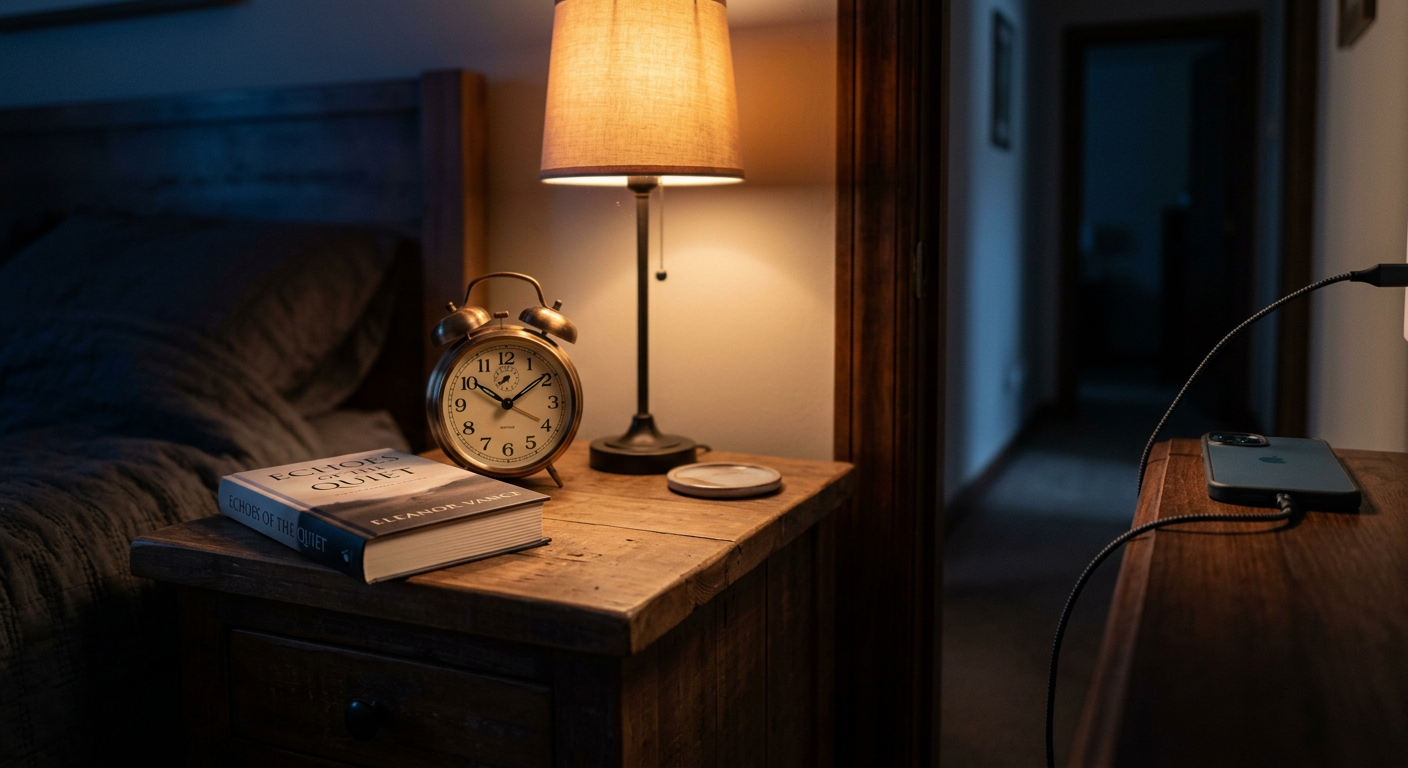
- Dim lights and put the phone on a charger outside the bedroom.
- Prepare the next morning's essentials.
- Do one calming activity for 15 minutes.
- Get into bed only when sleepy.
Keep the routine deliberately boring. The goal is not to earn sleep through a long checklist. It is to make the same sequence familiar enough that the body begins to associate it with rest.
Protect Sleep With a Few High-Impact Boundaries
Consistency is often lost through small evening decisions, especially caffeine, naps, screens, and weekend catch-up sleep. We do not need to control every variable, but a few boundaries can prevent the most common disruptions.
Set a Caffeine Cutoff You Can Follow
Caffeine affects people differently, but it can linger longer than expected. The National Institutes of Health notes that caffeine's stimulating effects can take eight hours or more to wear off fully. If we are regularly awake later than planned, experiment with making lunch the last caffeinated drink of the day for one week.
Use Naps Carefully
A nap can be helpful after a short night, but a late or lengthy nap may reduce sleep pressure at bedtime. If we need one, try a brief early-afternoon nap rather than sleeping after dinner. The key question is practical: does the nap help us function without making the next night harder?
Make the Bedroom Support Sleep
A cool, dark, quiet room reduces unnecessary obstacles. Keep work, doomscrolling, and stressful planning out of bed whenever possible. If we cannot fall asleep after about 20 minutes, the American Academy of Sleep Medicine recommends getting up for a quiet, low-light activity and returning when sleepy rather than lying awake and frustrated.
Handle Weekends, Travel, and Bad Nights Without Starting Over
One late night does not erase a sleep schedule. The most effective response is usually to resume the usual wake-up time as closely as possible, get morning light, and avoid trying to force an early bedtime before we are sleepy.
Weekend social plans are where many schedules unravel. Instead of treating Saturday as a free-for-all, decide ahead of time what flexibility is acceptable. If we normally wake at 7:00 a.m., sleeping until 8:00 a.m. may be manageable, while sleeping until noon can make Sunday evening feel like jet lag.
Travel, night shifts, newborn care, illness, and caregiving can require a different plan. In those seasons, consistency may mean keeping the best rhythm available rather than chasing an ideal schedule. Focus on the next controllable cue, such as a stable wake time on off days, light exposure, a short pre-sleep routine, or a protected nap.
Track Progress by How We Feel, Not Just by the Clock
A consistent schedule should make daily life more manageable, not become another source of anxiety. Give the routine at least one to two weeks before judging it, then look for practical improvements.
Ask a few questions each day:
- Are we falling asleep with less effort?
- Are we waking closer to the alarm instead of repeatedly snoozing?
- Is afternoon energy more stable?
- Are workouts, focus, mood, or appetite easier to manage?
- Does the schedule still allow enough total sleep?
If the answer is no, adjust one variable at a time. Move bedtime or wake time by 15 minutes, shift caffeine earlier, reduce late light exposure, or revisit the amount of sleep we are allowing. Small adjustments are easier to evaluate and sustain.
When a Sleep Schedule Problem Needs Medical Support
A routine can help, but it cannot solve every sleep issue. Speak with a healthcare professional if sleep difficulties persist, if daytime sleepiness affects driving or work, or if there are signs of a sleep disorder such as loud snoring, choking or gasping during sleep, frequent leg discomfort, or long-term insomnia.
This is especially important if we are relying on alcohol, over-the-counter sleep aids, or frequent high-dose supplements to get through the night. Chronic insomnia often benefits from cognitive behavioral therapy for insomnia, a structured treatment that addresses the thoughts and behaviors keeping sleep problems in place.
Frequently Asked Questions
How long does it take to build a consistent sleep schedule?
Many people notice early improvements within one to two weeks, but a durable rhythm can take several weeks, especially after months of irregular sleep. The fastest progress usually comes from keeping the wake-up time stable instead of making dramatic bedtime changes.
Should we sleep in after a bad night?
A small amount of extra sleep may be reasonable when we are exhausted, but sleeping far past the usual wake-up time can make the following night more difficult. Try to stay close to the usual schedule, use daylight and movement to stay alert, and consider a short early-afternoon nap if necessary.
What is the best bedtime for adults?
There is no universal best bedtime because work schedules, natural sleep preferences, and family responsibilities differ. The right bedtime is one that lets us get sufficient sleep before a wake-up time we can maintain.
Can we use melatonin to fix an inconsistent schedule?
Melatonin may be appropriate for certain timing problems, but dose and timing matter. It is best to discuss it with a clinician or pharmacist, particularly if we take other medications, are pregnant, or have an ongoing sleep concern.
Does a consistent sleep schedule matter if we already get eight hours?
Yes. Duration is important, but regular timing also helps organize the sleep-wake rhythm. A 2023 consensus statement in the journal Sleep Health concluded that consistency in sleep onset and wake times matters for health, safety, and performance.
What if our partner has a different sleep schedule?
Start by protecting the habits we can control, such as our wake time, earplugs, an eye mask, a quiet wind-down routine, or separate reading time before bed. If schedules differ sharply, discuss practical compromises around lights, alarms, noise, and shared bedroom expectations.
Build Better Habits One Repeatable Day at a Time
Better sleep does not require a flawless evening or a strict lifestyle overhaul. It comes from repeating a few supportive cues, especially a realistic wake-up time, morning light, enough time in bed, and a predictable transition into the night.
We should expect ordinary disruptions, then return to the routine without treating them as failure. Protect the next morning, make one adjustment when needed, and let consistency accumulate. That is how a sleep schedule becomes a habit that holds up in real life.
Keep Building a Healthier Everyday Routine
If you want more evidence-based ideas for sleep, mindfulness, fitness, practical habits, and everyday well-being, explore ContentBeast. We publish clear, useful articles designed to help us make sustainable changes without adding unnecessary complexity.