Starting strength training at home can feel intimidating if you don't know where to begin, but you only need clear steps, modest equipment, and sensible progress. In this guide you'll get a simple plan to start safely, build consistency, and avoid common mistakes.
By the end you will understand how to design beginner-friendly sessions, choose exercises that work every major muscle group, and scale up over weeks. Begin by learning the basics and following a routine that fits your schedule, because consistency beats intensity at the start. Here’s how how to start strength training at home for beginners works in practice.
Why start strength training at home
Strength training builds muscle, improves bone density, raises resting metabolic rate, and helps with everyday tasks like lifting and climbing stairs. It is time-efficient and flexible, so you can work it into a busy week without a gym membership. Most health guidelines recommend resistance work for all major muscle groups at least twice weekly to see meaningful benefits.
The beginner blueprint: what you need
Space and basic equipment
- A clear 6-by-6 foot area, a mat, and comfortable shoes.
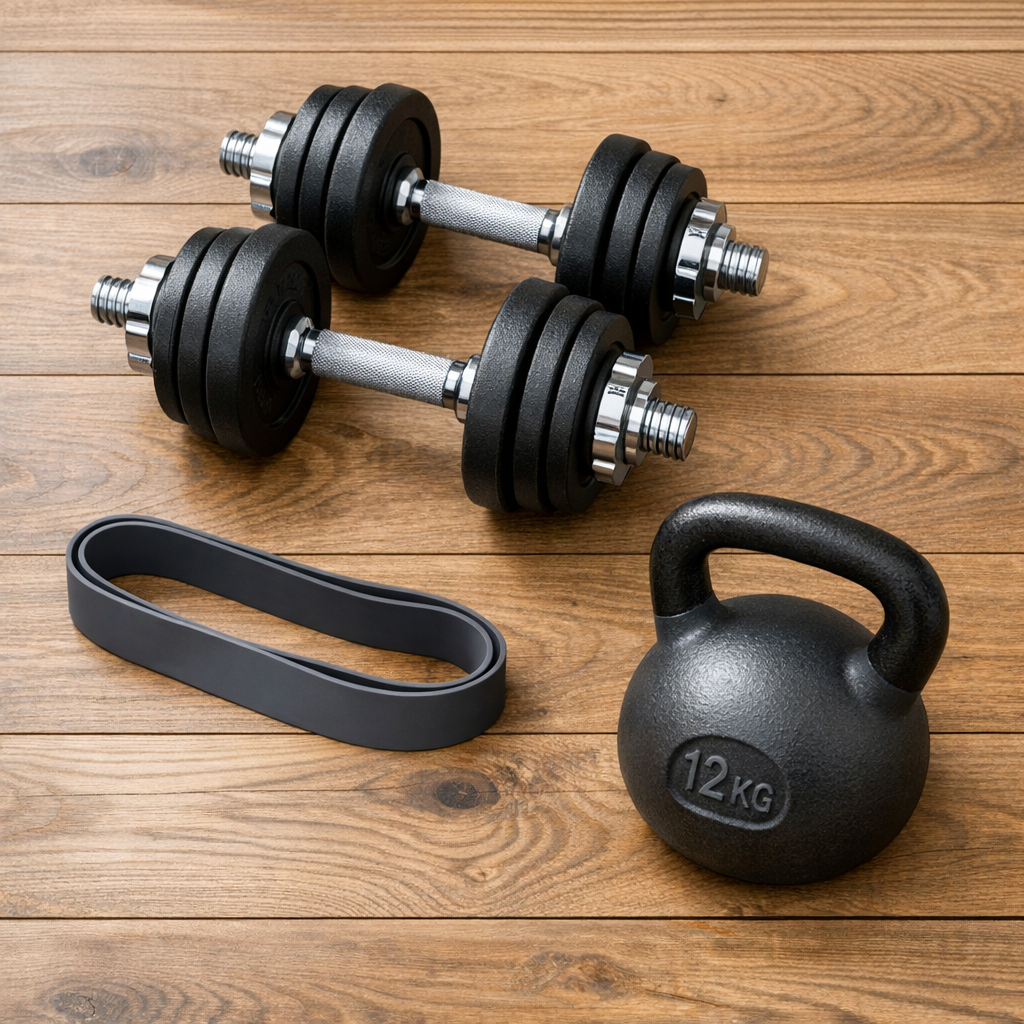
- Optional but helpful: a pair of light-to-moderate dumbbells, a resistance band, and a kettlebell or adjustable weight. Bodyweight alone is fine to start.
Warm-up and cool-down
- 5 to 7 minutes of light movement, joint circles, and dynamic stretches before you lift.
- 3 to 5 minutes of gentle stretching or foam rolling after the session.
Programming fundamentals
- Frequency: 2 full-body sessions per week to start, or 3 sessions if you prefer shorter, more frequent workouts.
- Volume: 1 to 3 sets per exercise, 8 to 15 repetitions to challenge muscles without overdoing it.
- Progression: increase reps, sets, weight, or reduce rest as you get stronger.
A simple 8-week starter plan
Weeks 1 to 2 — Learn the moves
Focus on learning form with bodyweight only. Example session:
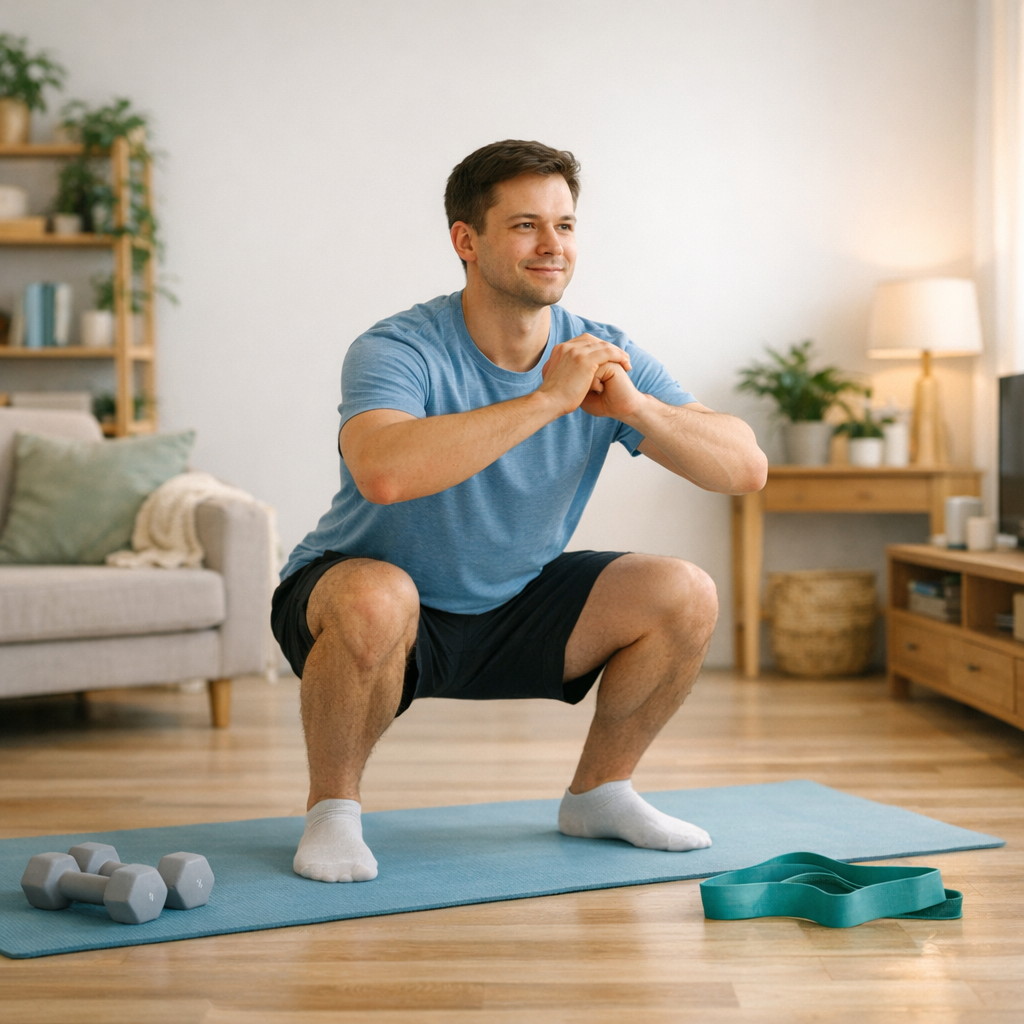
- Squats, 2 sets of 10
- Push-ups (knees if needed), 2 sets of 8–10
- Bent-over row with band or light dumbbell, 2 sets of 10
- Glute bridges, 2 sets of 12
- Plank, 2 holds of 20–30 seconds
Do this twice during the week with at least one rest day between sessions.
Weeks 3 to 6 — Build consistency and challenge
Add weight or extra reps. Example session:
- Goblet squat with kettlebell or dumbbell, 3 sets of 8–12
- Push-ups or dumbbell bench press, 3 sets of 8–12
- One-arm dumbbell row, 3 sets of 8–12 each side
- Romanian deadlift with dumbbells, 3 sets of 8–12
- Side plank or dead bug, 3 sets of 30 seconds
Weeks 7 to 8 — Ready to progress further
Introduce small increases in weight or an extra workout day (3x/week). Consider splitting sessions into upper and lower body if you prefer shorter workouts.
Technique tips that matter
- Control each rep: 1 to 2 seconds lifting, 2 to 3 seconds lowering, no bouncing.
- Breathe: exhale on effort, inhale on the return.
- Keep a neutral spine and braced core on compound lifts.
- If something hurts sharply, stop and reassess form.
How to progress without buying a lot
- Increase reps then sets, then weight.
- Slow down the lowering phase to make an exercise harder without more weight.
- Use resistance bands for variable tension.
- Convert single-leg or single-arm versions to make bodyweight moves tougher.
Common beginner mistakes and how to avoid them
- Rushing progression: add small increments instead of big jumps.
- Skipping warm-ups: always warm muscles to reduce injury risk.
- Neglecting posterior chain: include hamstrings and back work, not just chest and quads.
- Doing only cardio: combine strength training with cardio for balanced fitness.
Integrating with lifestyle and recovery
- Sleep, nutrition, and stress affect progress. Aim for consistent sleep and a protein-rich diet to support muscle repair.
- Schedule non-consecutive strength days to allow recovery.
- If you have health concerns, consult your healthcare provider before starting.
Frequently Asked Questions
How often should a beginner strength train at home?
Aim for two full-body sessions per week to begin. If you prefer smaller sessions, three non-consecutive days of shorter workouts also works well.
What equipment is essential for beginners?
Nothing is essential. Bodyweight exercises work. A resistance band and one pair of adjustable dumbbells provide more progression and variety.
How soon will I see results from home strength training?
You may notice strength and posture improvements in 3 to 6 weeks, and visible muscle changes in 8 to 12 weeks with consistent training and proper nutrition.
How do I avoid injury when training at home?
Prioritize technique, warm up, progress slowly, and stop if you feel sharp pain. Using mirrors or video can help you check form.
Can I lose fat while strength training at home?
Yes. Strength training preserves muscle while a modest calorie deficit and added cardio will help with fat loss. Strength work also raises resting energy expenditure.
Is it okay to strength train every day?
Beginners should avoid training the same muscle groups daily. You can do short mobility or active recovery sessions on off days, but allow 48 hours for muscle groups to recover.
Should I follow a workout plan or improvise?
Follow a simple, progressive plan for the first 8 to 12 weeks. Plans help ensure balanced development and measurable progress.
Ready to Build Strength?
If you want help turning these steps into a publish-ready article or a weekly content plan for your blog, check out ContentBeast for automated SEO-friendly content and publishing. Visit the homepage or explore pricing and integrations to see how you can systematize content creation for fitness audiences.
- ContentBeast homepage: https://contentbeast.com/
- Pricing and plans: https://contentbeast.com/pricing/
- Integrations: https://contentbeast.com/integrations/
Conclusion
Starting strength training at home is straightforward when you keep the plan simple, prioritize form, and progress steadily. Focus on consistency, warm up properly, and choose a handful of compound moves that hit major muscle groups. Small, sustainable gains add up quickly, and within a few months you will feel stronger and more capable in daily life. Start today, track progress, and adjust as you grow.