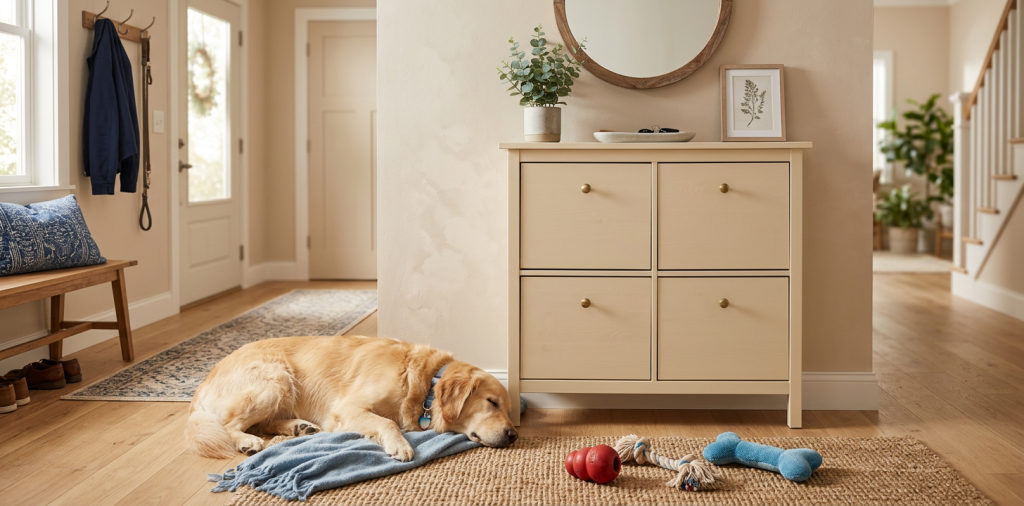
You come home, open the door, and there it is, one shoe shredded like confetti while your dog looks up as if nothing happened. It’s frustrating, expensive, and honestly a little confusing when your dog has toys sitting two feet away.
If you’re wondering how to stop dog from chewing shoes when left alone, the answer isn’t yelling, guilt, or hoping they’ll “grow out of it.” The real solution is a mix of management, enrichment, training, and understanding why your dog is choosing shoes in the first place.
Here’s the thing: chewing is normal dog behavior. The problem isn’t that your dog wants to chew. The problem is that your shoes are available, familiar, scented like you, and often more interesting than the toys you left behind.
Why Dogs Chew Shoes When They’re Alone
Dogs don’t chew shoes to get revenge. They chew because it works for them in the moment. Shoes smell strongly like their favorite human, have interesting textures, and are easy to carry around. For a bored, anxious, teething, or under-stimulated dog, that’s a pretty tempting package.
The ASPCA guide on destructive chewing explains that chewing can help dogs relieve boredom, mild anxiety, frustration, and teething discomfort. In other words, your dog isn’t being “bad.” They’re meeting a need in the wrong way.
Common Reasons Behind Shoe Chewing
Your dog may be chewing shoes because of:
- Boredom: They’re alone with too little to do.
- Separation stress: They feel distressed when you leave.
- Teething: Puppies chew to soothe sore gums.
- Excess energy: They haven’t had enough movement or mental work.
- Habit: They’ve practiced shoe chewing enough that it has become rewarding.
- Access: Shoes are simply too easy to grab.
The fastest improvement usually comes from changing the environment first, then training the behavior you want.
Step One: Remove the Shoes Before You Train
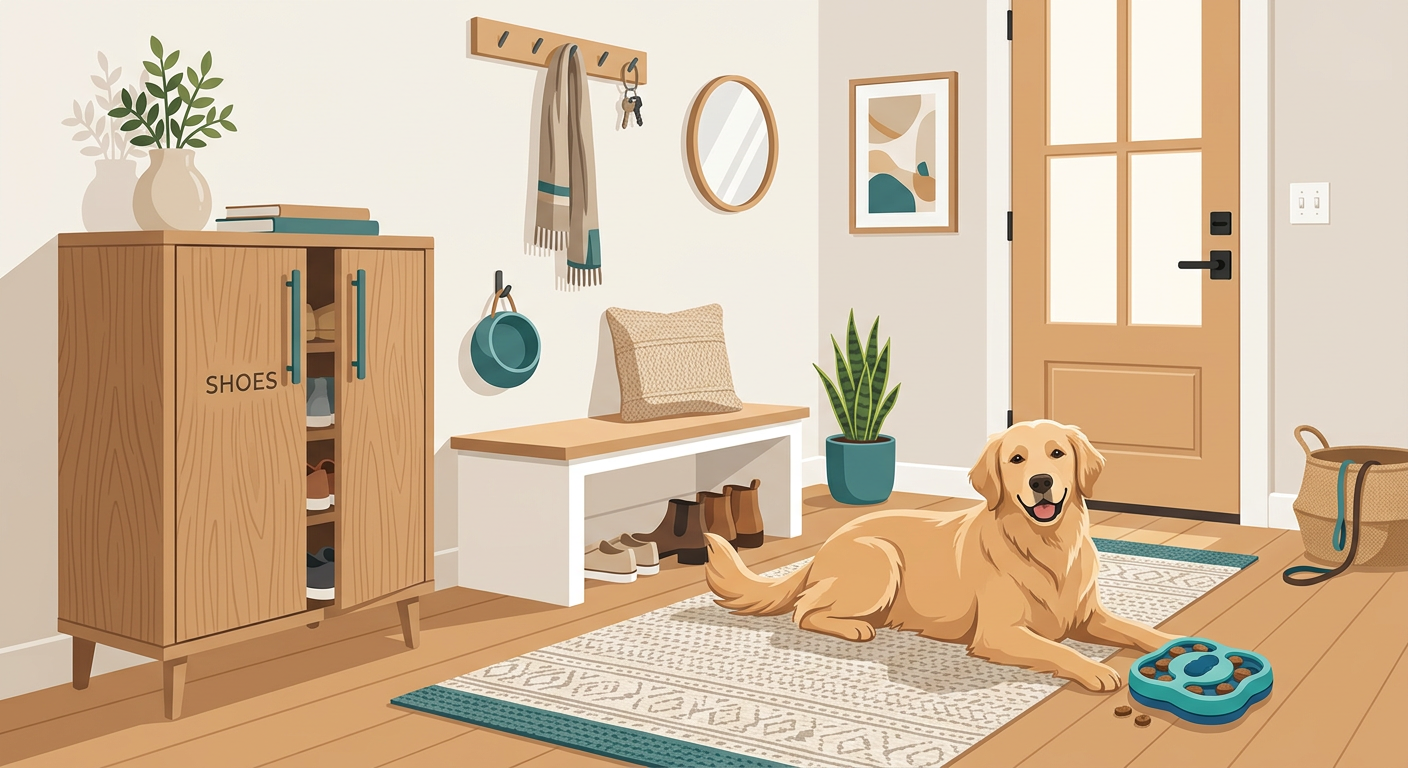
This sounds almost too simple, but it matters: your dog can’t chew shoes they can’t reach.
Put every shoe behind a closed door, inside a cabinet, in a closet, or on a high shelf before you leave. Not “mostly away.” Not “pushed under the bench.” Fully unavailable.
Think of it like leaving a chocolate cake on the floor and asking a toddler not to touch it. Technically, you can train self-control over time, but why make the first lesson impossible?
Create a Shoe-Free Zone
Set up one reliable alone-time area, such as:
- A crate, if your dog is already crate trained and comfortable
- A gated kitchen or laundry room
- A puppy pen
- A dog-proofed room with no loose shoes, cords, socks, trash, or small objects
The goal is not punishment. The goal is prevention. Every time your dog chews a shoe, the behavior gets more practiced. Every time they chew an approved item instead, you build the habit you actually want.
Step Two: Give Your Dog Better Chewing Options
If you only take shoes away without offering something better, your dog will find another outlet. Maybe a chair leg. Maybe the remote. Maybe the corner of your rug.
Offer safe, appealing chew options before you leave. Rotate them so they stay interesting.
Good choices may include:
- Rubber treat-stuffable toys
- Puzzle feeders
- Veterinary-approved dental chews
- Frozen food toys
- Durable chew toys matched to your dog’s size and chewing strength
- Snuffle mats for dogs who enjoy scent work
The American Kennel Club notes that dogs need to learn appropriate chewing behavior, not just be stopped from chewing altogether. That distinction is huge.
Make the Approved Chew More Valuable Than the Shoe
Before leaving, prepare a high-value chew that your dog only gets during alone time. For example, you can stuff a rubber toy with wet food, plain pumpkin, dog-safe peanut butter without xylitol, or soaked kibble, then freeze it.
Now your departure predicts something good. Instead of watching you leave and hunting for your sneakers, your dog gets a calm, rewarding activity.
Step Three: Tire the Brain, Not Just the Body
A long walk helps, but mental exercise often makes the biggest difference for shoe chewers. Five to ten minutes of training, scent games, or food puzzles before you leave can settle a dog better than physical activity alone.
Try this quick pre-departure routine:
- Take your dog out for a bathroom break.
- Do five minutes of simple cues like sit, down, touch, and stay.
- Scatter a small handful of kibble in a snuffle mat or towel.
- Give the special alone-time chew.
- Leave calmly without a dramatic goodbye.
This routine gives your dog movement, focus, sniffing, and chewing. That’s a powerful combination.
Step Four: Teach “Leave It” and “Trade” While You’re Home
You can’t train your dog after the shoe is already destroyed. Training has to happen when you’re present, calm, and able to guide them.
Start with two skills.
Teach “Leave It”
Hold a low-value treat in your closed hand. Let your dog sniff. The moment they stop investigating, mark the behavior with “yes” and reward from your other hand. Gradually practice with items on the floor, then with more tempting objects.
Eventually, you can practice around shoes, but don’t rush. Shoes are high-value for many dogs.
Teach “Trade”
If your dog grabs something they shouldn’t, avoid chasing. Chasing can turn the whole thing into a game.
Instead, offer a treat or toy and say “trade.” When your dog releases the item, reward them and calmly remove the shoe. This builds cooperation instead of conflict.
Step Five: Watch for Separation Anxiety
Sometimes shoe chewing is more than boredom. If your dog only destroys things when alone, especially near doors, windows, or your belongings, separation anxiety may be involved.
The ASPCA separation anxiety resource lists signs such as barking, howling, pacing, house soiling, drooling, escape attempts, and destruction that happens soon after a guardian leaves.
Signs You May Need Professional Help
Talk to your veterinarian or a certified behavior professional if your dog:
- Panics when you pick up keys or put on shoes
- Chews door frames, window sills, or crates
- Injures their mouth, paws, or nails while trying to escape
- Barks or howls for long periods
- Drools heavily when alone
- Refuses food toys until you return
- Suddenly starts destructive chewing after a schedule change, move, or loss of another pet
Punishment can make anxiety-driven chewing worse. If fear is fueling the behavior, your dog needs a behavior plan, not harsher discipline.
Step Six: Don’t Accidentally Reward the Shoe Drama
When you come home to a destroyed shoe, it’s natural to react. But your dog doesn’t connect your frustration to the decision they made earlier. They may only learn that your return is unpredictable or scary.
Instead:
- Stay calm.
- Clean up without a lecture.
- Review what was left accessible.
- Adjust the setup before the next departure.
If you catch your dog chewing a shoe while you’re home, interrupt gently, trade for an approved chew, and praise them when they use it.
A Simple Alone-Time Setup That Works
Use this checklist before every departure for the next two to four weeks:
- Shoes are behind a closed door or inside a cabinet.
- Laundry, socks, cords, trash, and kids’ toys are out of reach.
- Your dog has had a bathroom break.
- Your dog has had movement and mental enrichment.
- A safe chew or puzzle toy is ready.
- Your dog is in a dog-proofed area.
- Departures and returns are calm.
Consistency is what turns this from a one-day fix into a real habit change.
How to Stop Dog From Chewing Shoes When Left Alone Long Term
The long-term answer is simple but not always easy: prevent rehearsal, meet the need, and reward the replacement behavior.
That means shoes stay unavailable until your dog has built months of reliability. For some dogs, especially adolescents and strong chewers, shoes may always need to be stored away. That’s not failure. That’s smart management.
You don’t need a perfect dog. You need a practical system.
FAQ
Why does my dog only chew my shoes when I’m gone?
Shoes smell like you, are easy to grab, and may comfort or entertain your dog when they’re alone. If the chewing happens only after you leave, boredom or separation-related stress may be involved.
Should I punish my dog for chewing shoes?
No. Punishment after the fact won’t teach your dog what to chew instead. It can also increase fear or anxiety, especially if your dog is already stressed when left alone.
Do bitter sprays stop dogs from chewing shoes?
Bitter sprays may help some dogs, but they rarely solve the problem alone. You still need to remove access, provide better chew options, and train replacement behaviors.
Will my puppy grow out of chewing shoes?
Maybe, but don’t count on it without training. Puppies chew during teething, but they can also develop lasting habits if they repeatedly get access to shoes.
Is crate training a good solution for shoe chewing?
Crate training can help if your dog is comfortable in the crate and has been introduced to it gradually. It should feel safe, not like punishment. Dogs with separation anxiety may need a different plan.
What if my dog ignores toys and still wants shoes?
Try higher-value options, such as frozen food toys, puzzle feeders, or chews with different textures. Also, make sure shoes are fully inaccessible while you build interest in approved items.
When should I call a professional?
Call your veterinarian or a qualified behavior professional if your dog seems panicked when alone, damages doors or crates, injures themselves, or suddenly starts destructive chewing after a life change.
Build Better Pet Habits With ContentBeast
If you like practical, easy-to-follow advice for everyday life, explore more helpful guides at ContentBeast. You’ll find clear articles across pet care, wellness, habits, money, and healthier routines, all written for curious readers who want useful answers without the fluff.
Conclusion
Stopping shoe chewing isn’t about winning a battle with your dog. It’s about setting up your home so the wrong choice disappears and the right choice becomes obvious.
Put the shoes away, give your dog a better outlet, practice calm training skills, and pay close attention to signs of anxiety. With consistency, your dog can learn that alone time means safe chewing, not sneaker destruction.