Stress rarely arrives at a convenient time. It shows up between meetings, during a difficult family conversation, after a poor night of sleep, or in the quiet moment when our minds finally have room to race.
That is why mindfulness exercises for stress relief work best when they are simple enough to use in ordinary life. We do not need a silent room, expensive equipment, or an hour of spare time. We need a brief practice that helps us pause, notice what is happening, and choose our next response with a little more steadiness.
A 2024 randomized study conducted across 37 sites with 2,239 participants found that four brief, self-led mindfulness practices reduced short-term self-reported stress more than an active control activity. The body scan produced the largest reduction in that study, a useful reminder that paying attention to the body can be as valuable as trying to think our way out of stress. Nature Human Behaviour study
Start With the Exercise You Can Actually Repeat
The most effective practice is usually the one we will do consistently. Begin with two to five minutes, pair it with a familiar part of the day, and treat it as a skill rather than a test of how calm we can become.
Stress can make long meditations feel like another obligation. A short exercise lowers that barrier. If our attention wanders, we simply notice it and come back to the chosen anchor, such as breath, sound, movement, or physical sensation.
| Exercise | Best Moment to Use It | Time Needed | Primary Anchor |
|---|---|---|---|
| Box breathing | Before a tense task | 2 minutes | Breath count |
| Body scan | After work or before bed | 5 to 10 minutes | Physical sensations |
| Five senses check-in | During mental overload | 2 minutes | Surroundings |
| Mindful walking | When sitting feels difficult | 5 minutes | Movement and contact |
| Self-compassion pause | After a mistake or conflict | 3 minutes | Supportive inner language |
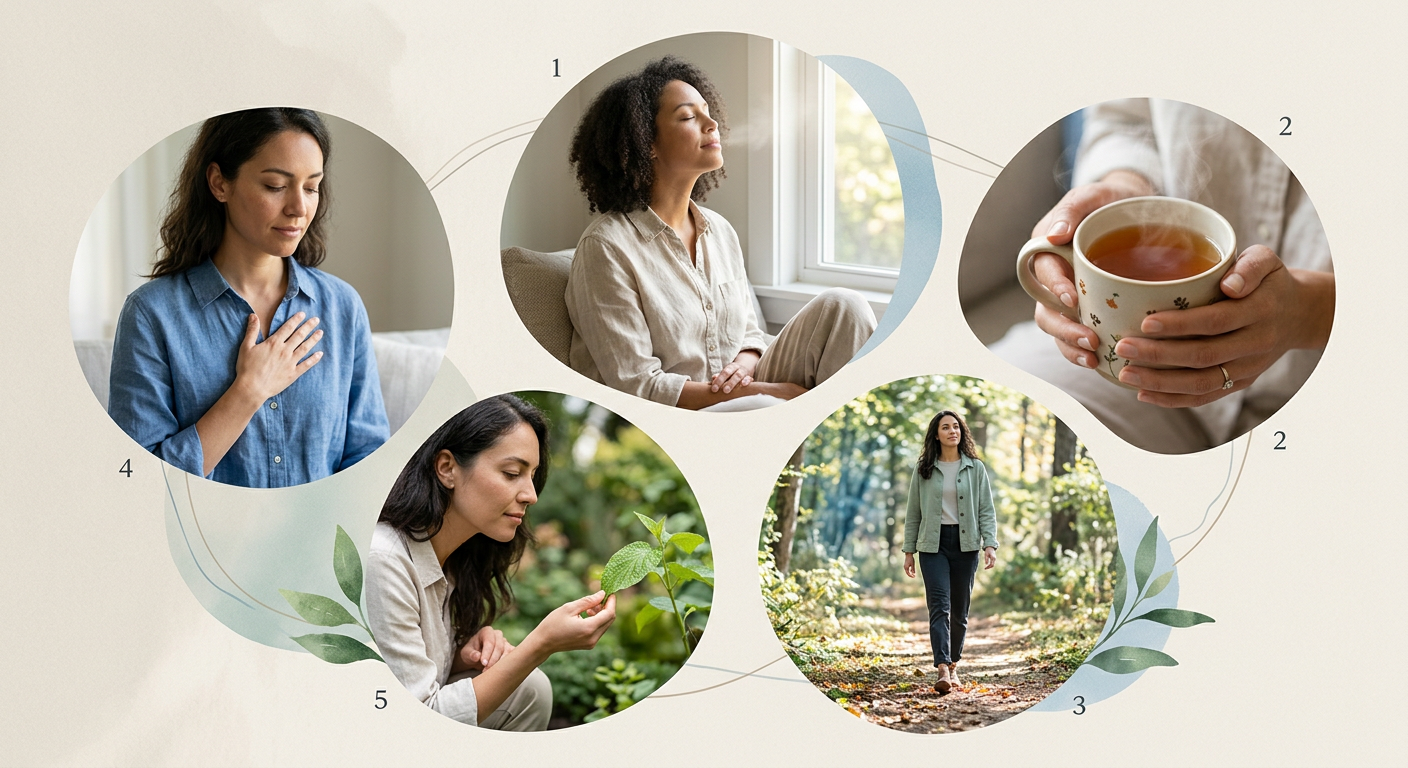
Five Mindfulness Exercises for Stress Relief
These five practices give us several ways to interrupt stress without pretending it does not exist. Try one for a week before deciding whether it fits, rather than cycling through several methods in a single day.
Box Breathing for Fast, Structured Calm
Box breathing gives the mind a simple job when it is crowded with worries. We inhale for a count of four, hold for four, exhale for four, and hold again for four, repeating the cycle for one to two minutes.
Keep the breath comfortable, not forced. If holding the breath feels unpleasant, skip the pauses and use an even inhale and exhale instead. The goal is a steadier rhythm, not perfect timing.
A Body Scan When Stress Feels Physical
A body scan helps us spot tension that has become so familiar we barely register it. Starting at the feet and moving slowly upward, we notice sensations in each area, such as warmth, pressure, tightness, tingling, or ease.
We do not have to relax every muscle on command. Naming what we feel without judging it can create enough distance to soften the automatic clench in the jaw, shoulders, hands, or stomach. The large 2024 trial noted earlier found particularly strong short-term stress benefits from this type of practice. Read the full study
The Five Senses Reset for Overthinking
The five senses reset directs attention from the mental spiral to the immediate environment. We slowly identify five things we can see, four we can feel, three we can hear, two we can smell, and one we can taste.
This is especially useful when we are in a busy office, waiting in the car, or dealing with a stressful transition at home. We are not trying to erase the problem. We are giving the nervous system a brief signal that the present moment is manageable.
Mindful Walking for Restless Energy
Mindful walking is a strong option when sitting still makes stress louder. We walk at a natural pace and place our attention on the lift of one foot, the contact with the ground, the shift of weight, and the sounds around us.
For fitness-minded readers, this can fit neatly into a warm-up, cool-down, or lunchtime walk. There is no need to make the walk long or solemn. Five minutes without headphones can be enough to create a useful mental reset.
A Self-Compassion Pause After a Hard Moment
Self-criticism often adds a second layer of strain to an already difficult situation. In a self-compassion pause, we acknowledge that the moment is hard, remind ourselves that difficulty is part of being human, then offer a supportive phrase such as, “May I give myself what I need right now.”
This practice is not an excuse to avoid accountability. It helps us respond to mistakes, conflict, and disappointing news without escalating stress through harsh inner commentary.
Build a Day 4 Routine That Makes Mindfulness Stick
By the fourth day, the goal is not to become an expert meditator. It is to turn one helpful exercise into a dependable cue that we can use before stress becomes overwhelming.
For the first three days, test one exercise at the same time each day. On Day 4, add a second, shorter practice tied to a predictable pressure point. For example, we might use mindful walking after lunch and a 90-second breathing practice before opening email or joining a meeting.
This progression matters because habits become easier when the cue is obvious. Instead of relying on motivation, we connect the practice to something that already happens.
A Simple Day 4 Plan
- Morning: Use three rounds of box breathing before checking messages.
- Midday: Take a five-minute mindful walk, paying attention to movement and sound.
- Evening: Do a brief body scan after changing out of work clothes or before getting into bed.
- During a difficult moment: Use the self-compassion pause before replying, deciding, or explaining.
We can keep a note on our phone with one question: “What changed after two minutes?” Some days, the answer will be “not much.” Other days, we may notice unclenched shoulders, a slower pace, or a more thoughtful response. Those small shifts are worth tracking because they show which practice fits our real life.
What Mindfulness Can and Cannot Do for Stress
Mindfulness can help us relate to stress differently, but it is not a cure-all and it should not become another demand for constant calm. It works best as one part of a wider foundation that can include sleep, movement, nourishing meals, social support, boundaries, and professional care when needed.
The National Center for Complementary and Integrative Health notes that mindfulness meditation may help with symptoms of stress, anxiety, depression, and sleep difficulties, while also emphasizing that results vary and some evidence remains limited or mixed. NCCIH guidance on mindfulness
It is also important to be honest about discomfort. NCCIH reports that a review of 83 studies found negative experiences related to meditation in about 8 percent of participants, commonly anxiety or depression. If a practice leaves us feeling more distressed, numb, panicked, or overwhelmed, we should stop, ground ourselves with a familiar activity, and consider speaking with a qualified health professional. NCCIH safety information

Common Mistakes That Make Practice Harder
Mindfulness is straightforward, but unrealistic expectations can make it feel frustrating. We can avoid several common traps by adjusting how we define progress.
Expecting a Blank Mind
Thoughts are not evidence that we are doing it wrong. The practice is noticing that attention has wandered and gently returning it, again and again.
Waiting Until We Are Overwhelmed
A practice learned only in crisis can feel unfamiliar when we need it most. Brief daily repetition builds familiarity, so we have a tool ready for an intense moment.
Treating It Like a Productivity Hack
Mindfulness may improve focus, but chasing perfect output can create more pressure. A better question is whether the practice helps us become more present, less reactive, and more able to choose what matters next.
Frequently Asked Questions
How long should a mindfulness exercise last?
Two to 10 minutes is enough to begin. Short sessions are more likely to become a regular habit, and we can increase the time later if it feels useful.
Is mindfulness the same as meditation?
Meditation is a broad category of practices, while mindfulness is a way of paying attention to the present moment with openness and less judgment. Many meditations use mindfulness, but we can also practice it while walking, eating, or doing routine tasks.
Can mindfulness help when I am stressed at work?
Yes, especially when we choose discreet exercises such as steady breathing, a five senses check-in, or noticing our feet on the floor. These practices will not fix an unhealthy workload, but they can create a pause before we react.
Should I use an app to practice mindfulness?
An app can be helpful if guided audio and reminders make it easier to stay consistent. It is optional, though. A timer, a note card, or a few remembered steps are enough for many people.
What if focusing on my breath makes me anxious?
Choose another anchor, such as sounds in the room, contact between your feet and the ground, or objects you can see. Mindfulness should be adaptable, and breath focus is not the only valid approach.
Can mindfulness replace therapy or medical care?
No. Mindfulness can complement professional support, but it should not replace care for persistent anxiety, depression, trauma symptoms, panic, or other health concerns.
Make Space for a Calmer Daily Rhythm
We do not need to overhaul our lives to begin feeling the benefit of a small pause. Pick one exercise that feels realistic, attach it to a daily cue, and give it enough repetitions to become familiar.
For more ideas on building healthier routines around sleep, habits, movement, and everyday well-being, visit ContentBeast. A consistent two-minute practice can become a practical way to meet stressful moments with more awareness and less automatic reaction.
A Small Pause Can Change the Next Choice
Mindfulness does not promise a life without pressure, conflict, or uncertainty. It gives us a moment of space inside those experiences, which can be enough to breathe more steadily, speak more thoughtfully, or take one constructive next step.
Start with the exercise that feels least intimidating. When we practice it before we desperately need it, we build a steadier response that can travel with us through the ordinary stress of real life.