
Sleep has a way of exposing everything else that is off in your routine. When you feel groggy, unfocused, or strangely irritable the next day, the problem often is not just how long you slept, it is how well you slept.
That is why natural ways to improve deep sleep matter so much. Deep sleep supports physical recovery, memory, mood, and overall resilience, and the good news is that you can often improve it with small, practical changes instead of complicated gadgets or expensive fixes.
Why Deep Sleep Matters
Deep sleep, also called slow-wave sleep, is the stage when your body does some of its most important repair work. This is when tissue recovery, immune support, and many restorative processes are thought to be strongest.
If you train regularly, deep sleep helps your muscles recover. If you are focused on productivity or money management, better sleep can improve decision-making and reduce stress spending. If you care for pets, you already know how much calmer everything feels when the household is rested.
1. Keep a Consistent Sleep Schedule
One of the most effective changes is also one of the simplest. Go to bed and wake up at about the same time every day, including weekends.
Your body likes rhythm. A steady schedule helps your internal clock predict when to release sleep signals, which can make it easier to fall asleep and spend more time in deeper stages overnight.
2. Get Bright Light in the Morning
Morning light is a powerful cue for your circadian rhythm. Try stepping outside soon after waking, even for 10 to 20 minutes.
If you work indoors, open the blinds right away or sit near a bright window. This can help you feel more alert early in the day and sleep more deeply later that night.
3. Reduce Evening Light Exposure
Late-night screen time can make it harder to wind down. Bright light, especially from phones and tablets, can delay your body’s natural sleep signals.
A helpful habit is to dim lights in the evening and put screens away 30 to 60 minutes before bed. If that feels unrealistic, start smaller. Even a short screen-free window can make a difference over time.
4. Make Your Bedroom Cooler and Darker

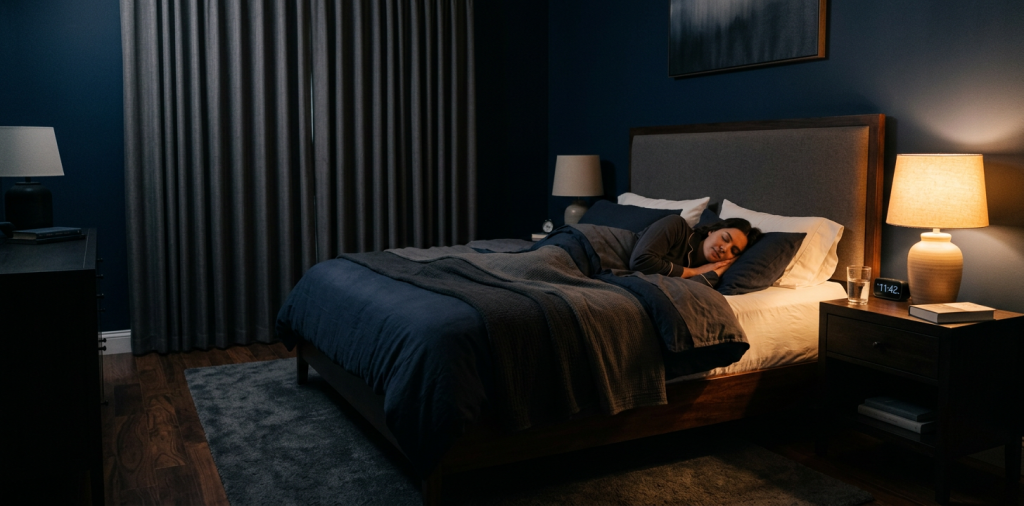
Temperature and light matter more than most people realize. A cool, dark room usually supports better sleep quality than a warm or brightly lit space.
Aim for a bedroom that feels calm and uncluttered. Blackout curtains, a fan, or breathable bedding can help create better conditions for deeper sleep without spending a fortune.
5. Watch Caffeine and Alcohol Timing
Caffeine can stay in your system longer than you think, so afternoon coffee may still be affecting you at night. If deep sleep is a priority, consider cutting off caffeine earlier in the day.
Alcohol is also tricky. It may help you fall asleep faster, but it can fragment sleep and reduce sleep quality later in the night. If you drink, keep it moderate and avoid making it a bedtime habit.
6. Exercise Regularly, But Time It Well
Exercise supports better sleep overall, and for many people it can improve deep sleep too. A regular mix of walking, strength training, and cardio is a strong foundation.
The timing matters. Intense workouts very late at night can be stimulating for some people, so experiment and see what works best for your body. Morning or afternoon workouts are often the easiest fit.
7. Use a Simple Wind-Down Routine
Your brain needs a transition between “go mode” and sleep mode. A repeatable wind-down routine helps signal that the day is ending.
Try a short sequence like these:
- Dim the lights
- Take a warm shower
- Read a few pages of a book
- Do slow breathing for 5 minutes
- Write down tomorrow’s tasks
The routine does not have to be fancy. It just has to be consistent.
8. Keep Meals and Heavy Snacks Earlier
Late, heavy meals can make sleep less comfortable. If you eat too close to bedtime, your body may spend more energy digesting instead of resting.
A lighter evening meal and a buffer of at least a couple of hours before bed can help. If you need a snack, keep it small and easy to digest.
9. Manage Stress Before It Builds Up
Stress is one of the biggest sleep disruptors. If your mind races at night, your body may struggle to settle into deeper sleep stages.
A few minutes of mindfulness, journaling, stretching, or breathing practice can help. Even a simple “brain dump” list of unfinished tasks may reduce mental clutter and help you relax.
A Few Realistic Lifestyle Upgrades That Pay Off
The best part about improving sleep naturally is that many of these habits cost little or nothing. That makes them especially appealing if you want better health without buying a stack of supplements or devices.
For readers who are budget-conscious, this is a strong reminder that the highest-value sleep improvements are often behavioral, not financial. A dark room, a routine, and better timing often beat shiny products.
FAQ
How much deep sleep do you need?
It varies by age and individual factors, but deep sleep generally makes up a smaller portion of the night than lighter sleep stages. The goal is not to obsess over a number, but to improve how rested you feel.
Can naps reduce deep sleep at night?
They can, especially if naps are long or taken late in the day. If you nap, keep it short and earlier in the afternoon.
Do supplements help deep sleep naturally?
Some people try magnesium or melatonin, but results vary and they are not the first thing to fix. It is usually smarter to focus on sleep habits, light exposure, and stress management first.
What is the fastest habit to try tonight?
Start with two things, dim the lights and put your phone away earlier. Those changes are simple, free, and often surprisingly effective.
Why do I wake up tired even after enough hours of sleep?
You may be getting enough total sleep but not enough quality sleep. Deep sleep can be disrupted by stress, alcohol, irregular schedules, or a poor sleep environment.
Can pets affect deep sleep?
Yes, pets can interrupt sleep if they move around, snore, or wake you during the night. If that is happening, try adjusting your pet’s bedtime routine or sleep location.
Make Better Sleep Part of Your Routine
If you want better energy, better focus, and a calmer day, start with one habit tonight instead of trying to change everything at once. The most reliable natural ways to improve deep sleep are the ones you can actually repeat.
For more practical wellness ideas and simple habit upgrades, visit Content Beast and keep building a routine that supports better rest.
Final Thoughts
Deep sleep is not something you need to chase with perfection. It usually improves when your daily habits give your body the right signals, consistent timing, less evening stimulation, better light exposure, and a more relaxed mind.
Pick one or two changes, stay consistent for a couple of weeks, and pay attention to how you feel. That is often where the real progress starts.