
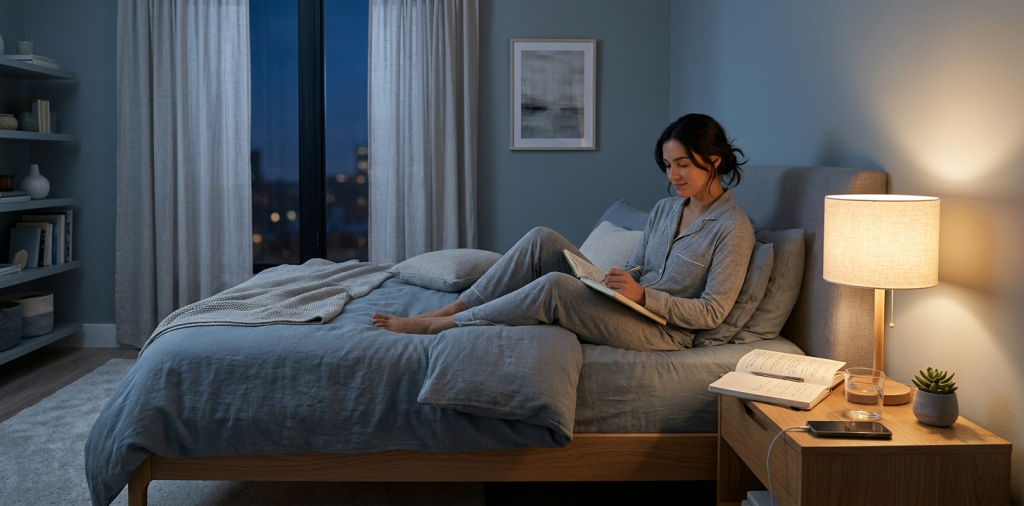
Many people treat bedtime like a switch, as if the mind should simply power down on command. If you live with anxiety, you already know it does not work that way. The real goal is not to force sleep, it is to create a predictable landing strip for your brain and body.
A strong bedtime routine for anxiety can reduce the mental noise that shows up the moment the lights go out. It gives you repeatable cues, lowers stimulation, and helps your nervous system recognize that the day is ending safely.
Why Anxiety Feels Worse At Night
At night, distractions fade. There are fewer tasks, fewer notifications, and fewer reasons to stay mentally occupied. That silence can make anxious thoughts feel louder than they did earlier in the day.
Sleep pressure also builds the longer you stay awake, but anxiety can make your body feel alert even when you are tired. The result is a frustrating loop, you want rest, but your mind keeps scanning for problems.
What A Bedtime Routine Should Do
A useful routine does not need to be long or complicated. It should do three things well:
- Signal safety to your nervous system
- Reduce physical and mental stimulation
- Repeat the same pattern often enough to feel familiar
Think of it as a sequence, not a performance. If you do the same calming actions every night, your brain starts to connect them with sleep.
Step 1: Pick A Consistent Wind-Down Time
Start by choosing a time to begin your routine, not just a time to get into bed. For many people, 30 to 60 minutes is enough. Consistency matters more than length.
If your schedule changes often, anchor the routine to an event you already do every night, like washing dishes, brushing your teeth, or feeding a pet. That makes the habit easier to remember and harder to skip.
Step 2: Lower Stimulation Gradually
Your brain does not love abrupt transitions. If you go from work, scrolling, texting, or intense TV straight into bed, your nervous system may still be revved up.
Try this simple progression:
- Dim the lights
- Put your phone on do not disturb
- Turn off loud or fast-paced media
- Switch to calming activities
For pet owners, this can also be a good time to do a final walk or quiet play session with your dog, so both of you settle at the same pace.
Step 3: Use A Repetitive Relaxation Sequence
Choose 3 to 5 actions you can repeat in the same order each night. The exact list matters less than the consistency.
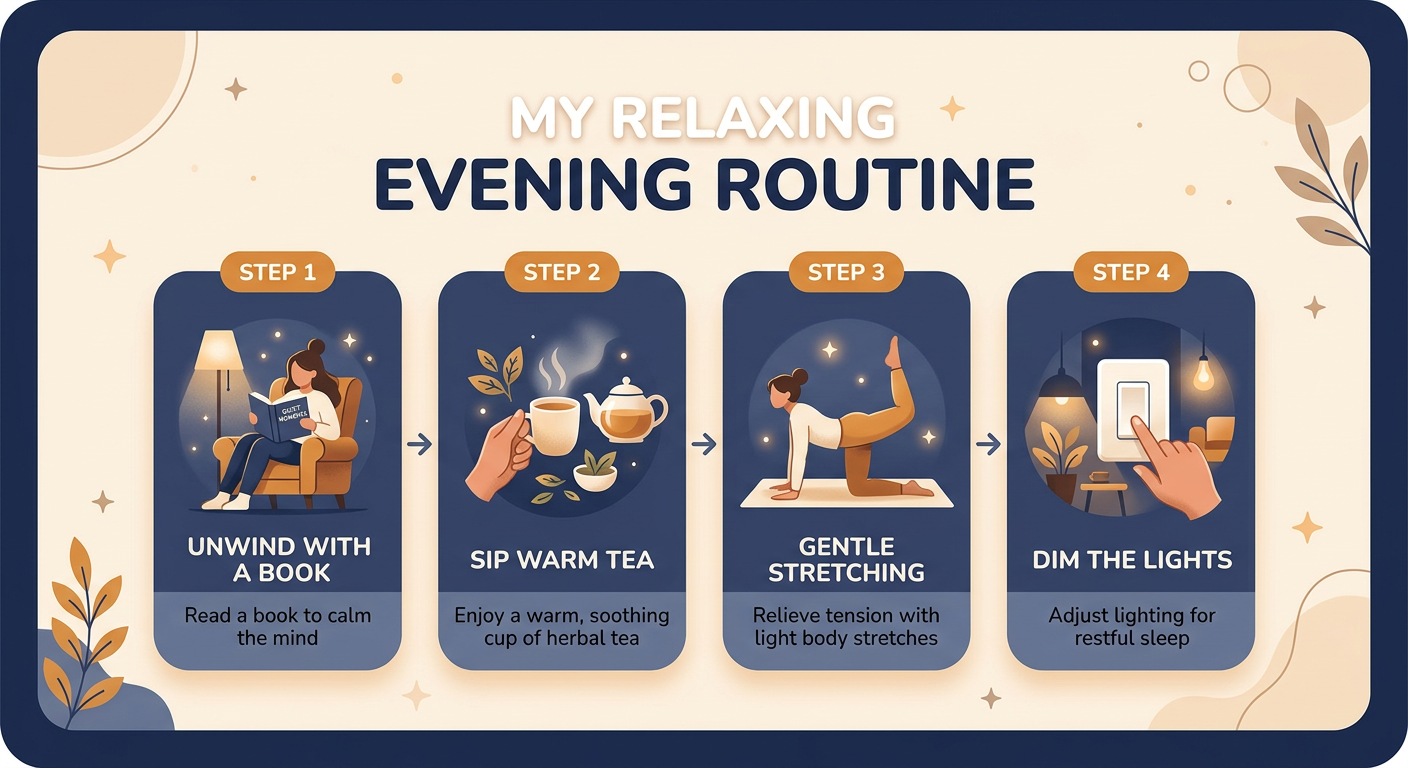
A good sequence might look like this:
- Wash up and change into sleepwear
- Make tomorrow easier by setting out clothes or packing a bag
- Write down lingering thoughts or tasks
- Do 5 to 10 minutes of stretching or breathing
- Read a few pages of something calm
This kind of structure helps because it reduces decision-making, which is often exhausting when anxiety is already high.
Step 4: Get The Worry Out Of Your Head
Anxious thoughts often feel bigger when they stay vague. A short brain dump can help you move them onto paper instead of carrying them into bed.
You do not need a polished journal entry. Just answer three prompts:
- What is on my mind?
- What can wait until tomorrow?
- What is one small next step?
If you want a more mindful approach, pair this with a few slow breaths and remind yourself that you are not solving the problem tonight, you are simply parking it for later.
Step 5: Make Your Bedroom Work For Sleep
Your environment matters more than most people realize. A bedroom that is too bright, noisy, warm, or cluttered can keep anxiety active.
Focus on the basics:
- Keep the room cool and dark
- Reduce noise with a fan or white noise
- Reserve the bed for sleep and rest when possible
- Keep clutter low and surfaces simple
Even small changes can make bedtime feel more stable and less mentally crowded.
Step 6: Keep Your Routine Gentle, Not Perfect
This is where many people get stuck. They build a routine, miss it once, and assume they failed. That mindset creates extra stress, which is the opposite of what you want.
A better rule is this, if you can do 70 percent of your routine on a rough night, that still counts. Flexibility makes the habit sustainable.
A Sample Bedtime Routine For Anxiety
Here is a simple version you can try tonight:
- 9:00 p.m., dim lights and stop checking work messages
- 9:10 p.m., tidy your space and prep for tomorrow
- 9:20 p.m., write down worries or tasks
- 9:30 p.m., stretch or do slow breathing
- 9:40 p.m., read quietly or listen to calming audio
- 10:00 p.m., lights out
You can shorten this or stretch it depending on your schedule. The point is to create a repeatable rhythm your brain can learn.
What To Avoid Before Bed
A routine works best when it removes common triggers. Try to avoid:
- Caffeine too late in the day
- Intense workouts right before bed if they leave you wired
- Doomscrolling or emotionally charged content
- Work emails or task planning in bed
- Alcohol as a sleep strategy, since it can disrupt sleep quality
If you notice one habit makes your mind race, that is useful information. Adjusting one trigger can sometimes do more than adding another relaxation step.
When Anxiety Keeps Disrupting Sleep
If anxiety is frequent, severe, or affecting your daily life, a bedtime routine may help but it may not be enough on its own. Cognitive behavioral therapy for insomnia, anxiety treatment, and sleep-focused support can make a big difference.
If you are dealing with panic, intrusive thoughts, or long-term sleep problems, it is worth speaking with a licensed clinician. A routine is a tool, not a substitute for care.
FAQ
How long should a bedtime routine for anxiety be?
Most people do well with 30 to 60 minutes, but even 10 to 15 minutes can help if that is what you can keep up consistently.
What is the best thing to do before bed when anxious?
The best choice is usually something that lowers stimulation and gives your mind a predictable cue, such as reading, stretching, journaling, or slow breathing.
Should I meditate if my anxiety is high at night?
You can, but keep it simple. If meditation feels frustrating, try guided breathing, a body scan, or quiet journaling instead.
Can exercise help my bedtime routine?
Yes, regular exercise can support sleep and anxiety management, but timing matters. For some people, hard workouts too late in the evening can be energizing rather than calming.
What if I cannot follow the routine every night?
That is normal. Keep a shorter backup version for busy nights so you still have a predictable pattern.
Does using my phone before bed make anxiety worse?
It can. The combination of light, stimulation, and endless content may keep your brain alert longer than you want.
Make Tonight Easier
The best bedtime routine is the one you will actually repeat. Start small, keep it predictable, and focus on calming your nervous system instead of chasing perfect sleep.
If you want more practical guidance on habits, wellness, and simple routines that improve daily life, visit https://contentbeast.com and keep building a calmer night, one small step at a time.
Final Takeaway
Anxiety does not mean bedtime has to feel like a battle. With a steady sequence, lower stimulation, and a few repeatable calming habits, you can train your brain to expect rest instead of alertness. Keep it simple, keep it consistent, and give the routine time to work.