Bringing home a puppy is exciting, until those tiny teeth turn every sleeve, hand, and ankle into a target. The good news is that biting is normal puppy behavior, and with the right plan, you can shape it quickly without turning training into a battle.
The key is consistency. Puppies learn through repetition, timing, and clear boundaries, so the fastest progress usually comes from small, repeatable habits you use every day.
Why Puppies Bite in the First Place
Puppies bite for several normal reasons:
- They are exploring the world with their mouths.
- They are teething and want relief.
- They are overstimulated or tired.
- They are trying to keep play going.
That means the goal is not to punish biting, but to teach better choices. If you can identify why your puppy is biting, you can respond in a way that actually helps.
Teach Bite Inhibition Early
One of the most useful skills in puppy training is bite inhibition, which means helping your puppy learn to use a softer mouth. This matters because even friendly mouthing can become painful if your dog never learns control.
When your puppy bites too hard during play:
- Let out a brief, calm “ouch” or stop play immediately.
- Freeze for a moment so the fun ends.
- Resume only when your puppy is calm.
This teaches an important lesson, biting makes the good stuff stop. Keep your response steady and boring, not dramatic.
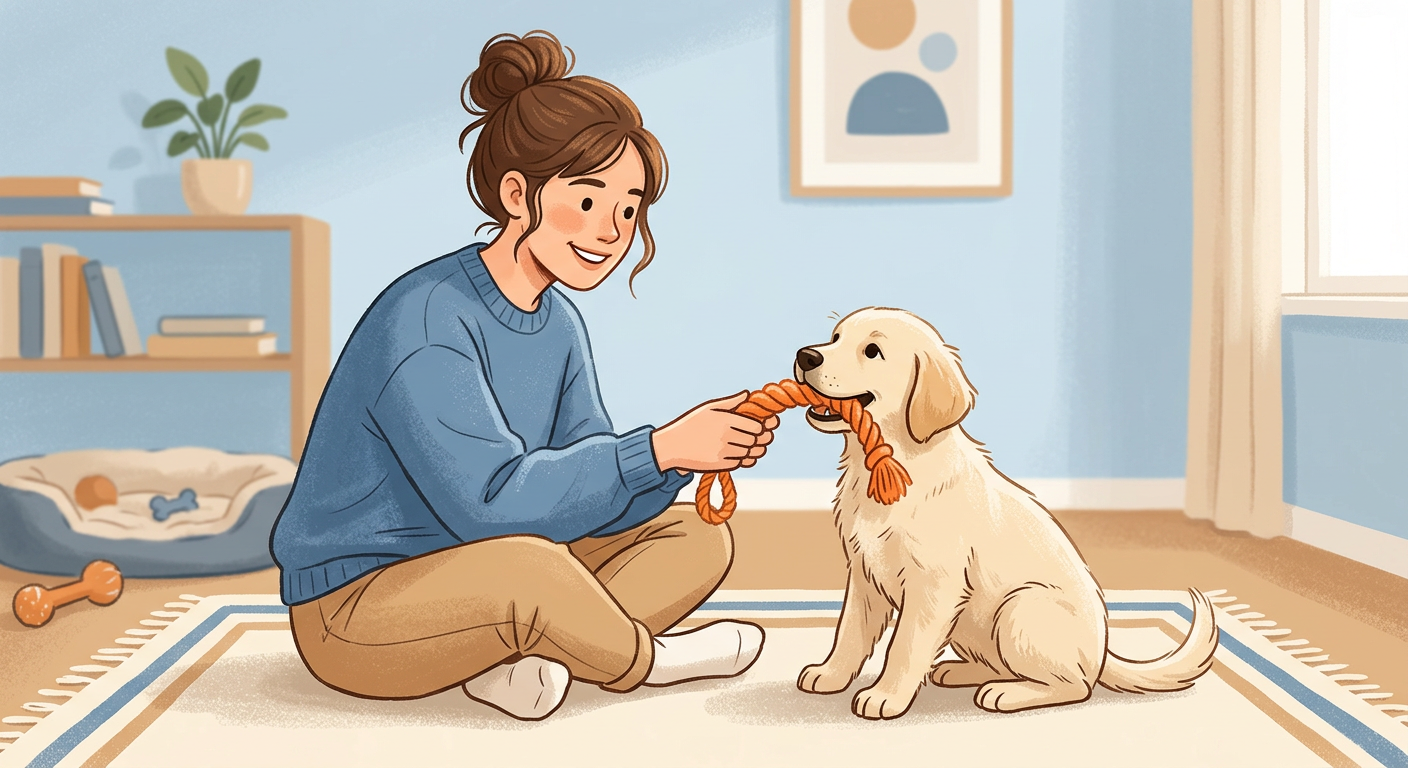
Redirect to the Right Chew Toys
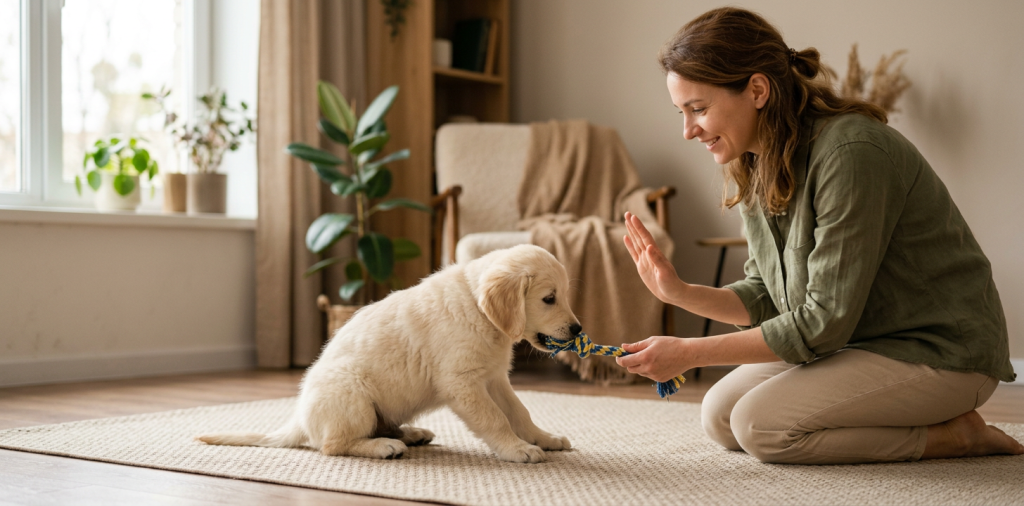
Your puppy needs legal outlets for all that chewing energy. Keep approved chew toys close by so you can redirect the moment teeth touch skin or clothing.
Good options include:
- Rubber chew toys
- Rope toys for supervised play
- Frozen puppy-safe chews
- Food puzzle toys
If your puppy starts biting your hands, immediately offer a toy instead. The timing matters, because puppies usually repeat whatever gets rewarded fastest.
Manage Excitement Before It Turns Into Biting
A lot of biting happens when puppies get overexcited. Zoomies, rough play, and too much stimulation can push them past the point where they can think clearly.
Try to prevent those meltdowns with structure:
- Keep play sessions short.
- Use a predictable routine.
- Build in nap time.
- Avoid encouraging wild wrestling with hands.
Puppies often bite more when they are tired, not just when they are playful. If your puppy gets nippy at the same time every day, sleep may be the real issue.
Use Time-Outs the Right Way
If redirection and play stops are not enough, a brief time-out can help. The idea is simple, biting ends the interaction.
Here’s how to do it:
- Calmly stand up and stop the game.
- Remove attention for 20 to 30 seconds.
- Return only when your puppy is settled.
Keep it short. You are not trying to scare your puppy, just showing that rough behavior pauses the fun.
Reward Calm Behavior
Training works best when you notice what your puppy does right. If your puppy licks gently, sits, or plays with a toy instead of your fingers, reward that behavior immediately.
You can use:
- Treats
- Praise
- Gentle petting if your puppy enjoys it
- More play with an appropriate toy
Positive reinforcement helps your puppy repeat calm behavior because it clearly pays off.
Avoid Common Mistakes
Some popular advice actually makes biting worse. Try to avoid these mistakes:
- Yelling, which can excite some puppies more.
- Using your hands as toys.
- Physically punishing your puppy.
- Allowing rough play to escalate.
If your puppy learns that hands are exciting and unpredictable, biting becomes part of the game. Clear and calm training works much better.
When to Get Extra Help
Most puppy biting improves with age and consistency, but some cases need more support. Consider talking to a professional trainer or veterinarian if:
- The biting is intense or frequent.
- Your puppy seems fearful or aggressive.
- Nothing changes after several weeks of training.
- The behavior suddenly gets worse.
A professional can help you rule out pain, anxiety, or a training gap.
FAQ
How long does puppy biting usually last?
Most puppies improve significantly over several months, especially with consistent training. Teething often peaks during the early puppy stage, but the habit fades faster when you redirect, manage excitement, and reward calm behavior.
Should I yell when my puppy bites?
Usually no. Loud reactions can make some puppies more excited. A calm stop-play response is often more effective because it removes the reward without creating extra stimulation.
Is puppy mouthing the same as biting?
Not exactly. Mouthing is gentler and often exploratory, while biting is harder and more likely to hurt. Even so, both should be redirected so your puppy learns that human skin is off-limits.
What if my puppy only bites when excited?
That is very common. Shorter play sessions, more rest, and earlier redirection usually help. If your puppy gets overstimulated easily, try ending play before the biting starts.
Are chew toys enough to stop biting?
Chew toys help a lot, but they work best as part of a bigger plan. You still need to manage excitement, stop play when biting happens, and reward calm interactions.
Can teething make puppy biting worse?
Yes. Teething can increase chewing and mouthing because it feels uncomfortable. Frozen puppy-safe chews and plenty of approved toys can help during this phase.
A Simple Daily Plan That Works
If you want a practical routine, keep it simple:
- Start the day with a short training session.
- Use toys for play, not hands.
- Stop interaction immediately when biting starts.
- Reward calm moments often.
- Make sure your puppy gets enough rest.
This kind of structure creates faster progress because your puppy gets the same message every time.
Final Thoughts
Stopping puppy biting is not about winning a power struggle. It is about teaching your puppy that gentle behavior keeps play going, while biting ends the fun.
Stay patient, stay consistent, and focus on redirection, rest, and rewards. With those basics in place, most puppies learn quickly and grow into much better-mannered companions.
Ready to Build Better Puppy Habits?
If you want more practical, easy-to-follow advice for everyday life improvements, visit Content Beast for more helpful guides. Keep building small habits now, and your puppy training will feel a lot easier in the long run.