

When every payday already seems assigned to rent, groceries, transportation, and bills, a budget can feel like another reminder that money is tight. We see it differently. A workable plan is not about guilt, perfection, or saying no to every enjoyable thing. It is about giving each dollar a job before it quietly disappears.
These budgeting tips for young adults living paycheck to paycheck are built for real life, including uneven work hours, rising costs, credit card balances, student loans, and the occasional need for takeout after a long week. We are aiming for breathing room first, then progress.
Build a Budget Around Your Actual Paycheck
The most common budgeting mistake is planning with gross pay or an optimistic estimate of next month’s income. Use the amount that actually lands in your bank account, after taxes, benefits, and any automatic deductions. If your income changes from paycheck to paycheck, base your plan on the lowest reliable amount you received during the past few months.
The Federal Reserve reported that 47 percent of adults ages 18 to 29 received help from someone outside their household to cover an expense during the prior year. That number is a useful reminder that financial strain is common, not a personal failure. Start with a plan that works with the money you have, rather than a plan designed for someone else’s situation. Federal Reserve report on household well-being
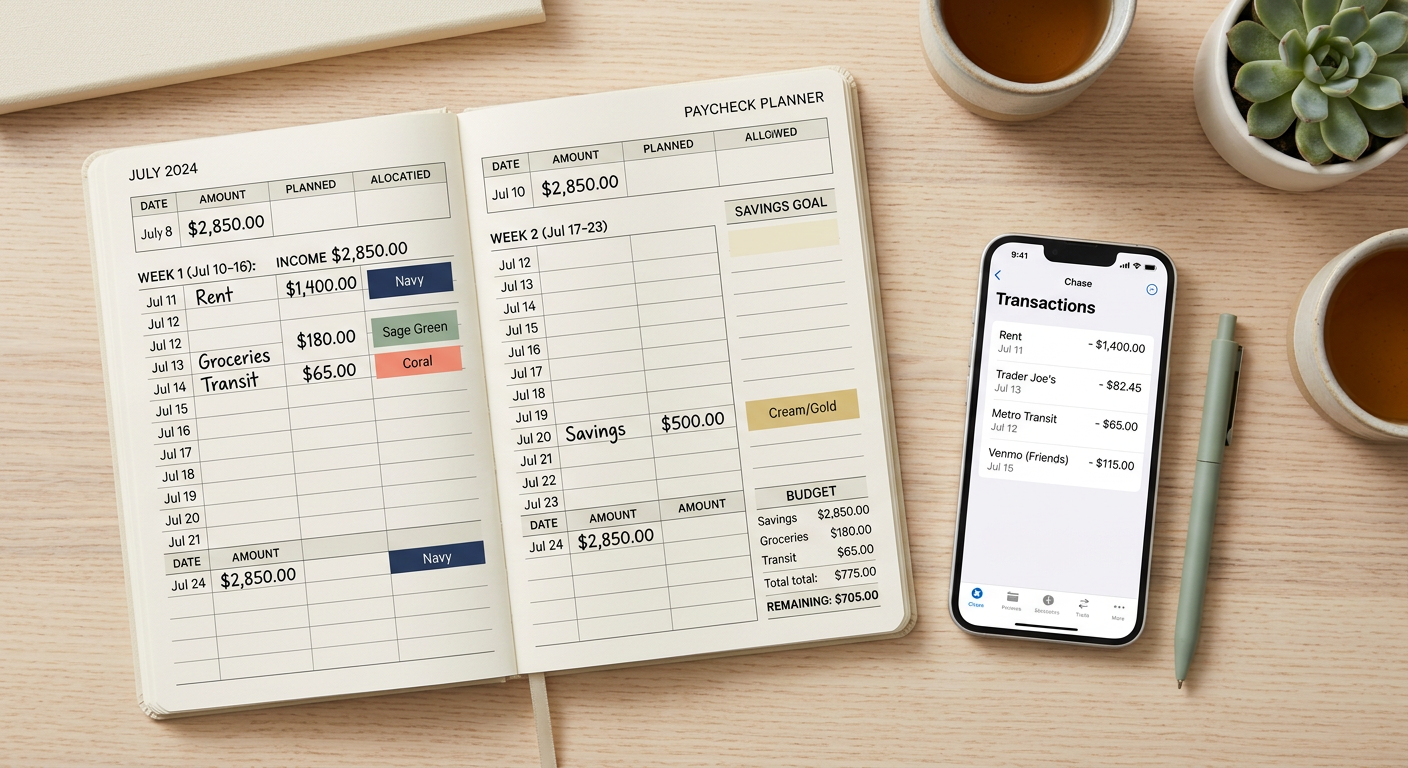
Try a paycheck-based layout
Instead of creating one large monthly plan and hoping the timing works out, divide your money by pay period. On each payday, set aside amounts for:
- Rent and utilities
- Food and household basics
- Transportation
- Minimum debt payments
- Upcoming bills before the next payday
- A small buffer, even if it is only a few dollars
This approach helps prevent the classic problem of having enough money on paper for the month but not enough cash available when a bill is due.
Find the Leaks Without Punishing Yourself
You do not need to cancel every subscription or stop buying coffee to improve your finances. But you do need to know which spending habits are quietly competing with necessities and goals. Look through the previous 30 days of transactions and mark anything that was unplanned, repeated, or easy to overlook.
The Consumer Financial Protection Bureau recommends tracking spending, income, and bill due dates before creating a working budget. That sequence matters because a realistic spending plan is built from your real behavior, not from wishful thinking. Consumer Financial Protection Bureau budgeting guide
Use three simple spending buckets
Keep categories broad enough that you will actually maintain them:
- Must pay: housing, utilities, groceries, insurance, medication, transportation, and minimum debt payments.
- Flexible needs: gas, personal care, household items, and occasional essentials that vary by week.
- Choice spending: dining out, entertainment, shopping, subscriptions, and convenience purchases.
If the numbers are tight, adjust choice spending first. If that still does not close the gap, take a closer look at recurring costs such as housing, car payments, insurance, phone plans, or debt interest. A budget cannot solve an income shortfall by itself, but it can make the pressure visible and guide the next move.
Give Every Bill a Due Date and a Place to Live
A bill calendar is one of the most useful tools for living from paycheck to paycheck. Write down each due date, expected amount, and the payday that will fund it. This makes it easier to avoid late fees, overdrafts, and the stress of wondering what is coming next.
Here is the thing, timing can matter as much as total income. If your rent is due at the start of the month but your largest paycheck arrives later, split rent money across both prior paychecks. Keep that money in a separate savings account or clearly labeled envelope so it does not get used for something else.
Make sinking funds small and specific
A sinking fund is money set aside gradually for an expense you know is coming. It can be as simple as $10 per payday for car maintenance, annual subscriptions, holiday gifts, pet care, or a friend’s wedding.
The goal is not to fund everything at once. Choose one upcoming expense that usually throws your budget off course, then save a small amount consistently. This creates a smoother cash flow and reduces the urge to rely on high-interest credit when predictable costs arrive.
Start a Tiny Emergency Buffer Before Chasing Big Goals
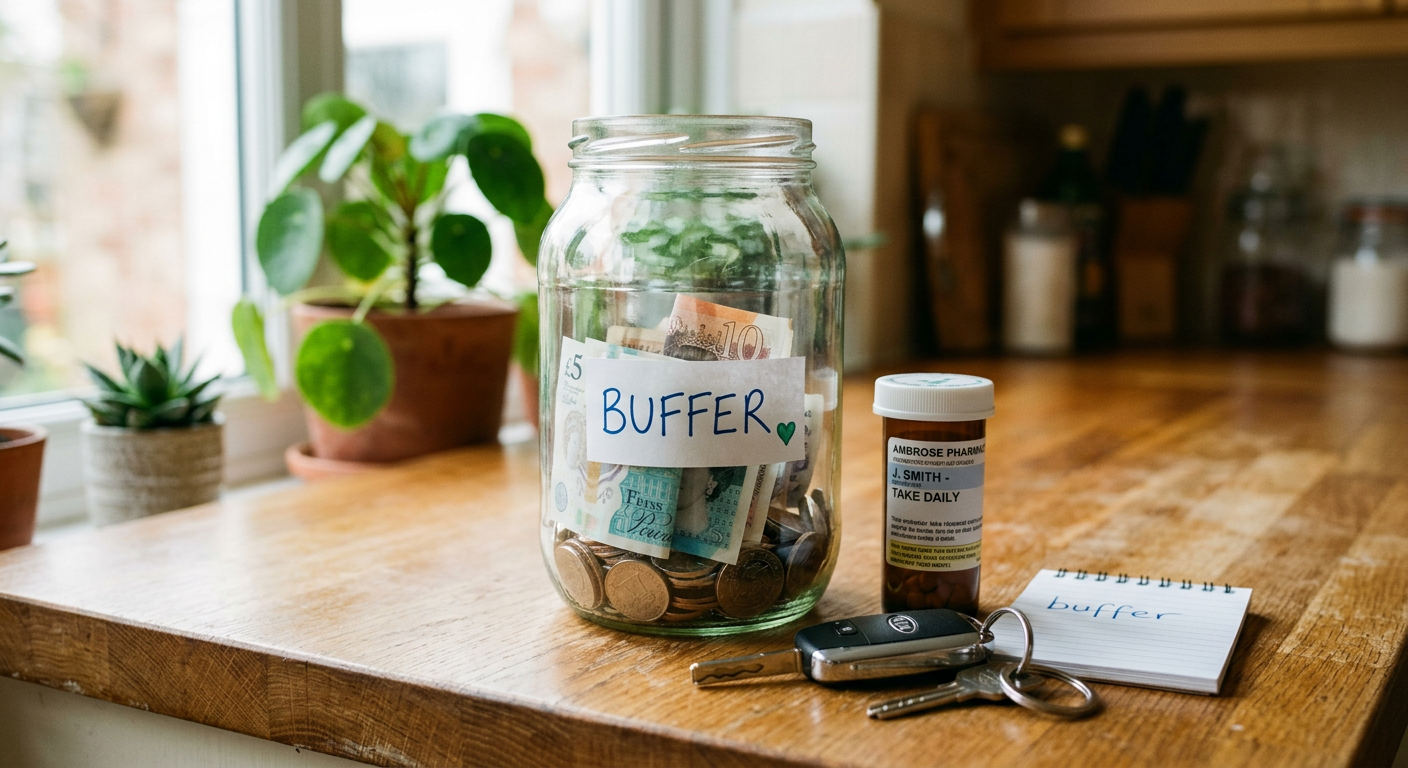
A three- or six-month emergency fund is a great long-term goal, but it may feel impossible when you are trying to make it to the next payday. Begin with a starter buffer of $100, then work toward $250, $500, and beyond. The first milestone matters because even a small reserve can cover a prescription, a flat tire, or a utility shortfall.
In the Federal Reserve’s 2025 household survey, 59 percent of adults reported at least one major unexpected expense during the prior year. Unexpected costs are not rare events, so your plan should make room for them, even in a small way. Federal Reserve data on financial hardships
Automate a realistic amount
Set an automatic transfer for the day after payday, not the day before. Start with an amount that will not force you to pull the money back, such as $5 or $15 per paycheck. Consistency beats a larger transfer that creates a cash crunch.
If automation is not possible, treat your buffer like a bill. Move it manually before you begin flexible spending, then leave it alone unless you face a real emergency.
Reduce Debt Pressure With a Clear Priority Order
When money is limited, minimum payments protect your accounts from falling further behind, but they may not move the balance quickly. Pay every required minimum first. Then direct any extra cash toward the debt with the highest interest rate, while keeping your basic needs and starter emergency buffer protected.
Avoid using new debt to cover ordinary recurring bills whenever possible. If you are already behind, call the lender, landlord, utility company, or medical provider before the due date and ask about payment arrangements or hardship options. A direct conversation can sometimes prevent late fees or give you a little time to reorganize.
Be careful with buy-now-pay-later plans
Splitting a purchase into smaller payments can make an item seem affordable when it is not. Before using one, add every scheduled installment to your bill calendar. If the payment will compete with groceries, rent, or a required debt payment, it is probably not the right purchase for this pay period.
Lower Costs in Ways You Can Keep Doing
Extreme cutbacks tend to last a week or two. Sustainable savings come from choosing a few changes that fit your routine. We might pack lunch three days a week, rotate streaming services instead of carrying several at once, shop with a grocery list, or use a lower-cost phone plan.
Try a 24-hour pause for nonessential online purchases. Add the item to a list, wait a day, and check whether you still want it after looking at your upcoming bills. This creates enough space to separate a passing urge from something you genuinely value.
Protect the habits that support your well-being
A tight budget should not eliminate every source of rest, movement, connection, or fun. Low-cost alternatives can help: a walking group instead of a boutique class, home workouts, library passes, meal planning with friends, or a movie night at home. The point is to make your money support a life you can enjoy, not just a spreadsheet you can survive.
Review the Plan Once a Week, Not Once a Year
A budget works best as a weekly check-in. Pick a consistent time, such as Sunday evening or the morning after payday, and spend 15 minutes checking balances, upcoming bills, and category totals. Then make one adjustment for the week ahead.
Do not label a difficult month as failure. A budget is a feedback tool. If groceries were higher than expected, or a shift was canceled, update the plan and decide what changes are needed next. Small corrections are much easier than trying to fix a month of overspending all at once.
Common Questions About Paycheck-to-Paycheck Budgeting
Should we use the 50/30/20 budget rule?
It can be a helpful starting point, but it is not a requirement. When rent, debt, or transportation takes up more than half of take-home pay, forcing the rule may create frustration. Use your actual fixed costs first, then create flexible categories that fit what remains.
What if our income changes every month?
Build your core plan using your lowest dependable income. Use higher-income pay periods to catch up on bills, add to your buffer, pay down expensive debt, or prepare for a leaner month.
How much should we save if money is extremely tight?
Even $5 per paycheck counts. Start small enough that the money can stay saved, then raise the amount when your cash flow improves. A dependable habit is more valuable than an ambitious number you cannot maintain.
Should we pay off debt or build savings first?
Usually, cover minimum payments and create a small emergency buffer at the same time. After that, prioritize high-interest debt. Without even a modest reserve, one unexpected expense can send you right back to borrowing.
How can we stop overspending on food delivery?
Set a specific delivery limit for each pay period and plan easy backup meals for low-energy nights. Frozen meals, pasta, soup, breakfast foods, and prepped ingredients can be cheaper than an unplanned order without demanding a major cooking project.
What if the budget is negative after cutting extras?
That is a cash-flow problem, not a willpower problem. Look for support through wage increases, extra shifts, benefits you may qualify for, cost-sharing options, debt assistance, or changes to large recurring expenses. A clear negative number gives you a starting point for making a bigger change.
Build a More Confident Money Routine
We publish practical guidance that connects personal finance with healthier habits and everyday well-being. Visit ContentBeast for clear ideas that can help you make steadier decisions with your money, routines, and goals.
Make the Next Paycheck Feel Different
Living paycheck to paycheck is exhausting, but it does not mean you are irresponsible or incapable of improving your situation. Start with one pay period, one bill calendar, and one small buffer. When you can see where your money is going and make decisions before it leaves your account, you create the control that makes larger goals possible.