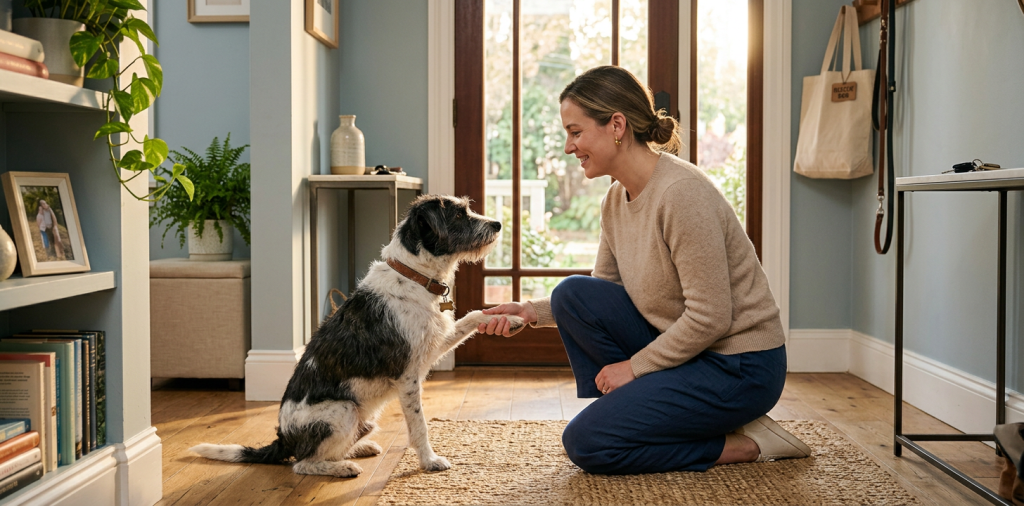
Living with a dog is rewarding, but even a deeply loved pet can develop habits that make daily life stressful. Barking at every passing car, pulling until walks feel like workouts, or finding another accident indoors can test anyone’s patience.
The good news is that common dog behavior problems and how to fix them usually come down to identifying the trigger, preventing rehearsal of the unwanted habit, and rewarding a practical alternative. We do not need to “win” against our dogs. We need to make the right behavior clear, worthwhile, and easy to repeat.
Before changing any behavior, consider what may be driving it. Pain, illness, changes in routine, fear, and unmet exercise or enrichment needs can all show up as behavior concerns. The American Animal Hospital Association notes that a previously house-trained dog that suddenly urinates indoors may have an underlying medical cause, so a veterinary check should be part of the plan when behavior changes abruptly.
Why Common Dog Behavior Problems Develop
Most challenging dog behaviors are functional from the dog’s perspective. A dog barks because barking creates distance from a stranger, jumps because jumping has earned attention before, or pulls because pulling gets them closer to an interesting smell.
This is why consistency matters more than one dramatic correction. The American Veterinary Society of Animal Behavior recommends “only reward-based training methods” for dog training and behavior treatment. That means we focus on teaching skills, managing situations that are too difficult, and reinforcing the choices we want to see again. Read the AVSAB humane training position statement.
Use This Three-Part Framework
- Manage the environment. Prevent the dog from practicing the behavior while they learn.
- Teach an alternative. Give the dog a clear replacement behavior, such as sitting instead of jumping.
- Reward generously. Deliver a treat, toy, access, or attention immediately when the replacement behavior occurs.
Barking at Sounds, Visitors, and Windows
Barking is normal canine communication, but frequent alarm barking can become exhausting. The goal is not to eliminate every bark. It is to reduce the intensity and teach your dog what to do after noticing a trigger.
How to Fix Excessive Barking
Start by reducing exposure. Use privacy film on lower windows, close blinds during busy hours, or move your dog away from the front of the house. For visitors, use a baby gate or a quiet room with a food puzzle before the doorbell rings.
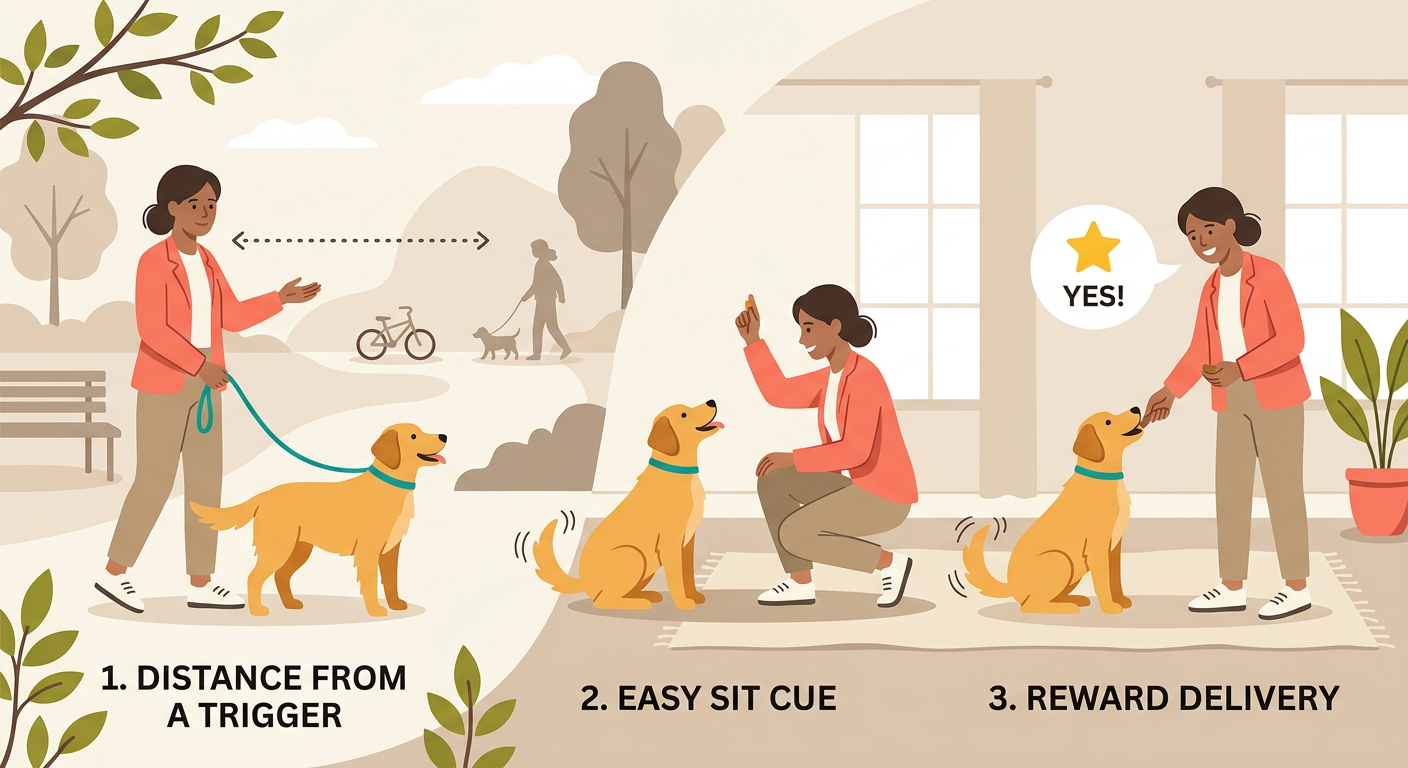
Then teach a simple pattern: your dog hears or sees the trigger, looks back at you, and receives a reward. Begin far enough from the trigger that your dog can still eat and respond. If they are barking nonstop, stiffening, or unable to take food, increase distance and make the exercise easier.
Avoid yelling. From a dog’s perspective, loud human voices can sound like joining the barking. Calm management and repeated reinforcement are more useful.
Jumping on People
Dogs often jump because it works. If jumping occasionally earns eye contact, laughter, petting, or even an excited push away, the behavior can become persistent.
How to Teach a Polite Greeting
Prepare before guests arrive. Keep treats near the entrance and put your dog on a leash or behind a gate if needed. Ask for a sit before any greeting begins, then have the guest offer attention only while all four paws remain on the floor.
If your dog jumps, the person should quietly turn away or step back. The instant paws return to the floor, mark the moment with a calm “yes” and reward. Repetition teaches the real lesson: calm behavior makes people come closer.
Practice with household members first. Short, predictable sessions create faster progress than expecting your dog to succeed during a chaotic family gathering.
Pulling on the Leash
A pulling dog is not necessarily being stubborn. The walk itself is full of rewards, including scents, movement, other dogs, and new places. If forward motion happens while the leash is tight, pulling gets reinforced.
How to Build a Looser-Leash Walk
Choose a quiet starting location and bring high-value treats. Reward your dog beside you every few steps while the leash has slack. If the leash tightens, stop moving rather than jerking the leash. Resume walking only when your dog turns back or creates slack.
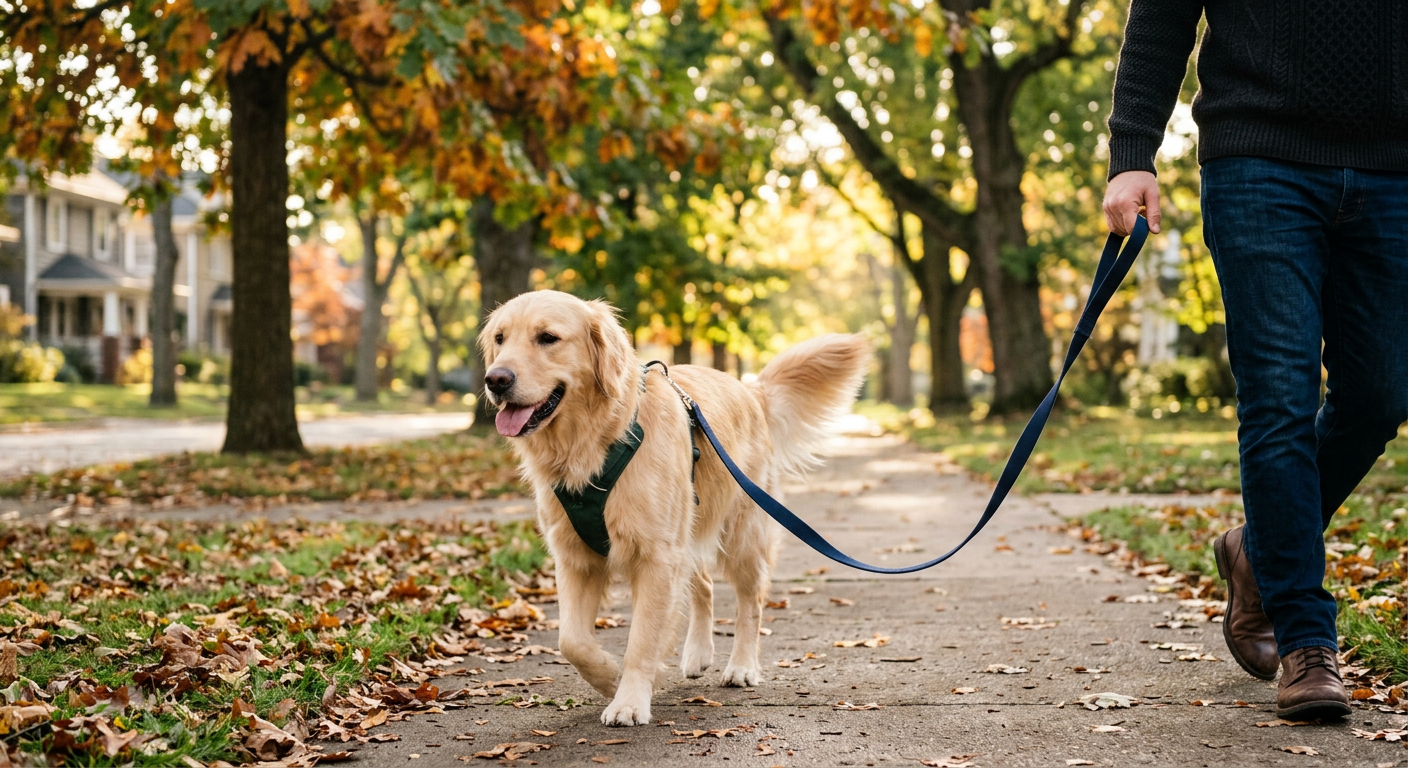
We can also use the environment as a reward. When your dog looks at a squirrel but keeps the leash loose, say “go sniff” and walk together toward an approved sniffing spot. This makes polite leash skills useful to the dog, not just convenient for us.
A front-clip harness can provide extra management while you train. It does not replace training, but it can help reduce strain and improve safety.
Separation Distress and Destructive Chewing
Chewing can be normal, especially for puppies and adolescent dogs. Destruction that occurs mainly when a dog is alone, however, may point to boredom, frustration, or separation-related distress.
How to Tell the Difference
Set up a camera for the first 30 to 60 minutes after you leave. Look for pacing, heavy panting, repeated vocalizing, attempts to escape, drooling, or immediate destruction around doors and windows. These signs deserve more support than simply providing a tougher chew toy.
How to Help Your Dog Settle Alone
For ordinary boredom, rotate safe chews, food puzzles, sniffing games, and age-appropriate exercise. Offer these items before leaving so alone time predicts something enjoyable.
For separation distress, start with absences short enough that your dog stays calm. Return before anxiety escalates, then build duration gradually. Do not use a crate as a solution if your dog panics in confinement, and do not punish damage discovered after you return.
AAHA’s behavior guidance recognizes separation anxiety as a common concern and emphasizes that treatment may combine environmental changes, behavior modification, and medication when appropriate. Discuss severe cases with your veterinarian or a qualified behavior professional. Review AAHA’s behavior management guidance.
House Soiling After Potty Training
Accidents indoors are frustrating, but punishment after the fact does not tell a dog where they should go. It can instead teach them to hide when they need to eliminate.
How to Rebuild Reliable Potty Habits
First, schedule a veterinary visit if the behavior is new, frequent, or paired with increased thirst, discomfort, diarrhea, or straining. Once medical issues are ruled out, reset the routine for a few weeks.
Take your dog out after waking, meals, play, naps, and longer periods of confinement. Go to the same outdoor area, keep the trip boring until they eliminate, and reward immediately after they finish. Indoors, supervise closely or use an appropriate safe containment area when direct supervision is not possible.
Clean old accidents with an enzymatic cleaner. Lingering odor can signal that the same spot remains an acceptable bathroom location.
Fearful or Reactive Behavior Around Dogs and People
Growling, lunging, snapping, and freezing should be treated as communication, not defiance. A dog may be asking for distance because they feel frightened, overwhelmed, or trapped.
How to Respond Safely
Create distance right away. Cross the street, turn around, step behind a visual barrier, or leave the setting. Preventing a reaction is not “giving in.” It protects everyone while preventing the dog from practicing the behavior.
At a comfortable distance, pair the sight of the trigger with small, high-value treats. The trigger appears, treats happen, and the trigger disappears. Over time, carefully managed repetition can help change the dog’s emotional association.
Do not force greetings or punish warning signals. If there has been a bite, if your dog cannot recover quickly after seeing a trigger, or if children are involved, seek professional guidance promptly. The AAHA guidelines emphasize early intervention, and behavior concerns can affect more pets than any other medical condition. Explore AAHA’s evidence-based behavior guidelines.
Resource Guarding Around Food, Toys, or Spaces
Resource guarding may look like freezing, hovering over an item, hard staring, growling, or snapping when someone approaches. The safest first rule is simple: do not take items from a growling dog.
How to Create Safer Habits
Manage access to valuable items around children and other pets. Feed dogs separately, pick up high-value chews when supervision is not possible, and teach a voluntary trade using low-value items first.
Offer a better treat, say “trade,” and allow your dog to move away from the item. Once they take the treat, calmly pick up the original object, then often give it back. Your dog learns that people approaching predict an upgrade, not a loss.
Because resource guarding can lead to bites, get qualified help for any intense or escalating case. Safety gates, leashes, and clear household rules are essential while a treatment plan is underway.
Frequently Asked Questions
How long does it take to fix a dog behavior problem?
Simple habits may improve in a few weeks with consistent practice, while fear, anxiety, and reactivity often require months of careful work. Progress is rarely perfectly linear. We should look for a gradual reduction in intensity, frequency, and recovery time.
Should we ignore bad behavior?
Ignoring can help only when the behavior is attention-seeking and safe, such as mild jumping. It is not appropriate for fear, aggression, panic, unsafe chewing, or house soiling. In those cases, manage the situation and teach a replacement behavior.
Are treats the only way to train a dog?
No. Treats are useful because they are easy to deliver and many dogs value them highly. We can also reward with play, praise, sniffing, access to the yard, or moving forward on a walk.
What if our dog will not take treats during training?
Your dog may be too stressed, too close to the trigger, full, or uninterested in the reward offered. Increase distance, lower the difficulty, try a more appealing reward, or train before a meal with your veterinarian’s feeding guidance in mind.
Can an older dog learn better behavior?
Yes. Older dogs can learn new skills, though sudden behavior changes in senior dogs should be assessed by a veterinarian. Pain, hearing or vision changes, and cognitive changes can influence behavior.
When should we hire a dog trainer or behavior specialist?
Get help when safety is a concern, progress stalls, anxiety is severe, or the issue is disrupting your household. Look for a professional who uses humane, reward-based methods and works collaboratively with your veterinarian when medical or anxiety-related factors may be involved.
Build a Calmer Routine With Practical Pet Guidance
Better behavior starts with better information, realistic expectations, and small steps you can repeat every day. Visit ContentBeast for practical articles that support thoughtful pet care, healthier routines, and everyday problem-solving for a happier home.
A Better Path Forward for You and Your Dog
Dog behavior improves when we stop treating every problem as disobedience and begin looking at the need beneath it. With thoughtful management, reward-based practice, and timely veterinary or professional support, most households can make meaningful progress.
Start with one situation this week. Make it easier for your dog to succeed, reward the behavior you want, and repeat that small win until it becomes the new normal.