

Benefits of Daily Walking: Health Gains That Add Up
A daily walk can be one of the most effective health habits because it asks very little of us and delivers benefits across the body and mind. We do not need expensive equipment, a complicated training plan, or a flawless schedule to begin.
The benefits of daily walking build through repetition. A short walk after lunch, a loop with the dog, or a steady evening stroll can support heart health, sleep, mood, mobility, and the kind of consistency that makes other healthy choices easier to sustain.
Daily Walking Supports Health From Several Directions
Walking benefits our cardiovascular fitness, metabolic health, muscles, joints, brain, and emotional well-being at the same time. The most valuable part is not chasing a perfect step count, it is making movement a dependable part of daily life.
The Centers for Disease Control and Prevention notes that regular physical activity can improve sleep, lower anxiety and depression risk, help manage blood pressure and cholesterol, and reduce the risk of several chronic conditions. It also emphasizes that adults can gain health benefits from doing less than the commonly recommended 150 minutes of moderate activity per week. CDC physical activity benefits
| What Walking Can Support | Why It Matters | A Simple Starting Point |
|---|---|---|
| Heart health | Improves cardiovascular activity | Brisk 10-minute walk |
| Blood sugar balance | Uses large leg muscles after meals | Walk after lunch or dinner |
| Stress relief | Creates a mental reset | Leave the phone in your pocket |
| Better sleep | Supports daily activity rhythms | Walk outdoors earlier in the day |
| Mobility | Maintains leg strength and function | Add gentle hills over time |
A walk is also adaptable. We can go slowly on recovery days, pick up the pace when time is short, walk indoors during bad weather, or use a stroller, mobility aid, or supportive shoes when needed.
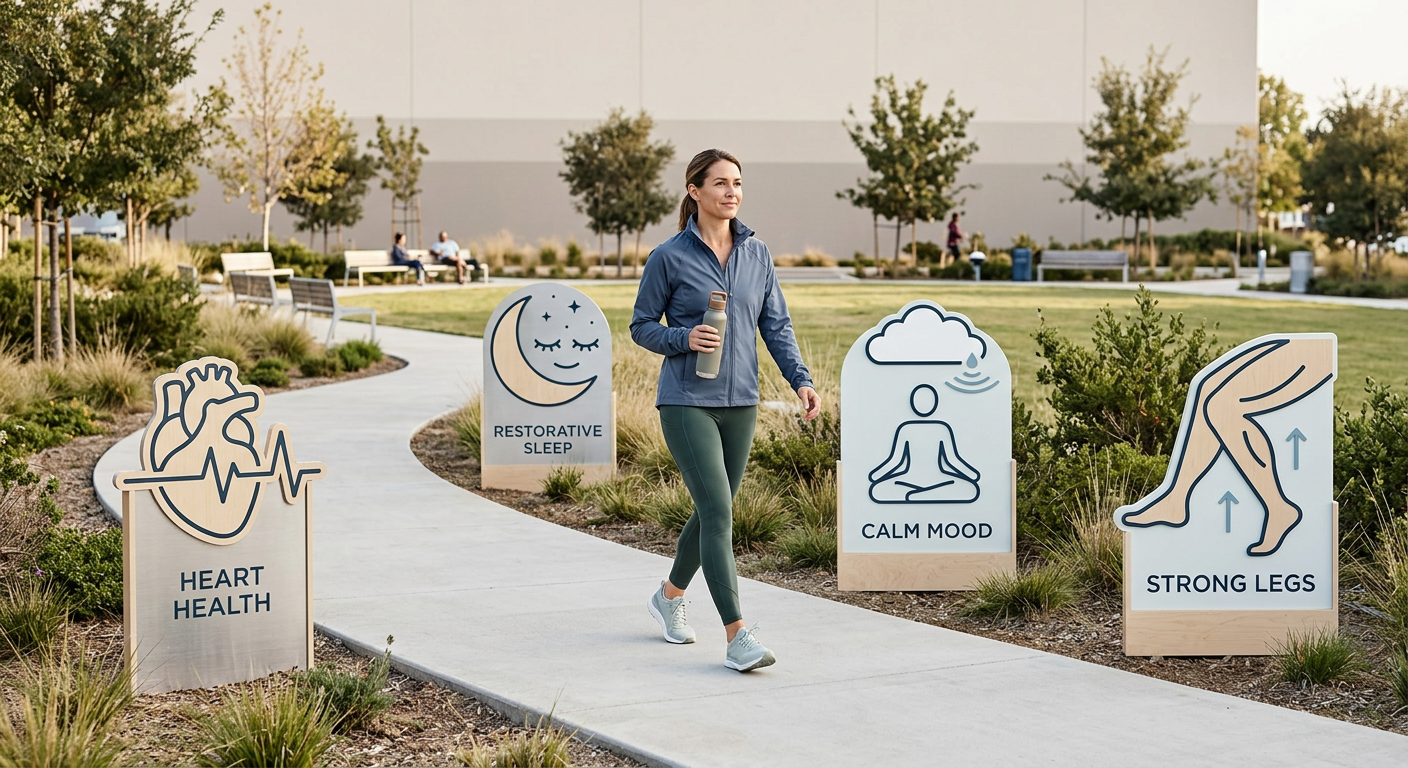
Heart Health and Longevity Are Major Benefits of Daily Walking
Regular walking can improve cardiovascular fitness and is strongly associated with lower long-term health risks. Brisk walking raises the heart rate without the impact demands of running, making it an accessible aerobic option for many people.
A 2025 review summarized by the American College of Cardiology found that, compared with 2,000 steps per day, reaching 7,000 steps per day was associated with a 25% lower risk of cardiovascular disease incidence, a 47% lower risk of cardiovascular death, and a 47% lower risk of death from any cause. These findings describe associations, not guarantees, but they reinforce a useful message: meaningful gains can happen well before 10,000 steps.
For many of us, walking is the gateway to meeting the general activity goal of 150 minutes of moderate-intensity movement per week. A pace is usually moderate when we can talk in short sentences but would not want to sing a full song. We do not have to maintain that pace for an entire outing, either. Alternating easy and brisk minutes is a sensible way to build capacity.
It Can Help Make Weight Management More Sustainable
Walking is not a shortcut for weight loss, and it should not be sold as one. Still, it increases daily energy expenditure, can reduce the tendency to sit for long periods, and supports a routine built around healthier choices.
When we pair walking with sufficient protein, fiber-rich meals, strength training, and sleep, it can become part of a sustainable approach to body composition and weight maintenance. A post-meal walk may also be especially practical for people focused on blood sugar management, because it turns a sedentary part of the day into an active one.
Walking Helps Our Mood, Focus, and Sleep
Daily movement can make us feel better before it changes anything visible. A walk creates a small break from screens, notifications, chores, and repetitive thoughts, which is often exactly what an overloaded day needs.
The CDC reports that some brain benefits of physical activity occur immediately, including reduced short-term anxiety in adults. Over time, regular physical activity can also support thinking skills, help lower depression and anxiety risk, and improve sleep quality. CDC guidance on physical activity and mental well-being
We can make this benefit more intentional by matching the walk to the moment:
- For stress: Choose an easy pace, loosen the shoulders, and notice what we can see and hear.
- For focus: Take a 10-minute walk before a demanding task instead of reaching for another coffee.
- For sleep: Walk during daylight hours and avoid making a late, intense workout our only evening activity.
- For connection: Invite a friend, family member, neighbor, or dog along.
For pet owners, a reliable walking routine can improve more than our own day. A consistent outing gives many dogs enrichment, opportunities to sniff and explore, and a predictable outlet for energy. The goal is not to force a fast pace on every dog, especially in heat or when they are older, but to make the outing safe, enjoyable, and appropriate for their needs.
Day 9: Build a Walking Habit That Survives Busy Weeks
By Day 9 of a habit-building effort, motivation often stops doing the heavy lifting. The real opportunity is to create a walking system that still works when meetings run late, weather changes, or energy is low.
We recommend designing a minimum version of the habit first. For example, commit to a 10-minute walk on most days, then treat additional time as a bonus. This keeps a difficult day from becoming a skipped week.
Use Triggers Instead of Willpower
A trigger is a routine event that reminds us to walk. The strongest triggers already happen consistently, so there is less to remember.
Try one of these pairings for the next week:
- Walk for 10 minutes after your first work meeting.
- Take a lap around the block after lunch.
- Walk the dog before opening entertainment apps at night.
- Park a little farther away for one regular errand.
- Hold one phone call while walking somewhere safe and quiet.
This approach also makes walking financially practical. We are using local sidewalks, parks, mall corridors, or nearby trails rather than relying on a gym membership, specialty gear, or an elaborate fitness plan. Comfortable shoes and weather-appropriate clothing matter, but the habit itself remains low-cost.
Track Consistency, Not Perfection
A phone, smartwatch, or simple calendar checkmark can help us see progress, but tracking should not turn into pressure. If step counts motivate us, use them. If they make us feel behind, track walk days or minutes instead.
A 2025 analysis highlighted by the American College of Cardiology found that roughly 7,000 daily steps was a practical public-health target associated with reduced health risks. That does not mean 7,000 is a pass-fail line. Someone starting from 2,000 steps can gain value by adding 500 or 1,000 more, then building gradually. Read the research summary on daily steps
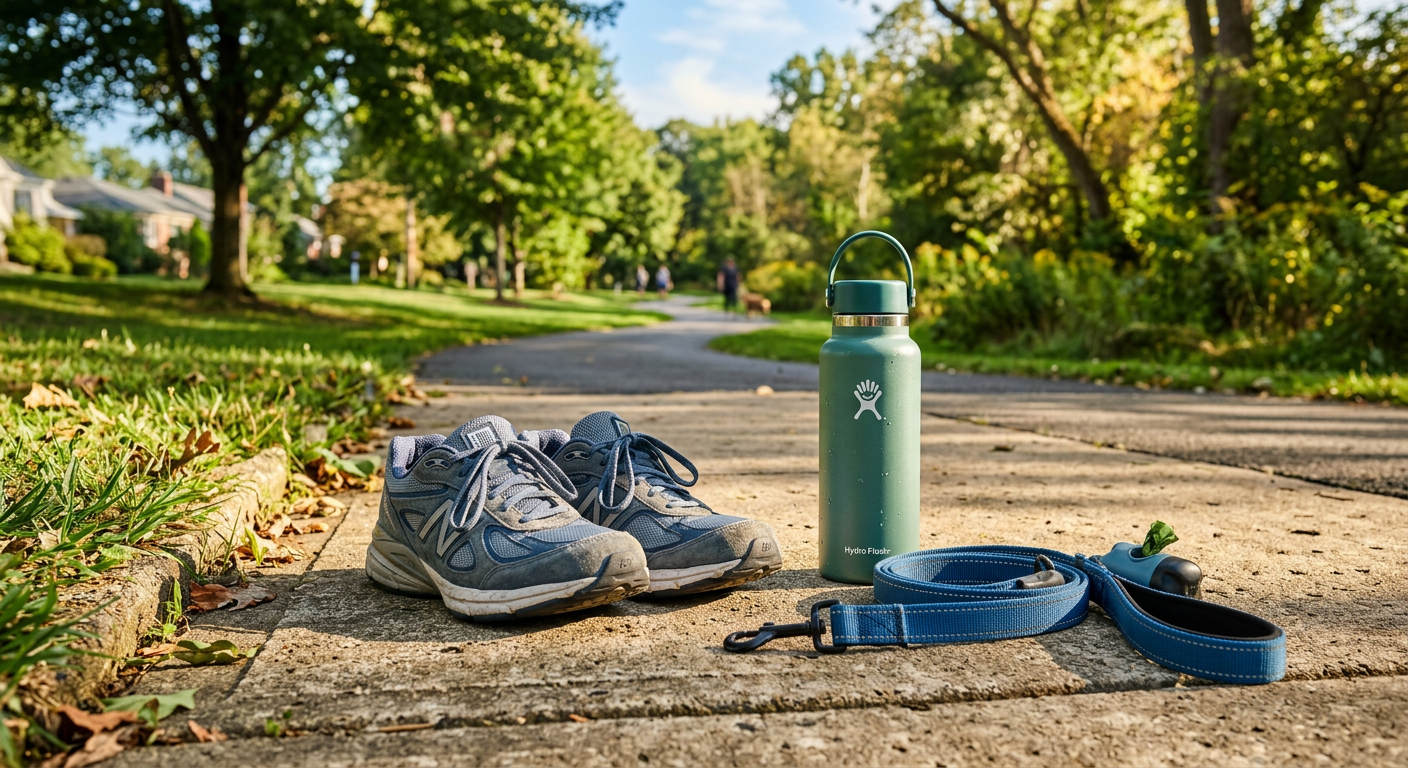
Make Each Walk Fit Your Current Fitness Level
The best walking plan is one that challenges us gently without leaving us injured, discouraged, or exhausted. We should begin with our current baseline, not with an online challenge designed for someone else.
If we have been inactive, five to 10 minutes at an easy pace is enough to establish momentum. Add a few minutes every several days as comfort improves. If we already walk regularly, we can add hills, a slightly faster interval, or one longer weekend route.
A Simple Weekly Progression
We can use this structure without overthinking it:
- Days 1 through 3: Walk 10 to 15 minutes at a comfortable pace.
- Days 4 through 5: Add five minutes or include two brief brisk intervals.
- Day 6: Choose a longer, relaxed walk somewhere enjoyable.
- Day 7: Take an easy recovery walk or split movement into short sessions.
People with chest pain, unexplained shortness of breath, dizziness, a recent injury, or a medical condition that affects exercise tolerance should speak with a qualified clinician before increasing intensity. Pain that changes our gait is a signal to pause, not something to push through.
Small Choices Make Walking Easier to Keep Doing
Consistency becomes more likely when we reduce friction. Leave shoes by the door, keep a light jacket in the car, save a few indoor routes for bad weather, and choose a time that fits how our days actually unfold.
Walking can also become a useful boundary between parts of the day. A morning walk can signal that work is about to begin. A brief lunchtime walk can interrupt hours of sitting. An evening loop can help us transition out of work mode and into family time or rest.
The benefits of daily walking do not depend on having a flawless route, a certain body type, or a marathon-level mindset. What matters most is returning to the habit often enough that movement becomes normal.
Frequently Asked Questions
Do we need to walk 10,000 steps every day?
No, 10,000 steps is not a universal requirement for better health. Research suggests benefits begin below that number, and a realistic increase from our own starting point is more useful than an arbitrary target we cannot sustain.
Is one long walk better than several short walks?
Both can contribute to daily activity, and shorter walks are often easier to fit into a demanding schedule. A longer outing may be better for endurance and mental decompression, but accumulated movement still counts when a single block is not realistic.
Can daily walking build muscle?
Walking primarily builds muscular endurance rather than substantial muscle size. Hills, stairs, a faster pace, and strength training can provide more challenge for the legs, hips, and core.
What is the best time of day to walk?
The best time is the one we can repeat consistently. Morning walking may help establish a routine, post-meal walking can fit blood sugar goals, and evening walks may offer a useful stress release.
Can we walk every day if our knees hurt?
Mild stiffness may improve with gentle movement, but persistent, sharp, swollen, or worsening knee pain deserves professional guidance. Consider flatter terrain, shorter outings, supportive footwear, and a pace that does not change how you walk.
Is walking enough exercise on its own?
Walking can meet a substantial portion of aerobic activity needs, particularly when the pace is brisk. For well-rounded fitness, we should also include muscle-strengthening work at least twice weekly and activities that support balance and mobility.
Put One Walk on the Calendar This Week
Walking is simple, but its effects can be meaningful when we repeat it. It can support a healthier heart, clearer mind, better sleep, improved mobility, and a steadier relationship with movement without requiring perfection.
Start with the walk that feels almost too easy to skip. Ten minutes after lunch, a relaxed loop with the dog, or a few laps around the building can become the foundation for a routine that grows with us.
Keep Building Healthier Everyday Habits
For more evidence-informed articles on movement, sleep, mindfulness, personal finance, and practical pet care, visit ContentBeast. We can help you find useful ideas that fit real schedules and support healthier choices one repeatable habit at a time.