An afternoon snack should help you feel prepared for the next meeting, not leave you hungry again 30 minutes later. The most useful work snacks are simple combinations of protein, fiber, and satisfying fats that travel well and do not require much thought once your workday gets busy.
These healthy snack ideas for work are designed for real schedules, shared office kitchens, commutes, and budget-conscious grocery runs. The goal is not to eat perfectly. It is to keep a few dependable options nearby so the vending machine does not become your default plan.
Build Snacks Around Staying Power
A balanced snack is usually more satisfying than a single packaged item because it combines nutrients that help you stay full between meals. For most people, pairing a produce item or whole grain with a protein-rich food is an easy rule that works across many dietary preferences.
The current U.S. Dietary Guidelines emphasize nutrient-dense foods such as fruits, vegetables, protein foods, dairy, healthy fats, and whole grains while limiting highly processed foods and added sugars. That principle can be translated into a practical workplace habit: choose recognizable foods, then pair them intentionally.
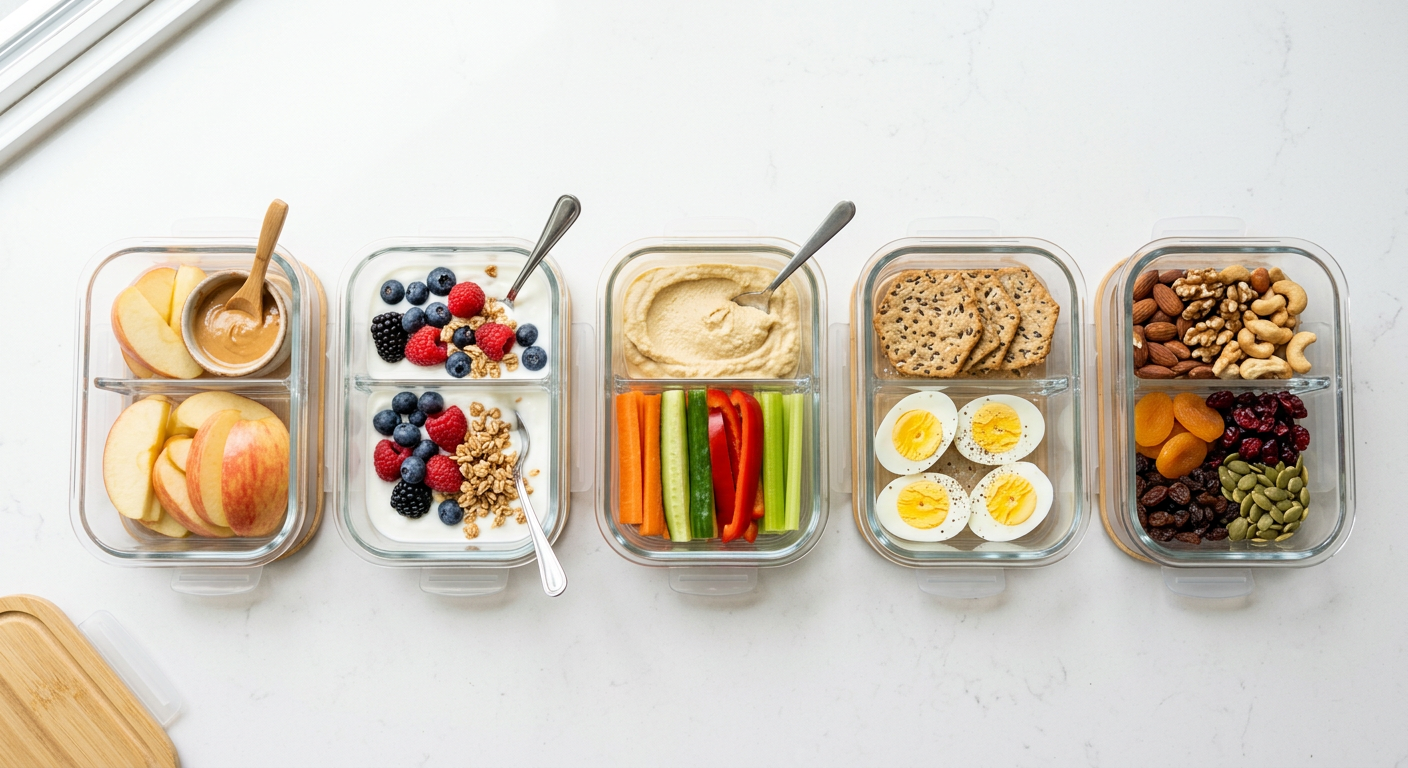
| Snack Pairing | Best For | Easy Work Setup | Budget Level |
|---|---|---|---|
| Apple and peanut butter | Sweet craving | Desk drawer or fridge | Low |
| Greek yogurt and berries | Creamy, filling snack | Office refrigerator | Moderate |
| Hummus and vegetables | Savory crunch | Small cooler bag | Low |
| Trail mix and fruit | Commutes and travel | Backpack-friendly | Moderate |
| Eggs and whole-grain crackers | Longer afternoons | Office refrigerator | Low |
A useful label-reading shortcut is to look for foods that contribute fiber, protein, vitamins, or minerals, rather than relying on front-of-package claims. The FDA Nutrition Facts Label guide notes that 20 percent Daily Value or more is considered high for a nutrient, while 5 percent or less is low. The same guide lists 28 grams as the Daily Value for dietary fiber, which makes fiber a helpful number to notice when comparing packaged snacks.
Healthy Snack Ideas for Work That Fit Busy Schedules
The best workplace snack is one you will actually pack, store, and enjoy. Start with two or three options that match your routine, then rotate flavors so the habit does not become boring.
Apple Slices With Peanut or Almond Butter
This is a reliable sweet-and-crunchy option that needs little prep. Slice the apple at home, use a small squeeze packet or portioned container of nut butter, and add cinnamon if you want more flavor without extra sugar.
If your workplace has nut restrictions, swap the nut butter for sunflower seed butter. A pear, banana, or whole-grain rice cake can fill the same role as the apple.
Plain Greek Yogurt With Berries and Seeds
Greek yogurt gives you a creamy base that pairs well with berries, chopped fruit, chia seeds, or pumpkin seeds. Choose plain yogurt when possible, then add your own fruit for sweetness and texture.
For a dairy-free version, use an unsweetened fortified soy yogurt and add roasted edamame or seeds on the side. The point is not to chase a perfect ingredient list, but to avoid a snack that is mostly added sugar with little staying power.
Hummus With Crunchy Vegetables and Whole-Grain Crackers
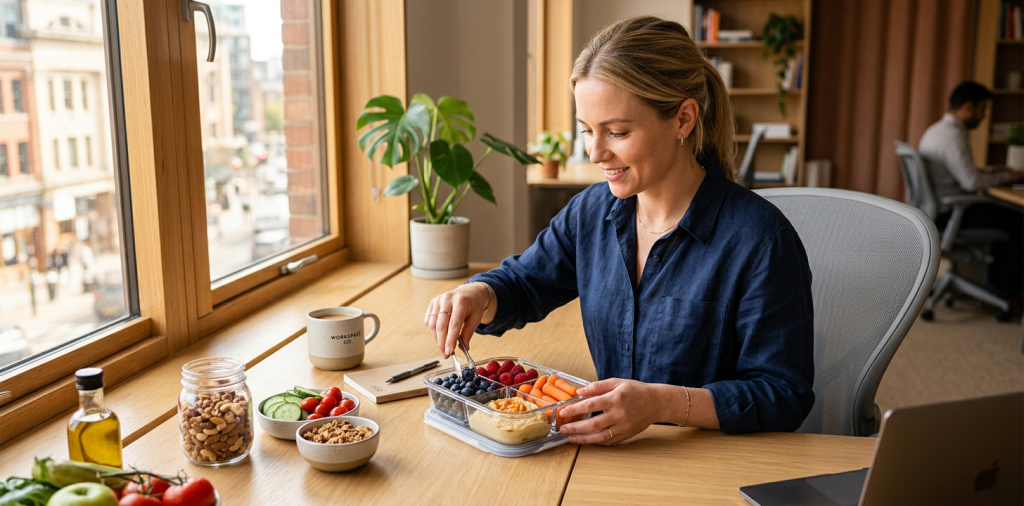
Hummus works well because it is flavorful, portable, and easy to portion into small containers. Pair it with baby carrots, snap peas, cucumber rounds, bell pepper strips, or a few whole-grain crackers.
Keep a shelf-stable hummus cup in your bag for unexpectedly long days. If you are building a desk snack drawer, choose single-serve crackers and replace fresh vegetables once or twice a week.
Hard-Boiled Eggs With Fruit
Hard-boiled eggs are an efficient option for people who prefer savory snacks. Pair two eggs with grapes, a clementine, or a small apple for a snack that feels more substantial than crackers alone.
Prepare several eggs at once, label the container with the date, and keep them refrigerated. If the smell is a concern in a shared workspace, eat them in a break area or substitute a cheese stick, edamame, or roasted chickpeas.
Cottage Cheese With Pineapple or Cherry Tomatoes
Cottage cheese can go sweet or savory, which makes it especially useful when snack fatigue sets in. Add pineapple, peaches, or berries for a sweeter option, or add cherry tomatoes, black pepper, and herbs for a savory one.
Individual cups reduce prep and help with portioning. For a plant-based alternative, try seasoned white beans or a small serving of tofu with fruit or vegetables.
Roasted Chickpeas and a Piece of Fruit
Roasted chickpeas bring crunch without requiring refrigeration, making them ideal for a desk drawer, car, or travel bag. Combine them with an orange, banana, or apple to add fiber and a naturally sweet finish.
Buy lightly seasoned versions or make your own by roasting canned chickpeas with olive oil and spices. Check the package if sodium is a concern, since flavored crunchy snacks can vary widely.
Tuna or Salmon Packets With Whole-Grain Crackers
Shelf-stable fish packets can turn a rushed afternoon into a more filling snack. Keep a packet, a few whole-grain crackers, and a piece of fruit in your bag for days when lunch runs late.
Choose plain or lightly seasoned packets if you want more control over sodium. If fish is not a workplace-friendly choice, use a pouch of seasoned lentils or mashed chickpeas instead.
Trail Mix You Portion Yourself
A homemade trail mix gives you more control than candy-heavy blends. Combine nuts or seeds, a whole-grain cereal, unsweetened dried fruit, and a small amount of dark chocolate if that makes the snack more enjoyable.
Portion it into small containers rather than eating from a large bag at your desk. This keeps a nutritious option convenient without turning distracted snacking into an accidental meal.
Make Day 8 the Point When Snacking Becomes Automatic
By the eighth day of a new routine, the novelty has usually worn off. That is exactly when a simple snack system matters more than willpower, because repeated decisions create the habits that carry through demanding weeks.
Use Day 8 as a quick check-in. Ask which snack you reached for most often, which one sat untouched, and what obstacle got in the way. Maybe yogurt was convenient but the office refrigerator was too crowded. Maybe you loved apples but forgot to pack them. The answer is not more discipline, it is a better setup.
Try this five-minute weekly reset:
- Choose two refrigerated snacks, such as yogurt, eggs, or hummus.
- Choose two shelf-stable snacks, such as roasted chickpeas, nuts, or tuna packets.
- Buy three pieces of easy fruit, such as apples, bananas, or clementines.
- Portion two snacks before the workweek starts.
- Keep one emergency option in your desk, bag, or car.
This approach also supports a realistic grocery budget. Buying ingredients that work in lunches, dinners, and snacks reduces the chance that specialty snack foods pile up unused in the pantry. A bag of apples, tub of yogurt, container of hummus, and bulk nuts can create multiple combinations without requiring a different product for every craving.
The CDC recommends stocking nutritious snacks at home or work so a healthier option is available when hunger hits between meals. Convenience is not a small detail, it is the foundation of a habit that lasts.
Choose Snacks for Your Workday, Not Someone Else’s
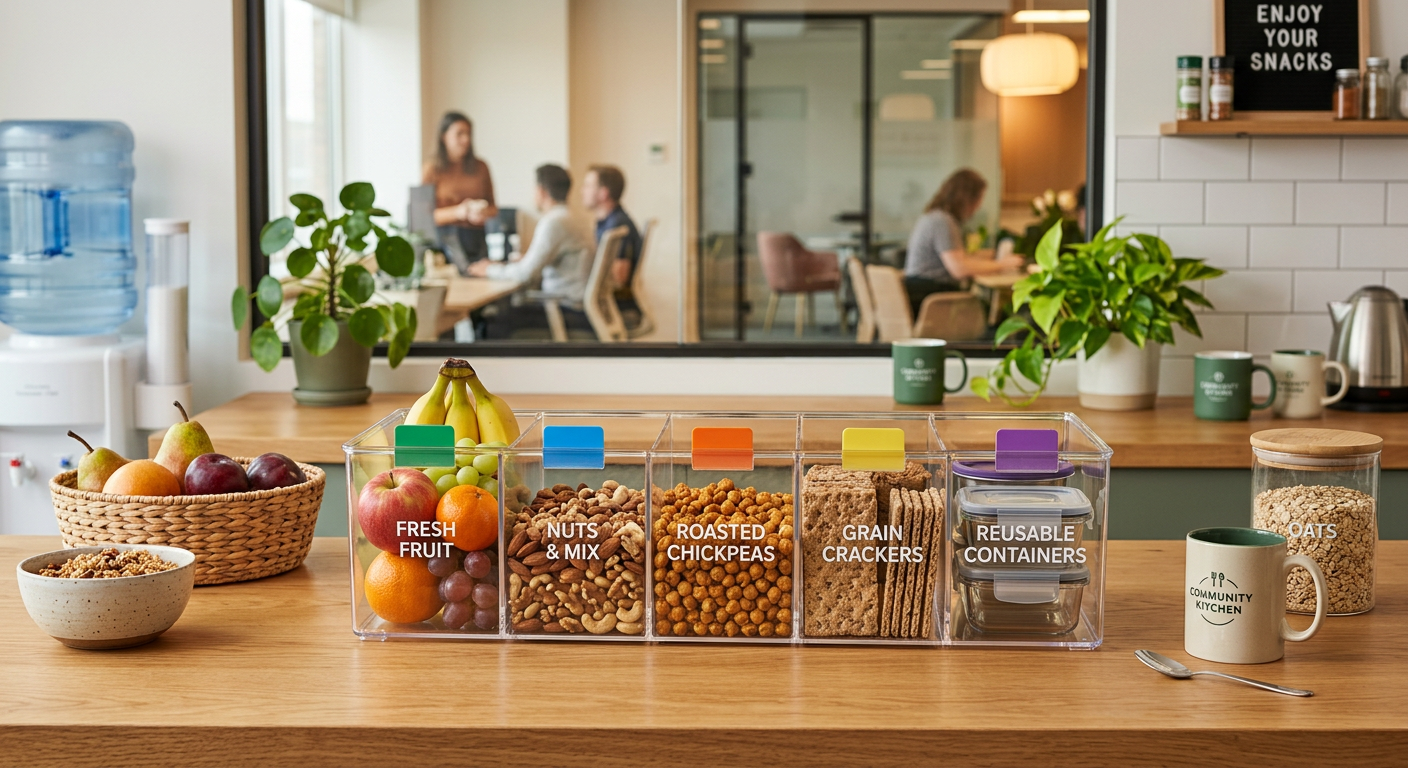
Your best snack choice depends on your schedule, preferences, access to refrigeration, and goals. A snack that works for an active commuter may be different from one that works for someone in back-to-back video meetings.
For Long Meetings
Choose quiet, low-mess options such as a banana with a single-serve nut butter, a cheese stick with whole-grain crackers, or roasted edamame. Keep water nearby too, since thirst can be mistaken for hunger during long stretches of focused work.
For Physically Active Jobs
Choose a larger snack with carbohydrates and protein, such as yogurt with fruit and granola, a turkey-and-avocado wrap half, or a peanut butter sandwich on whole-grain bread. If your work involves frequent movement, a tiny snack may not be enough to bridge the gap to your next meal.
For Desk-Based Work
Focus on snacks that are easy to eat without grazing all afternoon. Pre-portioned trail mix, vegetables with hummus, or cottage cheese with fruit can provide a defined break from the screen instead of becoming background eating.
For Tight Budgets
Use affordable staples: bananas, apples, carrots, canned chickpeas, popcorn kernels, plain yogurt, eggs, and peanut butter. Healthy workplace snacks do not need premium packaging or influencer-approved ingredients to be useful.
A Simple Label Checklist for Packaged Snacks
Packaged options can absolutely fit into a balanced routine. Use the label to compare a few choices, then choose the one that best supports your needs and tastes good enough to buy again.
Prioritize these details:
- Check the serving size first, especially with chips, granola, and trail mix.
- Look for meaningful fiber when choosing crackers, cereals, bars, or popcorn.
- Compare added sugars in yogurt, snack bars, dried fruit, and flavored oatmeal.
- Notice sodium in savory snacks, especially crackers, jerky, popcorn, and seasoned nuts.
- Consider protein, but do not assume a protein label makes a snack balanced.
The FDA daily value reference recommends choosing foods more often that are higher in dietary fiber, calcium, iron, vitamin D, and potassium, while choosing foods lower in saturated fat, sodium, and added sugars. Use that as a comparison tool, not a reason to overanalyze every bite.
Frequently Asked Questions
What is the healthiest snack to keep at a desk?
Roasted chickpeas, unsalted nuts, seed packets, whole-grain crackers, plain popcorn, and shelf-stable tuna or salmon packets are strong desk options. Add fresh fruit at the start of the week so you can turn a single shelf-stable item into a more balanced snack.
Are protein bars good snacks for work?
Protein bars can work when fresh food is unavailable, but they vary greatly in added sugar, fiber, and portion size. Compare labels and choose bars you enjoy, then treat them as a convenient backup rather than the only snack in your routine.
How can we avoid afternoon snacking out of boredom?
Take a short break before eating and ask whether you are hungry, thirsty, stressed, or simply ready to step away from work. If you are hungry, eat a planned snack away from your screen. If you need a break, try a brief walk, refill your water, or stretch first.
What are good healthy snacks when there is no refrigerator?
Fruit, nuts, seeds, roasted chickpeas, plain popcorn, low-sugar oatmeal cups, whole-grain crackers, nut butter packets, and shelf-stable fish or bean pouches work well without refrigeration. Keep several options in a bag so unexpected schedule changes do not leave you with no choice.
Can healthy snacks help us save money at work?
Yes, packing snacks can reduce impulse purchases from vending machines, coffee shops, and delivery apps. Start with inexpensive staples you already like, then portion them at home instead of buying individual snack packs every day.
What should we eat if we need a snack before a workout after work?
Choose an easy-to-digest combination of carbohydrates and some protein, such as a banana with peanut butter, yogurt with fruit, or whole-grain crackers with cheese. The right amount depends on how long it has been since your last meal and the type of activity you plan to do.
Build a Workweek Routine That Feels Easier
Healthy food habits become more sustainable when they fit the rest of your life, including sleep, movement, stress, and your budget. Visit Content Beast for more practical wellness ideas that help you make everyday decisions with more confidence.
The Bottom Line
The most effective healthy snack ideas for work are not complicated, expensive, or perfectly planned. They are the options you can keep within reach, enjoy consistently, and pair with the realities of your workday.
Start with one refrigerated choice, one shelf-stable choice, and one piece of fruit for the week ahead. After Day 8, review what worked, adjust what did not, and keep building a routine that supports steady energy without adding another stressful task to your schedule.