

A better night of sleep usually starts long before your head reaches the pillow. Small choices around light, movement, caffeine, stress, and bedtime consistency shape how easily we fall asleep and how restored we feel the next morning.
When we ask how to improve sleep quality naturally, the answer is rarely a single supplement, expensive device, or perfect nighttime ritual. The most dependable approach is a repeatable daily pattern that supports our internal clock and gives our brain clear cues for activity, recovery, and rest.
The goal is not to engineer a flawless night. It is to build conditions that make quality sleep more likely, then notice what actually works for our schedule, training routine, household, and stress level.
Start With a Consistent Wake Time
A stable wake time is often more powerful than forcing an early bedtime. Getting up within roughly the same hour every day helps reinforce our sleep-wake rhythm, making sleepiness arrive more predictably at night.
The CDC states that adults ages 18 to 60 generally need seven or more hours of sleep per night. That target matters, but sleep quality also matters: uninterrupted, refreshing sleep is different from simply spending enough hours in bed. CDC
Try this for the next week:
- Pick a wake time you can keep on workdays and days off.
- Get outside for a short walk or stand in natural daylight during the first part of the day.
- Avoid compensating for a late night by sleeping far into the afternoon.
- Move bedtime earlier gradually, in 15-minute steps, if you are consistently short on sleep.
Morning light is especially useful because it gives the body a strong signal that the day has begun. We do not need a complicated routine. A walk around the block, coffee on the porch, or a few minutes outside after walking the dog can be enough to make the habit realistic.

Use a Five-Day Sleep Reset to Find Your Biggest Lever
The fastest way to improve sleep is to change a few controllable habits, not every part of life at once. Our Day 5 approach focuses on one useful adjustment per day, then uses the fifth day to identify the habit with the clearest payoff.
Day 1: Protect Your Wake Time
Set the same wake time for five days, including the weekend if possible. We are looking for consistency, not perfection, so a 30- to 60-minute window is more realistic than treating the schedule like a military operation.
Day 2: Audit Caffeine Timing
Caffeine can stay active in the body longer than many people expect. If you struggle to fall asleep, move your last coffee, energy drink, pre-workout, or strong tea earlier in the day and observe the result for several nights.
For fitness-focused readers, this may mean shifting a late-afternoon pre-workout to an earlier training session or choosing a stimulant-free option. Better sleep supports recovery, so protecting the night can be more valuable than squeezing in one more caffeinated boost.
Day 3: Add Daytime Movement
Regular physical activity supports sleep, but timing matters for some people. The National Heart, Lung, and Blood Institute recommends daytime activity and notes that exercising close to bedtime can make it harder for some people to fall asleep. NHLBI
Start small if your schedule is full. A 10-minute walk after lunch, mobility work between meetings, or an active play session with your pet can create a useful break without requiring a full workout.
Day 4: Simplify the Bedroom
Make the bedroom dark, quiet, cool, and comfortable. Remove obvious disruptions where possible, such as bright chargers, loud alerts, a television that stays on, or clutter that keeps reminding us of unfinished tasks.
If a pet wakes you repeatedly, experiment before making a permanent change. A different sleeping spot, a later evening walk, a feeding adjustment approved by your veterinarian, or a gradual transition to a nearby pet bed may reduce disruptions while keeping your routine humane and consistent.
Day 5: Review, Keep, and Repeat
On the fifth day, write down three simple observations: when you had caffeine, when you went to bed, and how rested you felt on waking. We are not trying to create a perfect sleep score. We are looking for patterns we can repeat.
This is where natural sleep improvement becomes personal. One person may notice that a 3 p.m. coffee is the culprit, while another realizes their variable weekend wake time is making Sunday night difficult. Keep the change that gave you the best result, then test the next one the following week.
Build a Lower-Stimulation Evening
A predictable wind-down period tells the brain that the day is ending. The routine can be brief, but it should reduce bright light, work demands, emotional stimulation, and the temptation to keep solving tomorrow's problems from bed.
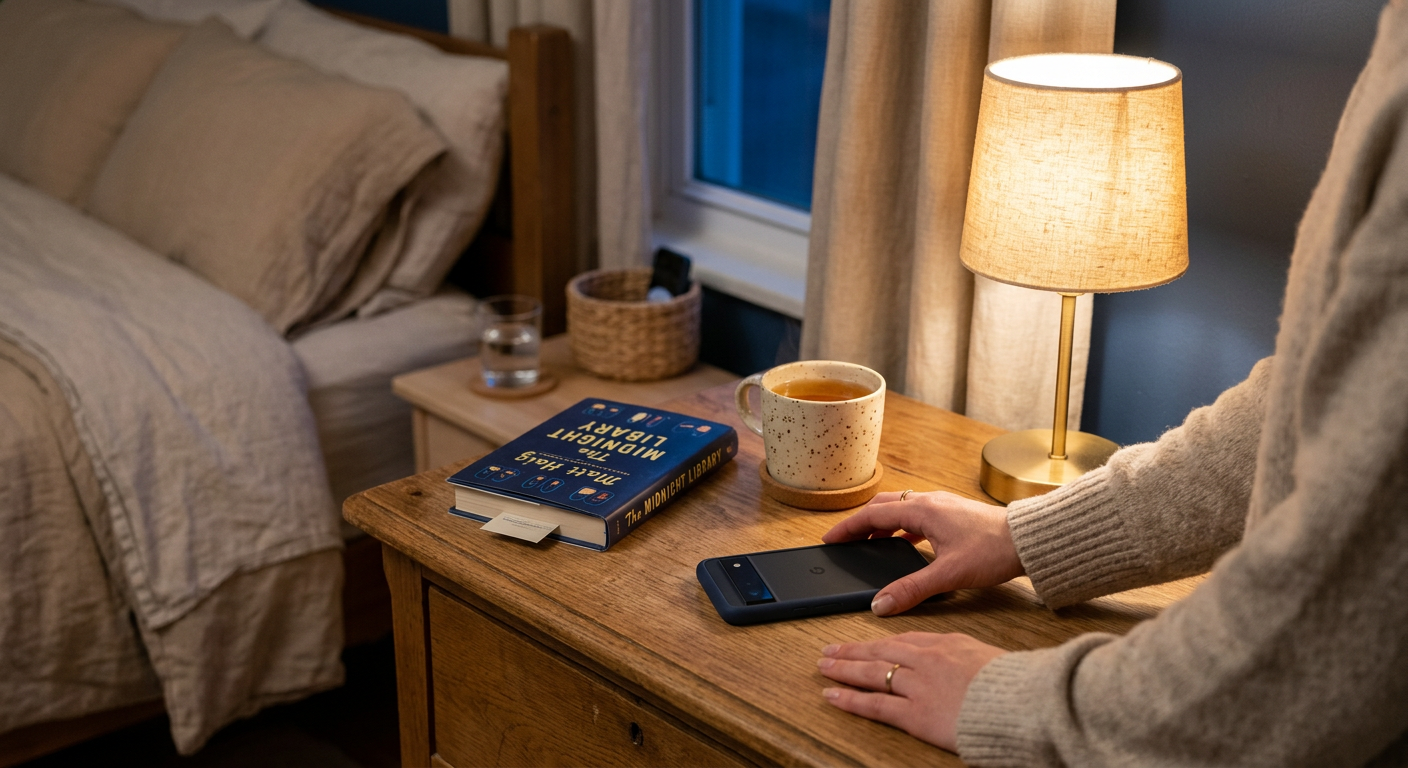
The CDC recommends switching off electronic devices at least 30 minutes before bedtime. If a total phone cutoff is not realistic, begin with a smaller boundary: charge the phone across the room, turn on Do Not Disturb, and avoid work email or upsetting content during the last part of the evening. CDC
A practical 30-minute routine might include:
- Dimming room lights.
- Preparing clothes, meals, or a to-do list for tomorrow.
- Taking a warm shower or bath.
- Reading something light in another room.
- Doing slow breathing, gentle stretches, or a brief mindfulness practice.
The key is repetition. We want the sequence to become familiar enough that it starts to feel like a cue for rest instead of another task to complete.
Support Sleep With Food, Training, and Stress Boundaries
Natural sleep habits work best when they fit the rest of the day. We do not need a restrictive diet or an intense exercise plan, but late stimulants, heavy meals, alcohol, and unprocessed stress can all make nights more fragmented.
Aim to finish large meals well before bed when possible, and notice whether spicy or rich foods affect you personally. Alcohol can make us feel sleepy at first, but the NHLBI notes that it may lead to lighter sleep and more nighttime waking. NHLBI
For people managing a tight budget, the most effective steps are usually free: a consistent wake time, outdoor daylight, walking, a darker room, and a written wind-down list. We do not need to buy a premium mattress, wearables, or supplements before testing the basics for a few weeks.
Stress deserves the same practical attention. If our mind races in bed, keep a notebook nearby and write down the next action for each worry. That does not solve every problem, but it gives the brain permission to stop rehearsing tasks at midnight.
Know When Sleep Hygiene Is Not Enough
Healthy habits can improve mild or occasional sleep problems, but they are not a substitute for medical care when symptoms persist. We should speak with a qualified clinician if poor sleep affects daytime functioning, if we regularly snore loudly or gasp during sleep, or if we have ongoing trouble falling or staying asleep.
The NHLBI defines chronic insomnia as difficulty falling or staying asleep at least three nights a week for three months or longer, with daytime effects. Keeping a one- to two-week sleep diary before an appointment can help identify patterns involving naps, exercise, caffeine, alcohol, and sleep timing. NHLBI
For diagnosed chronic insomnia, sleep hygiene alone may not be enough. The American Academy of Sleep Medicine recommends cognitive behavioral therapy for insomnia, often called CBT-I, as a first-line treatment for adults with chronic insomnia. American Academy of Sleep Medicine
Frequently Asked Questions
How long does it take to improve sleep quality naturally?
Many people notice small changes within a week when they stabilize wake time, caffeine timing, and evening habits. Give a new routine at least two weeks before judging it, unless it clearly makes sleep worse or causes concerning symptoms.
Should we take melatonin for better sleep?
Melatonin is not automatically the best answer for general sleep problems. The NHLBI notes that research has not proven it to be an effective treatment for insomnia, so it is wise to discuss supplements with a clinician or pharmacist, especially if we take medications or have health conditions.
Is it bad to exercise at night?
Not necessarily, because individual responses vary. If evening training leaves you energized or delays sleep, try moving intense sessions earlier and use gentler activity, such as walking or mobility work, later in the day.
Can a short nap ruin nighttime sleep?
It can for some people, particularly when naps are long or occur late in the day. If you have trouble falling asleep at night, test skipping naps for several days or keep them earlier and brief.
What if our partner or pet interrupts sleep?
Start with the least disruptive practical change, such as earplugs, a fan for steady background sound, separate blankets, a pet bedtime routine, or a nearby pet bed. If frequent snoring, gasping, or unusual movements are the issue, encourage a medical evaluation rather than treating it as a simple household inconvenience.
Is a sleep tracker worth buying?
A tracker can help some people notice broad patterns, but it is not required for better sleep. A basic paper log often provides more actionable information, especially when it records wake time, caffeine, exercise, bedtime, and morning energy.
Put Your Sleep Routine Into Practice
We publish clear, practical articles that help readers make healthier daily choices without turning wellbeing into an expensive or overwhelming project. Visit ContentBeast for more ideas on sleep, habits, fitness, mindfulness, personal finance, and caring for the animals who share our homes.
A Better Night Starts With a Repeatable Day
The most reliable answer to how to improve sleep quality naturally is to make sleep-friendly choices throughout the day, then repeat the ones that work. Start with a consistent wake time, daylight, movement, thoughtful caffeine timing, and a calmer evening environment.
We do not need perfect discipline or a drawer full of sleep products. One sustainable adjustment, tracked for a few days and repeated with care, can create the foundation for steadier energy, stronger recovery, and more restorative rest.