Feeling stronger does not require punishing workouts, complicated gym equipment, or hours of free time. A smart first plan focuses on a few foundational movements, enough recovery, and steady practice that fits a real week.
This beginner strength training routine for women is built for your first month. We will train the major muscle groups twice a week, use movements that are easy to adjust, and make progress without treating soreness as proof that a workout worked.
The Centers for Disease Control and Prevention states that adults need 150 minutes of moderate physical activity weekly plus muscle-strengthening activity on two days each week. That does not mean your first week needs to look perfect. It means two well-planned strength sessions are a meaningful place to begin.
What This First-Month Plan Includes
This program uses two full-body workouts each week because that frequency is manageable for beginners and gives muscles time to recover. Each session should take about 35 to 45 minutes, including a brief warm-up.
| Element | Week 1 | Weeks 2-3 | Week 4 |
|---|---|---|---|
| Strength sessions | 2 | 2 | 2 |
| Sets per exercise | 2 | 2-3 | 3 if ready |
| Repetitions | 8-10 | 8-12 | 10-12 |
| Effort | Comfortable practice | Moderately challenging | Controlled progression |
| Main goal | Learn form | Build consistency | Add a small challenge |
We will use body weight, resistance bands, dumbbells, or common gym machines. Pick the version that lets you move smoothly and keep good control through every repetition.
Day 1 Builds the Habit That Makes the Routine Work
The first session should feel almost too manageable. That is intentional. On Day 1, our job is to learn movement patterns, identify appropriate weights, and finish with enough energy to want to come back.
Start each workout with five to seven minutes of easy movement, such as brisk walking, cycling, or marching in place. Then complete one round of the exercises with no weight or a very light load before beginning your working sets. This practice round is especially useful for squats, hinges, rows, and pressing movements.
Use an effort level of about 6 or 7 out of 10. You should feel that the final two repetitions require focus, but you should not have to twist, hold your breath, or sacrifice form to finish them. Leave roughly two to three repetitions in reserve.
This Day 1 approach is worth repeating whenever life interrupts training. After travel, illness, a busy season, or an extended break, return with a lighter version of the plan. Consistency grows when the restart feels approachable.
Workout A: Squat, Push, Pull, Hinge, Carry
Workout A trains the lower body, chest, back, hips, core, and grip with simple movements. Rest for 60 to 90 seconds between sets, and take a little longer if your breathing has not settled.
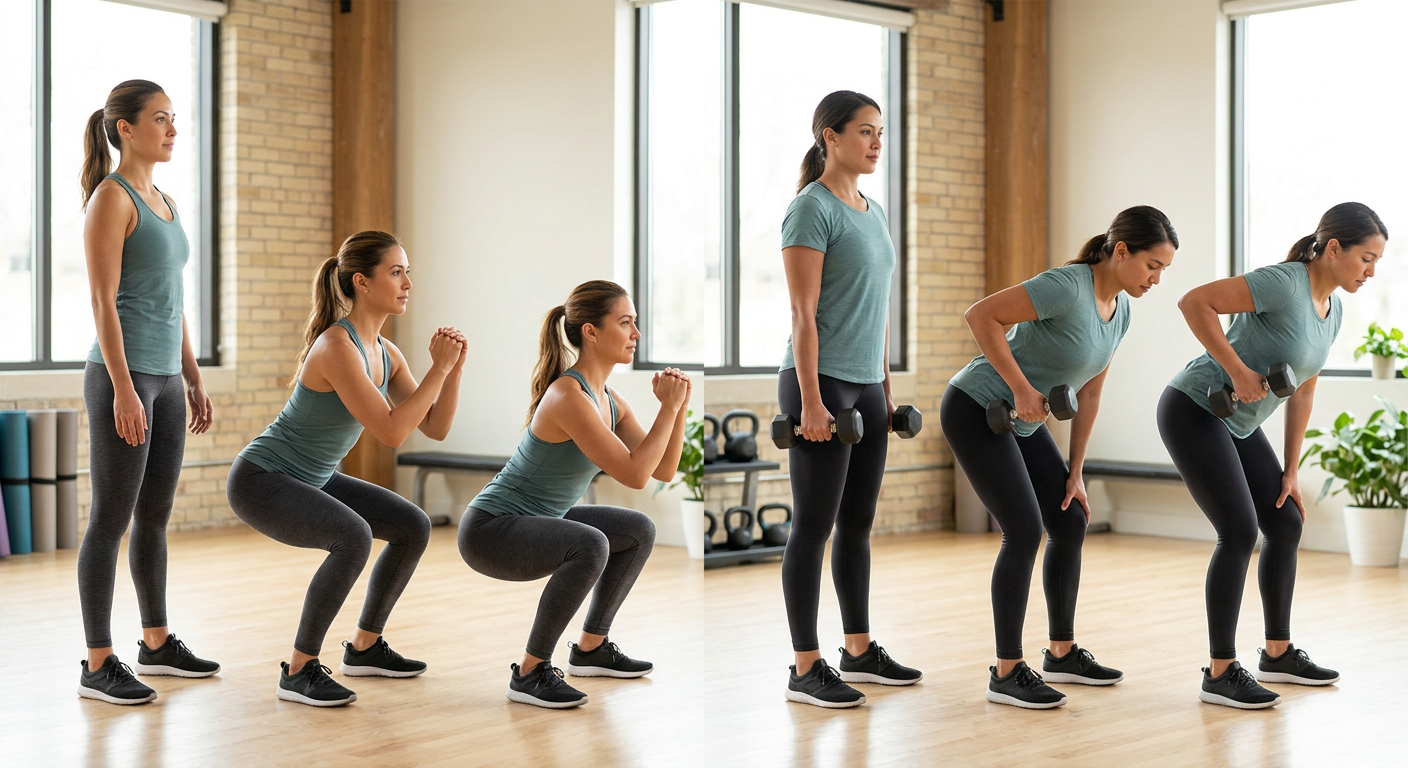
1. Goblet Squat or Chair Squat
Complete two sets of 8 to 10 repetitions. Hold one dumbbell at chest level for a goblet squat, or sit down to a sturdy chair and stand back up if you are learning the pattern.
Keep your feet planted, knees moving in the same direction as your toes, and chest comfortably tall. Reduce the depth if you feel joint pain, but do not confuse normal muscle effort with sharp pain.
2. Incline Push-Up or Dumbbell Chest Press
Complete two sets of 8 to 10 repetitions. An incline push-up against a wall, counter, or sturdy bench is an excellent starting variation because it allows you to control the angle.
For a dumbbell chest press, lie on a bench or the floor and press the weights upward without locking your elbows hard. Choose a variation that lets you keep your shoulders stable and your ribs from flaring upward.
3. One-Arm Dumbbell Row or Band Row
Complete two sets of 10 repetitions on each side. Brace one hand on a bench, chair, or your thigh, then draw the elbow toward your back pocket.
Avoid shrugging your shoulder toward your ear. Think about moving your elbow rather than yanking the weight with your hand.
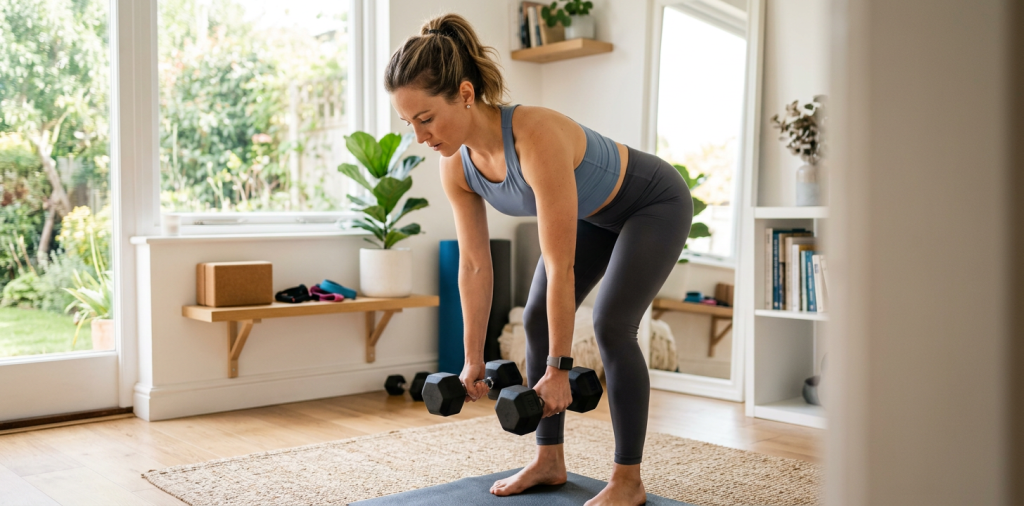
4. Dumbbell Romanian Deadlift
Complete two sets of 8 to 10 repetitions. Hold dumbbells close to your legs, soften your knees, and send your hips back until you feel a stretch through the back of your thighs.
This is a hip movement, not a deep squat. Keep your back neutral, then press through your feet and squeeze your glutes to stand tall.
5. Suitcase Carry
Complete two sets of 20 to 30 seconds per side. Hold one dumbbell at your side and walk slowly with an upright posture.
This deceptively simple exercise teaches core stability and grip strength. Use a load that challenges you without causing you to lean dramatically to one side.
Workout B: Lunge, Press, Pull, Bridge, Core
Workout B keeps the same full-body focus while giving your joints and muscles slightly different angles. Schedule it two or three days after Workout A, such as Tuesday and Friday.
1. Supported Reverse Lunge or Split Squat
Complete two sets of 6 to 8 repetitions per side. Hold a wall, countertop, or suspension strap for balance while stepping one foot back.
Move slowly enough to stay steady. If lunges bother your knees, shorten the range of motion or substitute another set of chair squats until you build confidence.
2. Seated Dumbbell Shoulder Press
Complete two sets of 8 to 10 repetitions. Sit tall, start with the dumbbells around shoulder height, and press overhead in a comfortable path.
Keep your ribs stacked over your pelvis rather than leaning backward. A resistance band press is a useful lower-cost option if you train at home.
3. Lat Pulldown or Band Pulldown
Complete two sets of 8 to 12 repetitions. Pull the bar or band toward the upper chest while keeping your neck relaxed.
A vertical pulling movement balances pressing work and helps develop the upper-back strength needed for daily tasks, posture, and other lifts.
4. Glute Bridge
Complete two sets of 10 to 12 repetitions. Lie on your back with knees bent, press through your feet, and lift your hips until your body forms a gentle line from shoulders to knees.
Pause briefly at the top without arching your lower back. Add a dumbbell across your hips only after body-weight repetitions feel controlled.
5. Dead Bug
Complete two sets of 6 to 8 repetitions per side. Lie on your back with arms pointed upward and knees bent at 90 degrees, then slowly lower the opposite arm and leg without letting your lower back lift away from the floor.
This is not about moving fast. A smaller range with steady control is more valuable than reaching farther and losing position.
How to Progress Without Rushing
Progress should be small, observable, and earned through good technique. In a beginner strength training routine for women, the best first sign of success is often better control, not dramatically heavier weights.
Use this simple progression rule:
- Keep the same weight until you can complete the top of the repetition range in every set with clean form.
- Add the smallest available amount of weight at the next session, or add one repetition per set if heavier weights are not available.
- If technique breaks down, return to the previous load or repetition count.
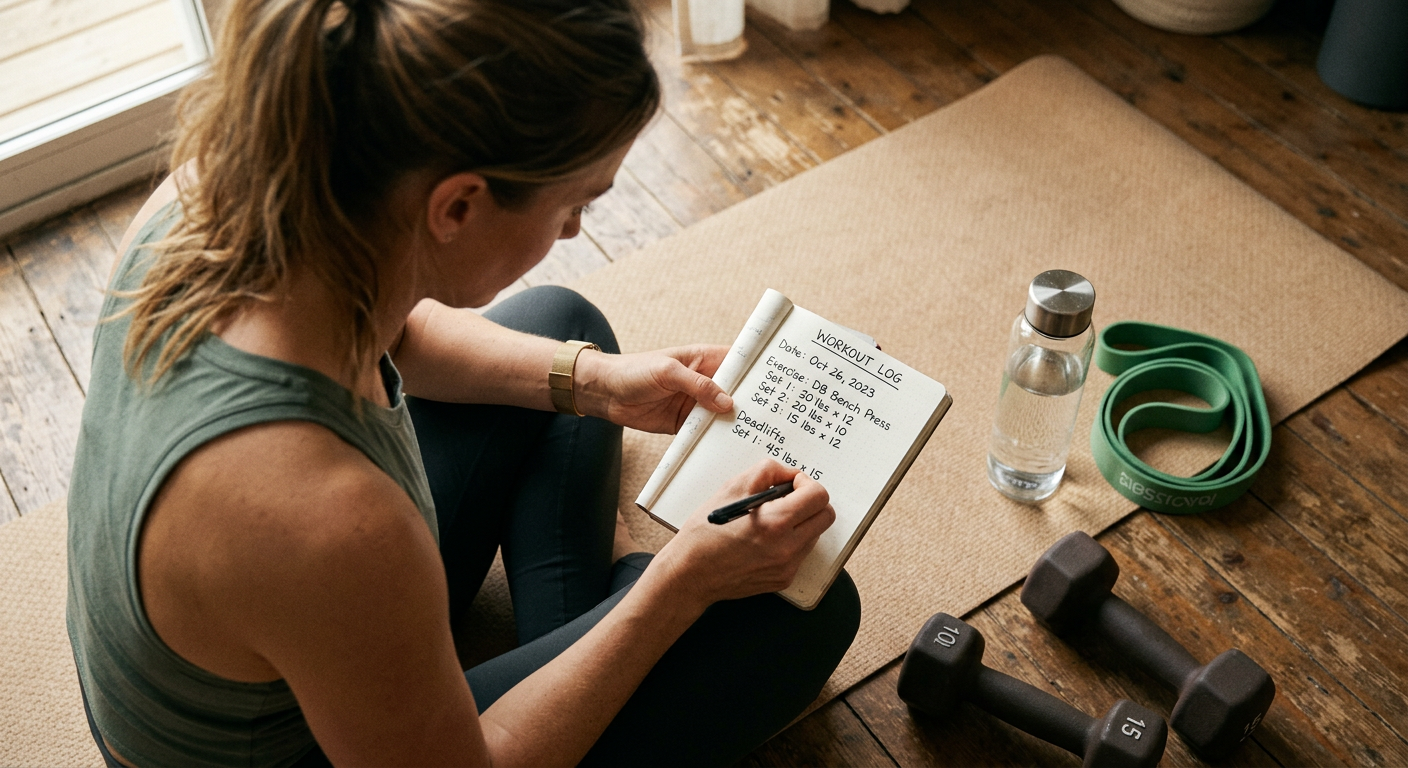
- Keep a brief training log with the exercise, weight, repetitions, and a note about how the session felt.
For example, if you perform two sets of eight goblet squats with a 15-pound dumbbell in Week 1, aim for two sets of nine or 10 before increasing the load. This approach keeps the routine challenging while protecting the movement quality that makes strength useful.
The Office on Women’s Health notes that women should work all major muscle groups and allow a day between strength sessions to limit unnecessary stress on muscles and joints. Recovery is not a gap in the plan. It is part of the plan.
Common Mistakes We Can Avoid From the Start
Beginners do not need flawless technique or expensive gear, but a few habits make training safer and more productive. The aim is to train with intention, not to chase exhaustion.
Doing Too Much in the First Two Weeks
Starting with five hard workouts can create soreness that makes daily life miserable and interrupts momentum. Two sessions per week is enough to establish the habit and learn how your body responds.
Changing Every Exercise Every Session
Variety can be enjoyable, but frequent changes make it difficult to measure progress. Keep the main lifts for four weeks, then adjust a movement if it is uncomfortable, boring, or no longer challenging.
Choosing Weight That Is Too Light or Too Heavy
Very light weights may not provide enough stimulus, while weights that force you to compensate can irritate joints. Choose a load that makes the final repetitions challenging while you can still move with control.
Treating Pain as a Requirement
Muscle fatigue and mild soreness can happen when we start a new program. Sharp pain, numbness, dizziness, chest pain, or pain that worsens with each repetition are signals to stop and seek appropriate medical guidance.
Food, Sleep, and Recovery Support Your Training
Strength workouts create the signal to adapt, while food and recovery help your body respond. We do not need a complicated meal plan to begin, but regular meals with protein, carbohydrates, fruits or vegetables, and adequate fluids can make training feel better.
Aim to include a protein-rich food in meals across the day, such as eggs, Greek yogurt, tofu, beans, fish, chicken, or lean meat. Carbohydrates such as fruit, oats, rice, potatoes, and whole-grain bread help fuel activity. If your goal includes weight change, avoid making severe calorie cuts while starting a new routine because energy and recovery matter.
Sleep also affects training quality. If a poor night leaves you drained, complete fewer sets, use lighter resistance, or take a walk instead. A flexible plan survives imperfect weeks better than a rigid one.
Frequently Asked Questions
Do women need a different strength routine than men?
No, the foundational movement patterns are the same, but exercise selection, loads, goals, preferences, and recovery should fit the individual. We can use the same squat, hinge, push, pull, carry, and core patterns while adapting the plan to our experience, equipment, injuries, and schedule.
Will lifting weights make me bulky?
Most beginners will not suddenly develop a large amount of muscle from two weekly strength sessions. Building significant muscle size takes sustained training, progressive loading, adequate nutrition, and time. For many women, strength work improves confidence and daily capability long before visible physique changes become the focus.
Can I do this routine at home without dumbbells?
Yes, body weight and resistance bands can cover every movement pattern in the program. Use chair squats, wall or counter push-ups, band rows, band hinges, glute bridges, and loaded carries with a backpack or reusable grocery bags.
How long before I feel stronger?
Many beginners notice better coordination and confidence within a few weeks. Meaningful strength improvements commonly build over several weeks of consistent practice, especially when you record your sessions and increase the challenge gradually.
Should I lift if I am sore from the previous workout?
Mild soreness that improves as you warm up is often manageable, but severe soreness may mean you need more recovery. Take an extra rest day, walk gently, or reduce the next workout’s volume. Do not train through sharp or worsening pain.
What if I have a medical condition or am pregnant?
Talk with a qualified health professional before starting or changing an exercise plan if you have a chronic condition, recent surgery, significant joint pain, are pregnant, or are returning after childbirth. They can help you choose safe movements and appropriate intensity for your situation.
Make Your Next Workout Easier to Start
We make fitness guidance more useful when it fits real schedules, budgets, and energy levels. Visit Content Beast for more clear, evidence-informed articles on healthy habits, sleep, movement, and everyday well-being.
Choose one training day, set out your shoes or equipment the night before, and write down the first exercise you will do. A small setup step can remove the friction that turns good intentions into skipped sessions.
Strength Comes From Repetition, Not Perfection
The most effective beginner plan is the one we can return to next week. Two full-body sessions, gradual progress, and patient attention to form create a strong foundation without overwhelming your calendar or your body.
Use the first month to build trust in the process. When squats feel steadier, a row feels more controlled, or you carry groceries with less effort, those are real signs that your training is working. Keep the routine simple, track the small wins, and let consistency do the heavy lifting.