
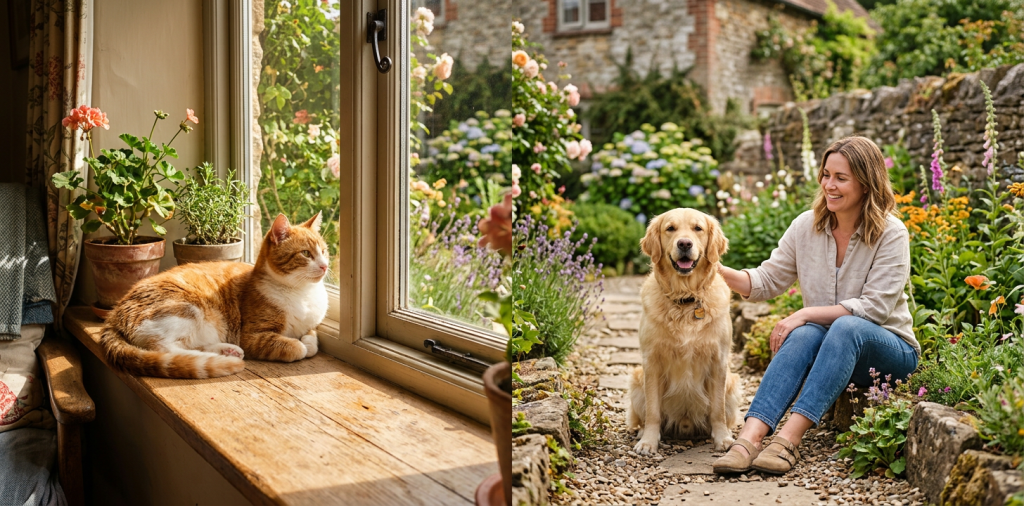
Choosing between a cat and a dog is less about picking the “better” pet and more about finding the companionship style that fits your real life. Cat vs dog personality differences can shape your daily routines, your activity level, your home environment, and even the kind of bond you build over time.
Dogs are often more socially expressive and routine-driven, while cats frequently communicate affection in subtler, more selective ways. Those broad patterns matter, but individual temperament, early experiences, health, and your household setup matter just as much.
The Biggest Personality Differences at a Glance
Cats and dogs can both be loving, playful companions, but they tend to ask for connection in different ways. A dog may invite you into its day repeatedly, while a cat may choose a few meaningful moments of contact and expect you to respect its boundaries.
| Trait | Dogs | Cats | What It Means at Home |
|---|---|---|---|
| Social style | Often outwardly social | Often selective | Dogs may seek more daily interaction |
| Communication | More obvious body language | More subtle signals | Cat owners benefit from close observation |
| Routine | Usually thrive on structure | Value predictability | Both need consistency, in different forms |
| Training | Often motivated by shared tasks | Can learn, on their terms | Dogs usually need more active practice |
| Affection | Frequently demonstrative | Often quiet and chosen | Both can form strong attachments |
A study of 1,270 people living with both species found that owners rated dogs higher in sociability, protectiveness, and reactivity, while cats scored higher in neuroticism. The findings reflect owner perceptions rather than a rule for every animal, but they support what many multi-pet households notice every day: cats and dogs often express personality through different social patterns. Read the study
Dogs Usually Make Their Feelings Easier to Read
Dogs are generally more direct about excitement, concern, playfulness, and affection. Tail movement, posture, vocalizations, and proximity often make their emotional state easier for people to notice, although every dog still deserves careful, respectful interpretation.
Dogs often seek shared activity
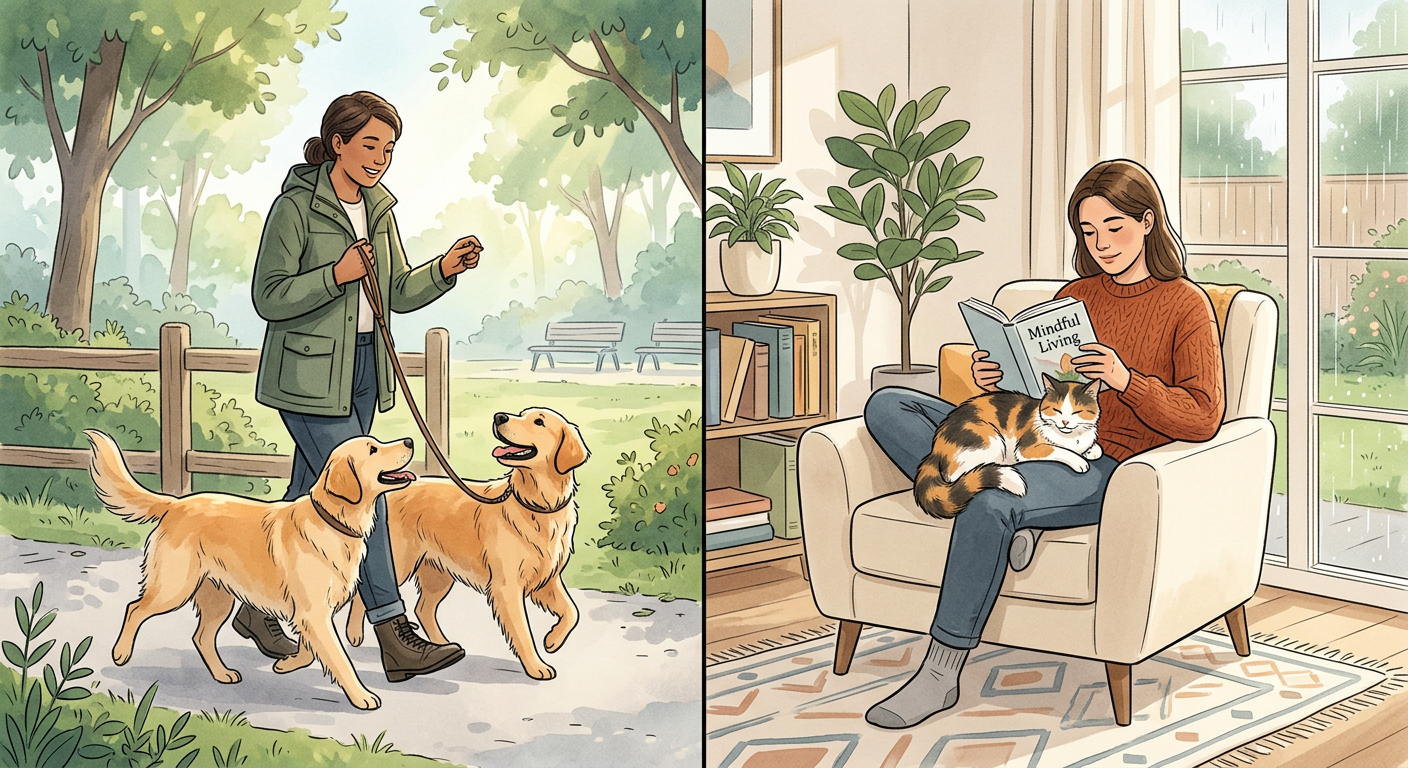
Many dogs enjoy participation. They may want to walk with us, follow us from room to room, practice cues, play fetch, or simply settle nearby while we work. This tendency can make dogs an excellent fit for people who want a pet relationship built around regular interaction and a predictable schedule.
That does not mean every dog is outgoing. A shy dog may need quiet introductions, gradual confidence building, and plenty of choice. The American Veterinary Medical Association advises prospective owners to consider how a dog fits their home, family, and lifestyle before committing, since unmet expectations are a common reason animals are surrendered. Review the AVMA’s dog-selection guidance
Training is often part of the relationship
Dogs were selectively bred across generations for varied working and companion roles, so many respond well to reward-based training and shared problem-solving. Training is not only about obedience. It provides mental exercise, builds communication, and gives an energetic dog an appropriate outlet.
For busy households, this is an important tradeoff. A dog may be deeply rewarding for someone who enjoys daily walks and structured engagement, but that same need can feel demanding when work, caregiving, travel, or health limits leave little room for routine.
Cats Often Show Affection Through Choice and Trust
Cats are not emotionally distant by default. They are often more particular about timing, touch, and personal space, which can make their affection feel quieter but no less meaningful.
A cat who slow-blinks at you, naps nearby, follows you into another room, rubs against your leg, or brings you a toy may be inviting connection. The key difference is that cats commonly prefer to control the pace of that connection. When we allow them to approach, pause, and leave freely, many cats become more relaxed and socially confident.
Subtle signals matter more with cats
Cat body language can be easy to misread. A flicking tail, flattened ears, a tense body, or sudden withdrawal can mean a cat needs space, not more petting. Learning these cues helps prevent stress and reduces the chance that a friendly interaction turns into a scratch or bite.
Research involving more than 4,300 cats identified stable differences in traits such as fearfulness, activity and playfulness, aggression toward people, sociability toward people, and sociability toward other cats. That is a useful reminder that “independent” does not describe every cat, and that a cat’s individual personality should guide care decisions. Explore the feline personality research
Independence does not mean low care
Cats may not require walks, but they do require daily attention. Litter boxes need consistent care, indoor spaces need enrichment, and even a calm cat benefits from play, climbing areas, scratching surfaces, and veterinary care.
A cat can suit someone with a quieter home or a less predictable workday, especially if the person still has time to play and build trust. The relationship may develop gradually, which appeals to people who enjoy observing behavior and earning affection over time.
A Day 9 Decision: Compare Your Ordinary Tuesday
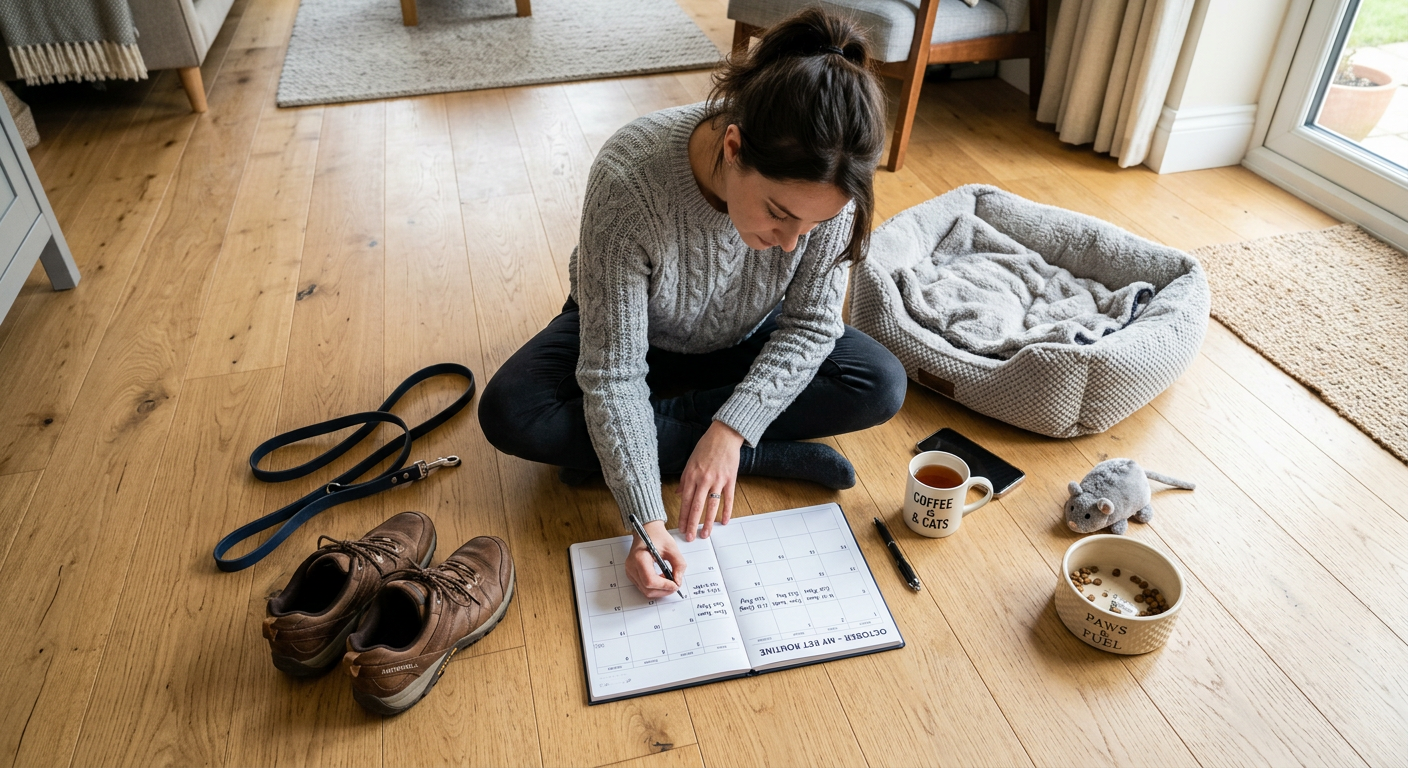
The best way to weigh cat vs dog personality differences is to picture an ordinary weekday, not an ideal weekend. Your pet will experience your typical schedule, energy level, budget, and living space far more often than your most ambitious plans.
Ask yourself these practical questions:
- Do we want a companion that encourages us to leave the house and move more?
- Can we reliably handle morning and evening walks, even in poor weather?
- Would we prefer a pet that may be content to rest nearby while we recover from a long day?
- Are we comfortable learning subtle body language and respecting a pet’s request for space?
- Does our housing allow for barking, outdoor breaks, climbing furniture, litter box placement, or multiple pets?
- Can we make room in the budget for food, preventive care, grooming, supplies, training, and unexpected veterinary needs?
For fitness-minded readers, a dog can become a steady walking or hiking companion, but only if the dog’s breed, age, health, and temperament support that activity. For people focused on stress reduction and mindful routines, a cat may offer calm companionship, provided we do not mistake quietness for a lack of needs.
Personality Is Individual, Not a Species Guarantee
The most useful rule is simple: choose the individual animal, not the stereotype. A highly social cat may greet guests at the door, while a reserved dog may prefer one trusted person and a quiet routine.
Breed background, genetics, socialization, age, medical conditions, prior experiences, and home environment all influence behavior. A young, high-energy dog can look very different from a senior rescue dog. A cat raised with gentle handling may be far more people-oriented than a cat that had little early social contact.
This is especially important when adopting. Spend time with the pet, ask shelter staff or foster caregivers about behavior in different situations, and be honest about what you can provide. A compatible match reduces stress for everyone and creates a stronger foundation for training, health care, and attachment.
What Each Personality Style Can Teach Us
Cats and dogs can support well-being in different ways because they invite different habits from us. Dogs often encourage movement, routine, and social contact. Cats can encourage observation, patience, and a calmer kind of companionship.
A recent daily-life study of 188 pet owners found that interacting with either cats or dogs was associated with higher positive affect and lower negative affect in the moment. The study also found that context matters, so we should avoid assuming one species automatically improves every stressful situation. Read the daily interaction study
The practical takeaway is to choose a pet whose needs help create habits you can actually sustain. A companion animal should add meaningful responsibility and connection, not constant guilt about needs we cannot meet.
Frequently Asked Questions
Are cats really less affectionate than dogs?
No, cats are not inherently less affectionate. They often show affection through proximity, slow blinking, head rubbing, play, and choosing to spend time near us, rather than through the more obvious greetings and attention-seeking many dogs display.
Are dogs easier to train than cats?
Dogs are usually easier to train for structured cues because many enjoy social rewards and repeated cooperative tasks. Cats can learn cues, carrier comfort, targeting, and simple tricks, but short reward-based sessions and respect for their motivation are especially important.
Which pet is better for a small apartment?
Either can live well in an apartment when their exercise, enrichment, and noise-management needs are met. A calm adult cat may be easier in a compact space, while some small or lower-energy dogs can also thrive with reliable walks and mental stimulation.
Can a cat and dog live happily together?
Yes, many can coexist well when introductions are gradual and each animal has safe space, separate resources, and control over contact. Personality compatibility matters more than the assumption that cats and dogs naturally dislike one another.
Do cats need less time than dogs?
Cats may need less hands-on scheduling because they do not require walks, but they still need daily play, litter care, enrichment, affection on their terms, and health monitoring. Less time outside does not mean no time invested.
Is it better to adopt an adult pet if personality matters most?
Often, yes. Adult cats and dogs usually have more established behavior patterns, so shelters and foster families may be better able to describe their social style, energy level, and household preferences than they can with a very young animal.
Choose the Relationship, Not the Label
Cat vs dog personality differences are real enough to shape daily life, but they should be used as a starting point rather than a shortcut. Dogs often bring active, expressive companionship, while cats often build trust through quieter, more selective connection.
The right pet is the one whose needs fit our home and whose personality gives us a relationship we are ready to nurture for years. When we choose based on routine, resources, and individual temperament, we give both ourselves and the animal a better chance to thrive.
Keep Building a Happier Life With Your Pet
We publish practical articles for people who want to make informed choices about pet care, health, habits, finances, and everyday well-being. Visit Content Beast for more useful ideas that help you care for the animals and people who matter most.