How to Teach a Puppy to Stop Biting Without Scaring Them
Those needle-sharp puppy teeth can make even a loving new-pet routine feel exhausting. The encouraging news is that most puppy biting is normal exploration, play, and teething behavior, and you can reduce it with calm, consistent responses instead of punishment.
When we teach a puppy to stop biting, the goal is not to make play disappear. We want to show our puppy that human skin, clothes, and ankles are never toys, while chew toys, calm play, and polite choices reliably earn attention. That distinction is the foundation of bite inhibition and a safer adult dog.
Why Puppies Bite in the First Place
Puppies bite because their mouths are their main tools for play, discovery, and relief during teething. Identifying the moment that triggers the behavior helps us respond before the puppy becomes too wound up to learn.
A puppy may nip when they are:
- Excited by moving hands, feet, sleeves, or shoelaces
- Tired and overdue for a nap
- Teething and looking for pressure on their gums
- Frustrated during handling, such as putting on a harness
- Inviting play after a burst of energy
- Overstimulated by rough games, visitors, or a busy room
The ASPCA explains puppy mouthing as a normal part of playing, chewing, and investigating. It also notes that puppies learn bite inhibition through play, when biting too hard makes the interaction stop.
That means the solution is not louder correction. It is a predictable pattern: teeth on skin ends the fun, teeth on an appropriate toy keep the fun going.
The Core Rule: Teeth on People End Attention
The fastest lesson for most puppies is simple: biting makes access to us pause, while gentle behavior keeps connection going. Every person in the household needs to follow the same rule, because mixed messages slow progress.
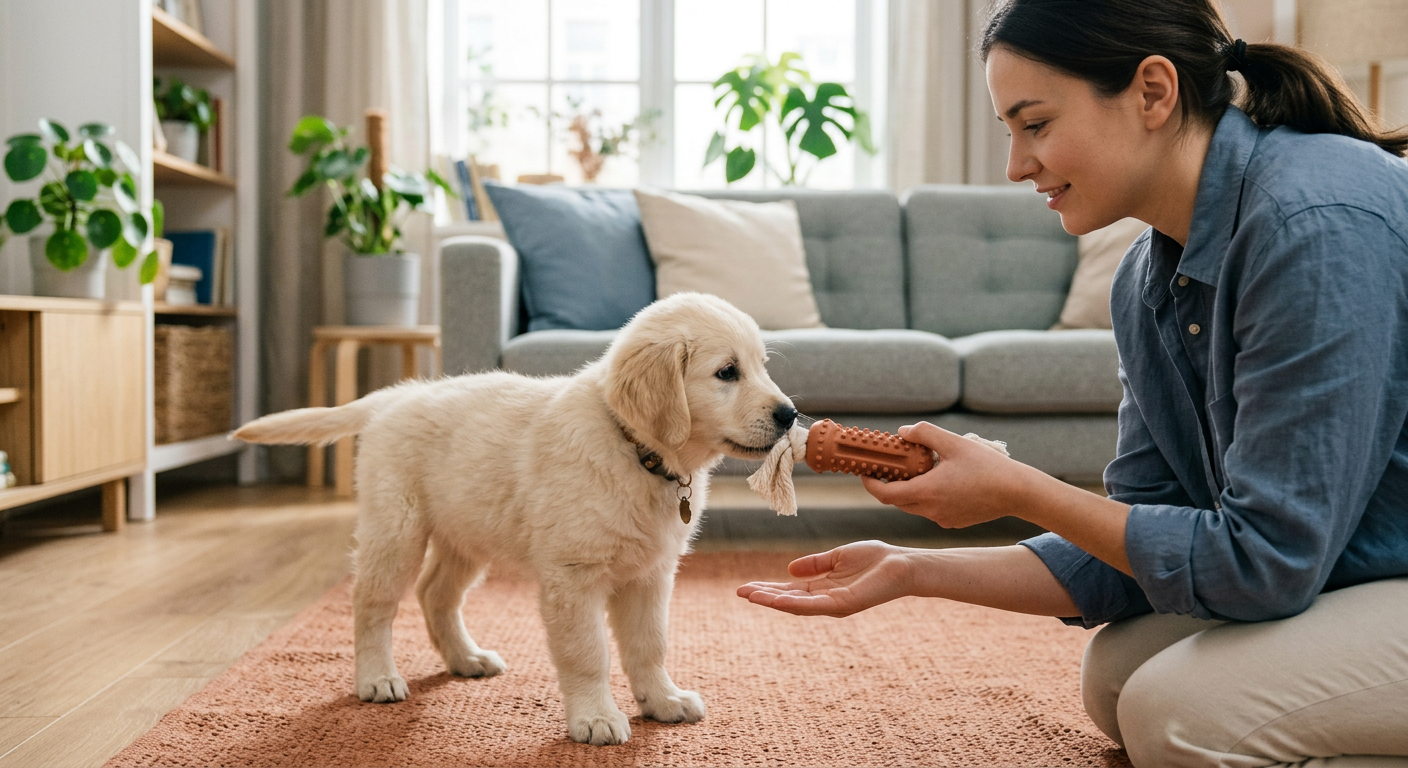
The instant teeth touch skin or clothing, stop moving your hands and feet. In a calm, neutral voice, say a short marker such as “too bad,” then stand up or step behind a baby gate for 10 to 20 seconds. Do not lecture, push the puppy away, or turn it into a chase game.
When you return, offer a toy and restart only if your puppy is calmer. If they immediately bite again, repeat the short break. The lesson is clear without being frightening: polite play brings people back.
A brief verbal “ouch” can help some puppies pause, but it can make others more excited. Watch your puppy rather than relying on one method. If the sound ramps them up, skip it and move straight to the quiet pause.
Redirect Before the Bite Happens
Redirection works best when we offer a legal chewing option before the puppy grabs a hand or pant leg. Keep suitable toys within reach in the rooms where your puppy spends time, especially during energetic morning and evening periods.
Use different toys for different needs:
- Soft tug toy: For supervised interactive play and ankle ambushes
- Rubber food toy: For quiet mental work and settling after activity
- Puppy-safe chew: For teething sessions and independent downtime
- Lightweight fetch toy: For play that keeps hands away from the puppy’s mouth
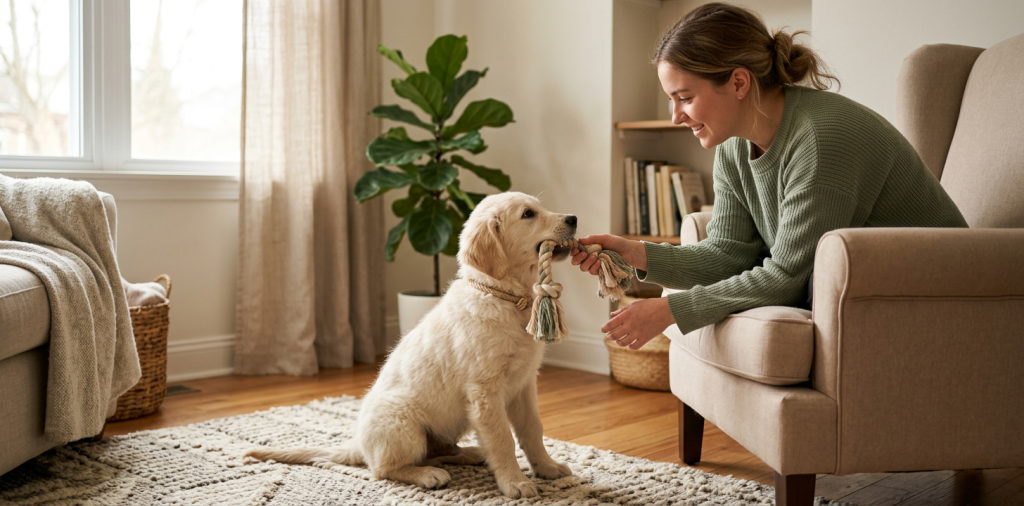
If your puppy targets your feet, freeze. Moving feet can make you more interesting. Present the tug toy close to the floor, then praise when they grab it. Resume walking only after the puppy has switched to the toy.
Avoid wrestling with your hands, wiggling fingers in your puppy’s face, or allowing playful sleeve-tugging. Those games teach a puppy that human body parts belong in the play category, then ask them to understand a rule that keeps changing.
Use a Day 5 Routine to Catch the Real Pattern
By day five of consistent training, many families notice a useful pattern: biting spikes at predictable times, not randomly. Use that insight to build a daily rhythm around prevention instead of waiting for another painful nip.
For the next five days, make a quick note each time your puppy bites. Record the time, what happened in the minute before, and whether your puppy had recently eaten, played, gone outside, or slept. You may find that the problem appears every evening around dinner, after 45 minutes awake, or when children start running through the room.
Then make one targeted adjustment. For example, if biting appears after a long awake period, offer a potty break, a food toy, and a quiet nap space before the usual meltdown. If it happens when you prepare meals, set up a puppy pen with a safe chew before you begin cooking.
This approach makes training more manageable because we are not trying to correct every bite in isolation. We are changing the environment and routine that repeatedly sets the puppy up to fail.
Reward the Behavior You Want to See More Often
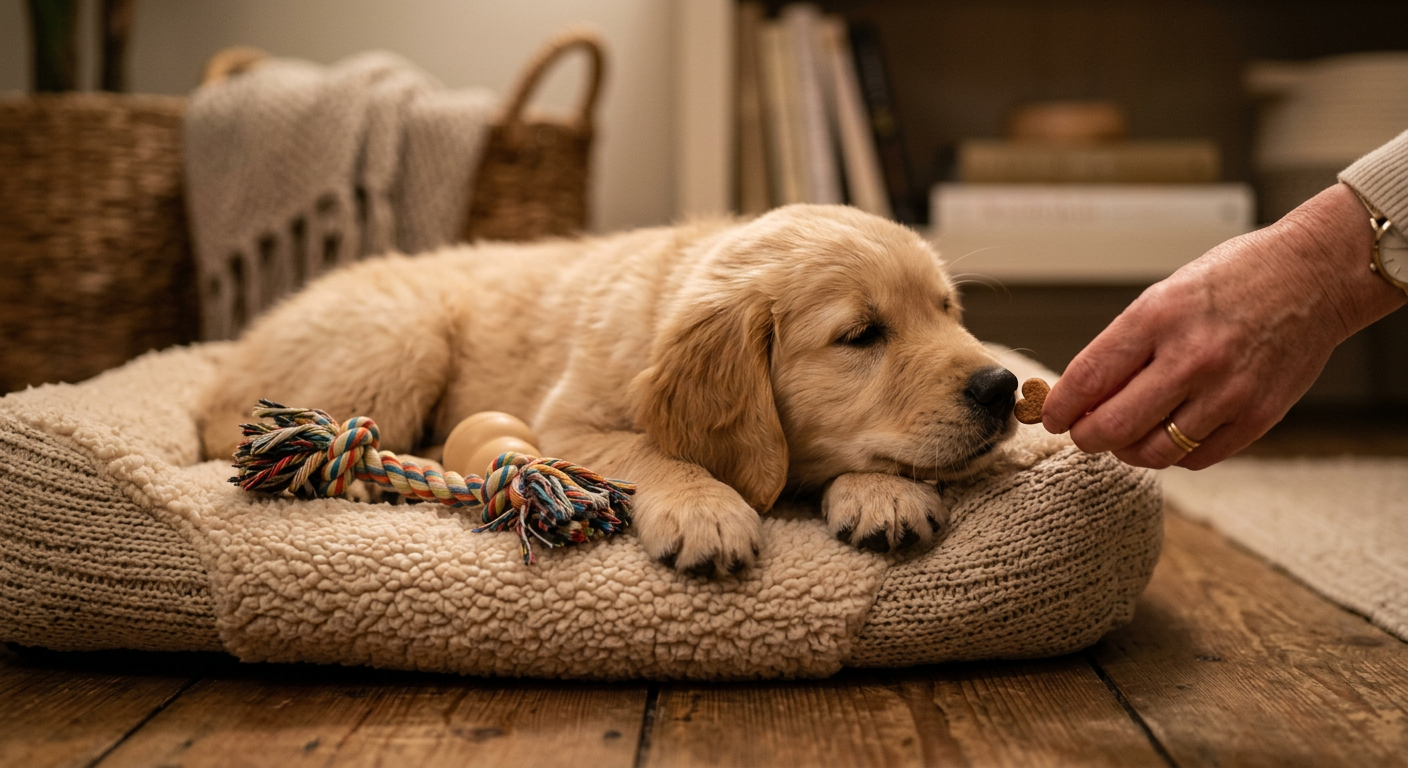
Puppies learn faster when we actively notice calm choices, not only biting mistakes. Reward a puppy for sitting near you, chewing their own toy, walking past your feet, or allowing gentle petting without grabbing your hand.
Keep rewards small and immediate. A piece of kibble, a calm “good,” a toss of the toy, or a few seconds of gentle attention can be enough. The reward should arrive while your puppy is still doing the behavior we want repeated.
The American Veterinary Society of Animal Behavior recommends reward-based methods for all dog training and behavior work. That is especially important with a young puppy, because harsh handling can create fear, defensive reactions, or confusion around people.
We should also reward calm handling. Briefly touch a paw, collar, ear, or shoulder, then offer a treat before the puppy mouths your hand. Over time, this teaches that human touch predicts good things, not a wrestling match.
Make Sleep, Enrichment, and Play Part of the Plan
A puppy who is overtired or under-stimulated is more likely to become mouthy. Regular naps, age-appropriate exercise, sniffing, and short training sessions often reduce biting more effectively than adding another correction.
Rather than one long, high-energy session, use several short outlets across the day. Try a few minutes of simple cue practice, a sniff-focused walk in a safe area, a food puzzle, supervised tug, and a quiet chew period. End active play while your puppy is still successful, not after they have reached peak excitement.
VCA Animal Hospitals recommends a regular daily routine with play and mental stimulation for mouthy puppies, along with appropriate toys for chewing and oral play. Consistency matters because every family member is teaching the same rules, whether they realize it or not.
If children live in the home, supervise every interaction. Give children an easy script: stand still, hold the toy out, and call an adult if the puppy bites. Young children should not be asked to manage biting on their own.
What Not to Do When Your Puppy Bites
Avoid punishment methods that may stop a behavior in the moment but do not teach a safe replacement. Biting back, holding the muzzle shut, scruff shaking, yelling, or using painful equipment can increase fear and damage trust.
Do not repeatedly shove your puppy away, either. Many puppies find that exciting and interpret it as a new game. A brief, boring pause is clearer than a physical struggle.
We also should not expect a puppy to know the right choice without access to it. If you are sitting on the floor, keep a toy nearby. If you are walking through the kitchen during puppy zoomies, use a gate or pen so you do not rehearse the ankle-biting pattern again.
When Puppy Biting Needs Professional Help
Most playful nipping improves with steady training, but some biting deserves prompt professional support. Contact your veterinarian and a qualified behavior professional if your puppy bites hard enough to puncture skin, becomes stiff or frozen, guards items, bites during ordinary handling, or seems fearful rather than playful.
Pay close attention to body language. A loose, wiggly puppy who bounces toward a toy is different from a puppy with a tense body, hard stare, exposed teeth, or repeated growling around touch or food. Early support is not an overreaction. It is a practical way to protect your puppy and everyone around them.
Frequently Asked Questions
How long does it take for a puppy to stop biting?
Most puppies improve noticeably within a few weeks when everyone responds consistently, but teething and excitement can keep the behavior active for months. Track progress by looking for fewer bites, gentler mouths, and faster redirection rather than expecting perfection overnight.
Should we use a crate when our puppy gets bitey?
A crate can support a calm nap routine when your puppy is already crate-comfortable, but it should not be used as a punishment. Offer a potty break, a safe chew, and a quiet transition so the crate remains a positive resting place.
Is tug-of-war okay for a puppy that bites?
Yes, supervised tug can be helpful when it uses a toy rather than hands and includes simple rules. Pause the game if teeth touch skin, reward a release, and restart only when your puppy is calm enough to play politely.
Why does our puppy bite us more in the evening?
Evening biting often comes from accumulated fatigue and stimulation. Try moving the final active play session earlier, then use a predictable wind-down routine with a potty trip, calming chew, and sleep.
Should we give our puppy more exercise to stop biting?
More exercise is not always the answer, especially for a tired puppy. Balance age-appropriate physical activity with sniffing, simple training, chewing, and naps, since overtired puppies can become more mouthy.
Can teething be the reason our puppy is suddenly biting harder?
Yes, sore gums can increase chewing and nipping. Offer puppy-safe chews and ask your veterinarian about safe options for your puppy’s age, size, and health history.
Build a Calmer Puppy Routine With Us
Practical pet guidance works best when it fits real life, not an unrealistic schedule. Visit Content Beast for more approachable ideas on pet care, healthy routines, sleep, habits, and everyday wellbeing.
A Kinder Response Produces a Safer Habit
Puppy biting is frustrating, but it is also a teachable stage. When we prevent predictable trouble, offer satisfying alternatives, end attention briefly when teeth touch skin, and reward calm choices, our puppies learn what works without feeling scared.
Start with one consistent household rule this week: teeth on people make the interaction pause, teeth on toys keep it going. That small boundary, repeated patiently, can turn chaotic play into the polite companionship you want for years to come.