
A better day rarely begins with a dramatic overhaul. It usually starts with a small choice that removes friction, such as putting on walking shoes before checking email or setting a glass of water beside the coffee maker.
The most useful positive habits for daily life are realistic enough to repeat when work is busy, sleep was imperfect, and motivation is low. We do not need a flawless routine. We need a few reliable actions that support our energy, health, finances, relationships, and peace of mind.
A recent systematic review of health behavior studies found that the median time for habits to take hold ranged from 59 to 66 days, with a wide individual range. That is a helpful reminder that consistency matters more than chasing a fictional 21-day finish line. Read the study in PubMed.
Build Habits Around Anchors, Not Willpower
Lasting routines work best when we connect them to something that already happens. Instead of hoping we will remember a new behavior, we attach it to a dependable cue in our day.
For example, take vitamins after brushing teeth, spend two minutes reviewing bank balances after lunch, or do a short mobility routine while waiting for coffee. The existing activity becomes the trigger, which reduces the number of decisions we need to make.
Use the smallest version first
Start with an action so easy it feels almost too small. A five-minute walk, one prepared vegetable, one sentence in a journal, or a transfer of five dollars to savings all count.
Small actions protect momentum. Once a behavior feels normal, we can extend it without turning daily life into a constant self-improvement project.
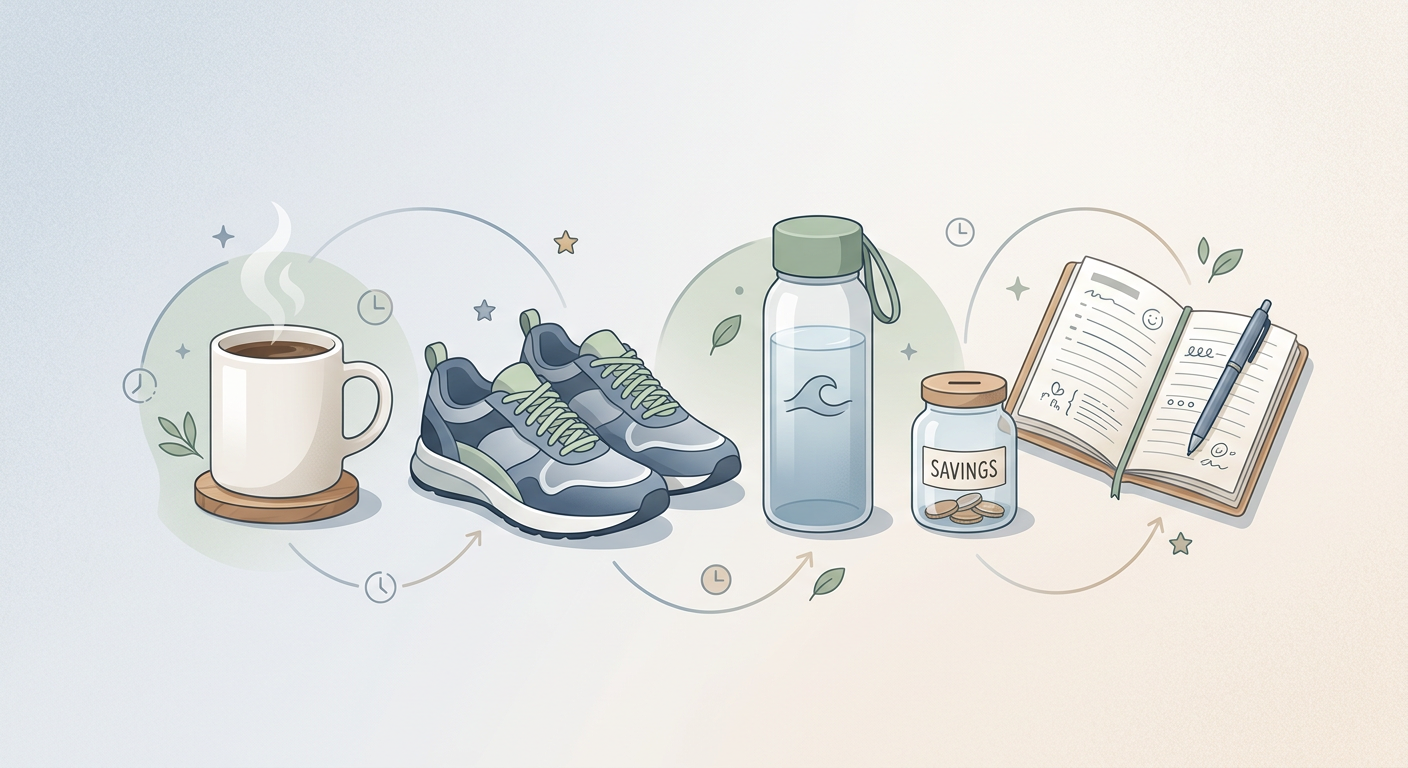
Choose the Daily Habits With the Biggest Return
The best routines support several areas of life at once. A brisk walk can improve mood, provide movement, create time away from screens, and even become a chance to connect with a friend or walk the dog.
| Habit area | Small daily action | Why it matters | Make it easier |
|---|---|---|---|
| Movement | Ten to 25 minutes of walking | Supports energy and fitness | Put shoes by the door |
| Sleep | Keep a regular wind-down time | Improves recovery and focus | Set an evening reminder |
| Food | Add protein and produce to one meal | Helps fullness and nutrition | Prep one simple staple |
| Money | Check spending for two minutes | Builds awareness before purchases | Use one banking app shortcut |
| Mindfulness | Pause for three slow breaths | Creates space before reacting | Pair it with transitions |
| Connection | Send one genuine message | Strengthens relationships | Do it during a routine break |
Move in a way you can repeat
We do not need an intense workout every day to benefit from more activity. The CDC recommends that adults aim for 150 minutes of moderate-intensity activity each week and muscle-strengthening work on two days each week. That can be broken into manageable pieces, including brisk walks, cycling, gardening, bodyweight exercises, or active play.
For a daily habit, choose a movement option that fits your real schedule. A 12-minute walk after dinner is often more sustainable than a demanding plan that requires an hour you do not have.
Protect sleep before trying to optimize everything else
Sleep affects appetite, patience, attention, training recovery, and decision-making. Yet it is often the first need we sacrifice when schedules become crowded.
The National Institutes of Health notes that adults generally need seven to nine hours of sleep a night. In 2024, 30.5 percent of U.S. adults reported sleeping fewer than seven hours in a 24-hour period, according to the National Center for Health Statistics.
A practical starting point is a consistent wind-down cue. Lower the lights, charge the phone outside the bedroom if possible, make tomorrow's top task visible, and begin the same short routine most nights. We are not trying to engineer perfect sleep. We are making rest easier to choose.
Make one meal more supportive
Nutrition improves most when we stop demanding perfection from every meal. Pick one daily meal and make it a dependable source of protein, fiber-rich plants, and satisfying flavor.
For breakfast, that may mean yogurt with fruit and nuts. For lunch, it may be leftovers paired with a bagged salad. For dinner, add frozen vegetables and beans to a meal you already enjoy. The goal is to create a default that works on ordinary weekdays.
Give your money a daily check-in
Financial well-being benefits from short, regular attention. A two-minute check of recent transactions can help us notice duplicate subscriptions, impulse spending patterns, or upcoming bills before they become stressful surprises.
Keep this habit neutral. We are gathering information, not scolding ourselves. Once each week, use what you noticed to make one decision, such as moving a small amount to savings, planning lower-cost meals, or pausing a purchase for 24 hours.
Day 8: Turn Repetition Into a Personal Baseline
By Day 8, a new routine is no longer just an idea. We have enough real-world evidence to see what fits, what gets skipped, and what needs to change.
Rather than adding five more habits, use this point to review one behavior with three questions:
- What time and place made it easiest?
- What obstacle showed up more than once?
- What is the smallest adjustment we can make this week?
If evening walks keep getting missed, move them to lunch or make them shorter. If meal prep feels exhausting on Sunday, prepare only one ingredient, such as washed fruit, cooked rice, or a tray of roasted vegetables. If a savings habit is forgotten, automate a modest transfer on payday instead of relying on memory.
This Day 8 check matters because sustainable change comes from adaptation. We are building routines around our lives, not trying to force our lives around a rigid plan.
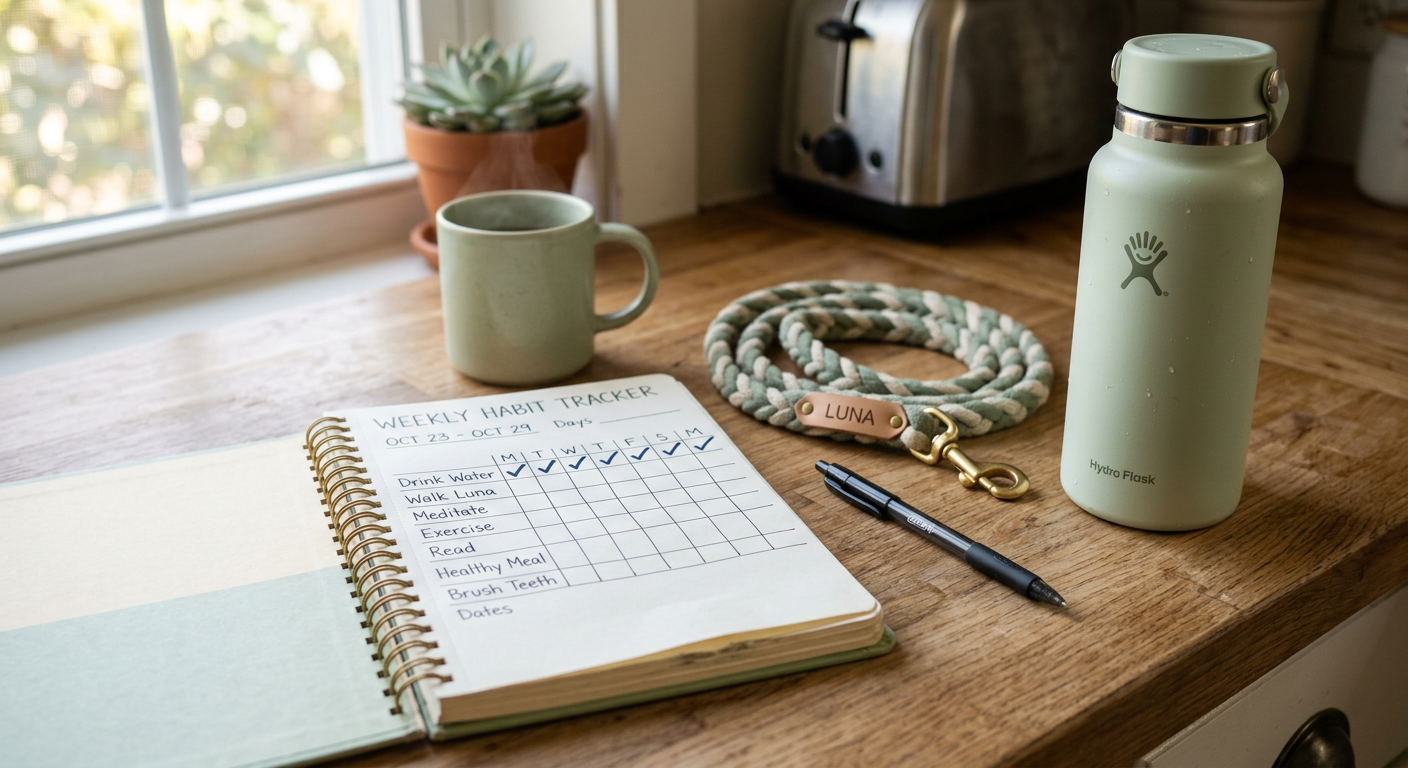
Make Your Environment Do More of the Work
Motivation changes from day to day, but our surroundings can quietly guide our choices. Put the desired action in sight and make the unwanted default slightly less convenient.
Keep fruit where you first see it, place a book on the pillow to prompt screen-free reading, store a reusable water bottle at your desk, and leave resistance bands near the television. For spending, remove saved card details from shopping sites. For mindful pauses, place a short reminder near your workspace.
Pair habits with everyday responsibilities
Daily life already includes useful cues. Dog owners can add a few minutes of purposeful walking during a regular outing. Parents can use school drop-off as a reminder to drink water or call a relative. People working from home can stand and stretch whenever a meeting ends.
The habit does not have to be impressive to be valuable. It has to happen often enough that it becomes part of who we are and how we operate.
Track evidence, not perfection
A simple calendar mark or note in a phone app can make progress visible. Track the behavior, not a vague outcome. Write “walked 15 minutes,” “packed lunch,” or “reviewed spending,” rather than rating the day as good or bad.
Missed days are expected. The most important rule is to avoid making one missed day into a reason to quit. Restart with the next available cue.
A Simple Seven-Day Habit Rhythm
We can make positive habits for daily life easier by assigning each day a light focus rather than trying to solve every area at once.
Monday: Set up the environment
Refill the water bottle, choose movement clothes, and make one healthy food option visible. A prepared environment lowers resistance all week.
Tuesday: Add a movement break
Take a walk, do a short strength circuit, or use a mobility video between tasks. Focus on showing up, not performance.
Wednesday: Check your spending
Review recent purchases and upcoming bills for two minutes. Choose one small adjustment without judgment.
Thursday: Strengthen a relationship
Send a thoughtful message, schedule a call, or eat one meal without a screen. Social connection deserves a place in our routines.
Friday: Prepare for better sleep
Set a realistic bedtime target for the weekend and decide what will make it easier, such as fresh sheets, a quieter room, or a later caffeine cutoff.
Saturday: Do a life-maintenance task
Restock groceries, wash workout clothes, refill pet supplies, or prepare easy meals. These tasks reduce weekday stress and support other habits.
Sunday: Review and simplify
Notice what worked and remove one source of friction for the coming week. A routine that is slightly easier is a routine we are more likely to keep.
Frequently Asked Questions
How many habits should we start at one time?
Start with one or two habits. Adding too many changes at once makes it difficult to know what is helping and raises the odds that the plan becomes overwhelming.
What if we miss several days in a row?
Restart with the smallest possible version of the habit. Review what interrupted the routine, then adjust the cue, timing, or difficulty instead of treating the lapse as failure.
Is a morning routine necessary for healthy habits?
No. Morning routines work well for some people, but the best time is the time we can repeat. Night-shift workers, parents, and people with unpredictable schedules may succeed with afternoon or evening anchors.
Can daily habits improve mental well-being without formal meditation?
Yes. Brief walks, time outdoors, regular meals, sleep consistency, social contact, and a few slow breaths before stressful moments can all support emotional steadiness. Formal meditation is optional, not a requirement.
Do we need an app to build habits?
No. A paper calendar, a note on the refrigerator, or a recurring phone reminder can work just as well. Use technology only if it makes the behavior easier to remember and repeat.
How long should a daily habit take?
A habit can take less than two minutes at first. The right length depends on the behavior, but the early priority is consistency, not duration.
Keep Building a Healthier Everyday Life
A reliable life is built from repeatable choices, not bursts of motivation. When we anchor one small action to a familiar part of the day, make it visible, and adjust it after setbacks, we give it a real chance to last.
For more evidence-informed ideas on health, money, pet care, sleep, and well-being, explore the practical articles at Content Beast. Choose one habit from this page, make the first version small, and use the next seven days to learn what helps it stick.
The Small Wins Are the System
Positive change does not require us to become a different person by next week. It asks us to create a slightly better default, then repeat it often enough that it feels ordinary.
Start with one action that serves the life you want to live. A walk, a bedtime cue, a balanced meal, a spending check, or a thoughtful message may seem modest, but repeated choices become the structure that carries us through busy days.