

Most diets fail for a predictable reason: they demand habits that do not fit ordinary life. An evidence based diet for weight loss works differently. It creates a manageable calorie gap while keeping meals satisfying, nutritious, affordable, and familiar enough to repeat.
We do not need a detox, a rigid food list, or a rule that makes dinner with friends stressful. We need a way of eating that supports health, preserves energy for daily life, and still works after the first few motivated weeks have passed.
What an Evidence-Based Weight-Loss Diet Actually Does
An effective eating plan supports gradual fat loss by lowering calorie intake without sacrificing the foods and nutrients that make meals filling. The best plan is usually the one we can follow consistently, not the one with the most dramatic promises.
Body weight changes when energy intake is lower than energy use over time, but real life is more complicated than a simple equation. Appetite, sleep, activity, food environment, medications, stress, and changes in metabolism all affect progress. The National Institute of Diabetes and Digestive and Kidney Diseases notes that metabolism slows as weight decreases, which is one reason extreme plans can become harder to sustain.
A sensible diet for fat loss should deliver four things:
- A calorie intake that supports steady progress
- Protein, fiber, and minimally processed foods that help with fullness
- Flexibility for meals out, family favorites, and social events
- Habits that remain realistic after the scale goal is met
The current Dietary Guidelines for Americans, 2025-2030 emphasize whole, nutrient-dense foods, including protein foods, dairy, vegetables, fruits, healthy fats, and whole grains, while advising people to reduce highly processed foods high in added sugars, refined carbohydrates, sodium, and unhealthy fats.
Build Meals Around Fullness, Not Deprivation
Fullness is one of the strongest practical tools we have for eating less without feeling constantly restricted. Start with protein and produce, then add carbohydrates and fats in portions that match your needs and preferences.
Put Protein at the Center of Meals
Protein can make a calorie-controlled diet more satisfying and helps support lean tissue during weight loss, especially when paired with resistance training. Good options include eggs, Greek yogurt, cottage cheese, fish, chicken, tofu, tempeh, beans, lentils, edamame, and lean cuts of meat.
For a simple meal structure, include a clear protein choice at breakfast, lunch, and dinner. A bowl of sweetened cereal may leave us hungry quickly, while Greek yogurt with fruit and oats or eggs with vegetables can make the morning easier to manage.
Make Plants the Largest Part of the Plate
Vegetables, fruit, beans, and whole grains add volume, fiber, micronutrients, and variety. They also make it easier to build satisfying meals without relying on oversized portions of calorie-dense foods.
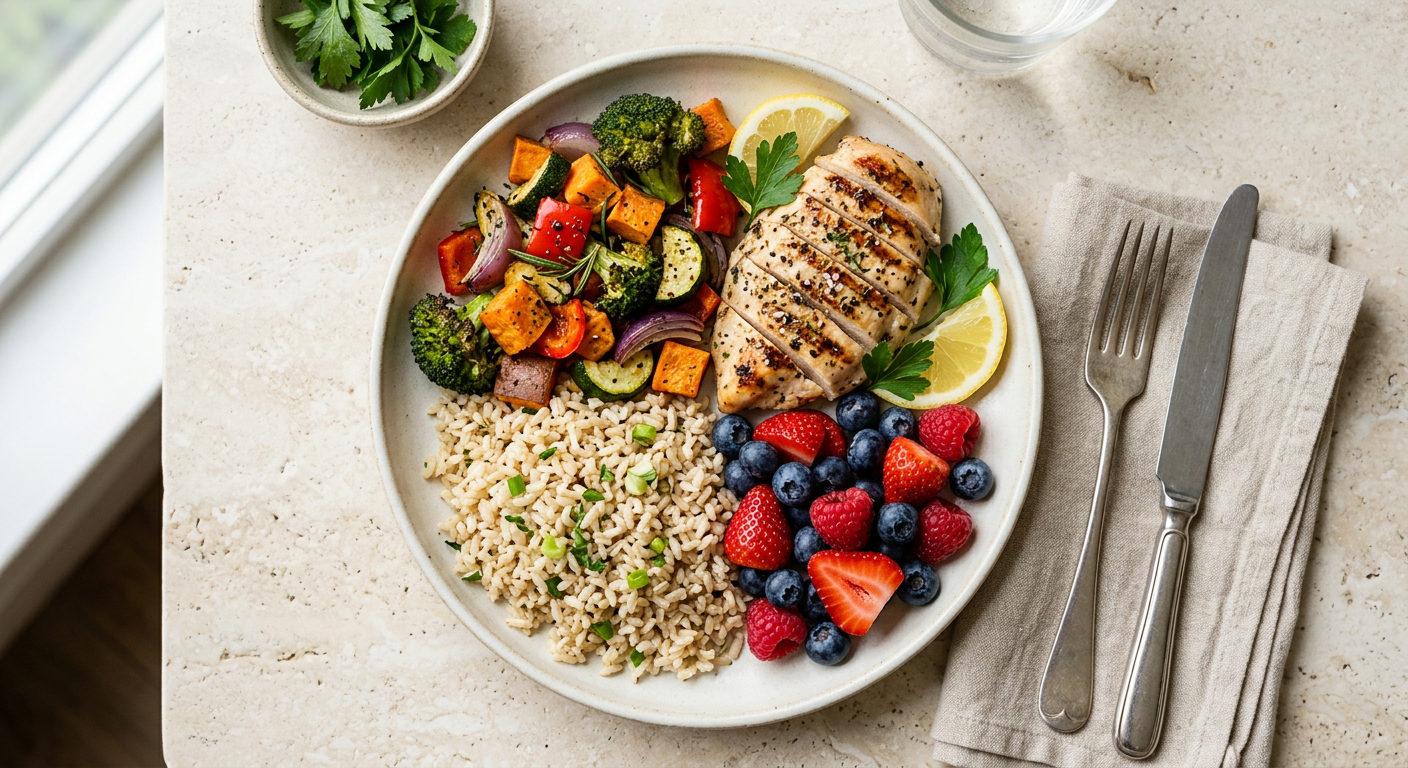
A useful visual approach is to fill about half the plate with vegetables or fruit, reserve one quarter for protein, and use the remaining space for a high-fiber carbohydrate such as potatoes, brown rice, oats, quinoa, or whole-grain pasta. This structure is flexible enough for tacos, stir-fries, grain bowls, soups, and sheet-pan dinners.
Keep Calorie-Dense Foods in the Plan
Nuts, cheese, oils, desserts, restaurant meals, and favorite snacks do not need to disappear. They simply need a place in the overall pattern. When every enjoyable food is labeled off-limits, overeating often becomes more likely after a difficult day.
We can make room by using portions intentionally. Add measured olive oil to vegetables, choose a smaller dessert we genuinely enjoy, or pair restaurant pizza with a large salad and a protein-rich side. Flexibility is not a lack of discipline. It is how an eating pattern survives real life.
Choose a Calorie Gap You Can Live With
Weight loss requires a calorie gap, but severe restriction is rarely the best answer. Aim for an intake that allows us to eat enough protein, produce, and enjoyable meals while making gradual progress.
The NIDDK Body Weight Planner offers personalized estimates for calorie intake, activity changes, goal timing, and long-term maintenance. It is more useful than generic calorie targets because it accounts for factors such as age, height, weight, sex, and activity level.
For context, NIDDK advises people with excess weight to aim to lose about 5% to 10% of current body weight within six months. For someone who weighs 200 pounds, that is roughly 10 to 20 pounds. This is a meaningful health target, not a modest consolation prize. NIDDK guidance also describes 1 to 2 pounds per week as a reasonable short-term pace for many adults.
Instead of reacting to a single weigh-in, look at a trend across several weeks. Daily body weight can move because of hydration, sodium intake, digestion, menstrual cycles, and muscle soreness. The trend matters more than Tuesday morning.
Make Day 7 the Start of a Repeatable Routine
The first week is often driven by novelty. Day 7 is where a plan becomes a routine or quietly falls apart. Rather than restarting every Monday, use the seventh day as a brief weekly review.
Ask four questions:
- Which meals kept us full and energized?
- When did hunger feel hardest to manage?
- What food or scheduling obstacle showed up?
- What is one small adjustment for the coming week?
For example, if afternoon vending-machine snacks appear three workdays in a row, the answer may not be more willpower. We could pack a high-protein snack, keep fruit at our desk, eat a larger lunch, or schedule a short walk before the usual hunger window. That is a specific change, and specific changes are easier to repeat.
Track only what helps. Some people benefit from logging meals and calories for a few weeks. Others do better with a meal template, grocery list, or photo log. The NIDDK recommends tracking food, physical activity, and weight as tools that can support motivation and consistency.

A Simple Day of Evidence-Based Eating
A healthy weight-loss menu does not need special products. This sample shows how ordinary foods can support a lower-calorie pattern while still providing satisfying portions.
Breakfast
Greek yogurt with berries, oats, and chopped walnuts, plus coffee or tea without a high-calorie add-on. For a savory option, make eggs with spinach, whole-grain toast, and fruit.
Lunch
A large salad or grain bowl with chicken, salmon, tofu, beans, or lentils. Add plenty of vegetables, a measured dressing, and a satisfying carbohydrate such as quinoa, corn, potatoes, or whole-grain bread.
Dinner
Build a familiar dinner around a protein and vegetables. Think turkey chili with beans, shrimp stir-fry with frozen vegetables, chicken fajitas with peppers, or baked tofu with roasted broccoli and rice.
Snacks
Use snacks when they solve real hunger or prevent an overeating episode later. Fruit with string cheese, hummus with vegetables, a protein-rich yogurt, or popcorn with a side of edamame can work well.
Do Not Treat Exercise as Permission to Ignore Food
Physical activity benefits health, mood, fitness, and long-term weight maintenance, but food intake usually has the larger effect on the calorie gap. We should move because it helps us feel and function better, not because we need to earn meals.
Walking, cycling, swimming, resistance training, group fitness, and active hobbies all count. NIDDK notes that regular activity can help maintain weight loss and suggests aiming for at least 300 minutes of moderate-intensity activity each week to help prevent regain. Read the activity guidance here.
Strength training deserves a place in the plan when possible. It supports strength, function, and lean mass while we lose weight. Two or three full-body sessions each week can be enough for many beginners, especially when paired with regular walking.
When Professional Support Matters
An evidence based diet for weight loss should be adapted for health conditions, medications, pregnancy, eating-disorder history, and major changes in appetite or weight. A registered dietitian or qualified clinician can help us create a safe plan that fits those circumstances.
Talk with a health professional before changing your diet substantially if you have diabetes, kidney disease, digestive disease, heart disease, or take medication that affects blood sugar, blood pressure, or appetite. Support is also important if food tracking increases anxiety, guilt, binge eating, or compulsive behaviors.
Frequently Asked Questions
Do I need to count calories forever?
No, calorie tracking can be a temporary learning tool rather than a lifelong requirement. Many people later maintain progress with repeat meals, portion awareness, regular weigh-ins, and a consistent meal structure.
Is low-carb better than a balanced diet for fat loss?
Low-carb eating can work, but it is not automatically superior for everyone. The best approach is one that creates a sustainable calorie gap and includes foods we enjoy enough to keep eating for months.
Can I lose weight without giving up dessert?
Yes, dessert can fit when portions and overall intake support your goal. Planning it intentionally is often more effective than trying to ban it and then overeating later.
What if the scale does not change for two weeks?
Stay calm and assess the broader pattern before changing anything. Review portions, drinks, weekend meals, activity, sleep, and consistency, then give a well-followed plan enough time to show a trend.
Is intermittent fasting required for weight loss?
No, meal timing is optional. Some people find a shorter eating window convenient, while others feel better with breakfast and regular meals. Choose the schedule that helps you manage hunger and daily responsibilities.
Can vegetarians follow this type of plan?
Yes, vegetarian diets can support weight loss very well. Use protein-rich foods such as tofu, tempeh, lentils, beans, Greek yogurt, cottage cheese, eggs, edamame, and seitan, then build meals around vegetables and high-fiber carbohydrates.
Build a Healthier Routine With Us
Sustainable health changes come from clear information and small actions repeated often. Visit Content Beast for more approachable articles on fitness, nutrition, sleep, habits, mindfulness, money, and everyday well-being.
What Lasting Results Look Like
The most effective diet is not built on fear of food or perfect adherence. It is built on meals we like, portions we can manage, and a routine that still works when work gets busy, motivation drops, or plans change.
Start with one week of consistent meals, a realistic calorie target, more protein and produce, and a brief Day 7 review. That is enough to create useful feedback, build trust in the process, and make the next week easier than the last.