
Building better routines sounds simple until real life gets in the way. You start strong, miss one day, then suddenly the whole plan feels like it fell apart. That’s why learning how to build habits that actually stick matters more than chasing motivation.
The good news is that lasting habits are not about being super disciplined. They are about making the right action easy, obvious, and rewarding enough that you repeat it without negotiating with yourself every day.
Why Most Habits Fail
A lot of people try to rely on willpower alone. That usually works for a few days, maybe even a few weeks, but it becomes fragile when you are tired, stressed, busy, or distracted.
The bigger problem is that many goals are too ambitious at the start. If you want to work out daily, save more money, meditate, train your dog, and get better sleep all at once, the plan gets heavy fast. When the plan is heavy, consistency breaks.
The real issue is friction
If a habit takes too much effort, you will avoid it. If it feels unclear, you will delay it. If the reward is too far away, your brain will pick something easier.
That is why the best habits start small and feel almost too easy. They fit your life instead of asking your life to reshape around them.
How To Build Habits That Actually Stick
Start smaller than you think you need to
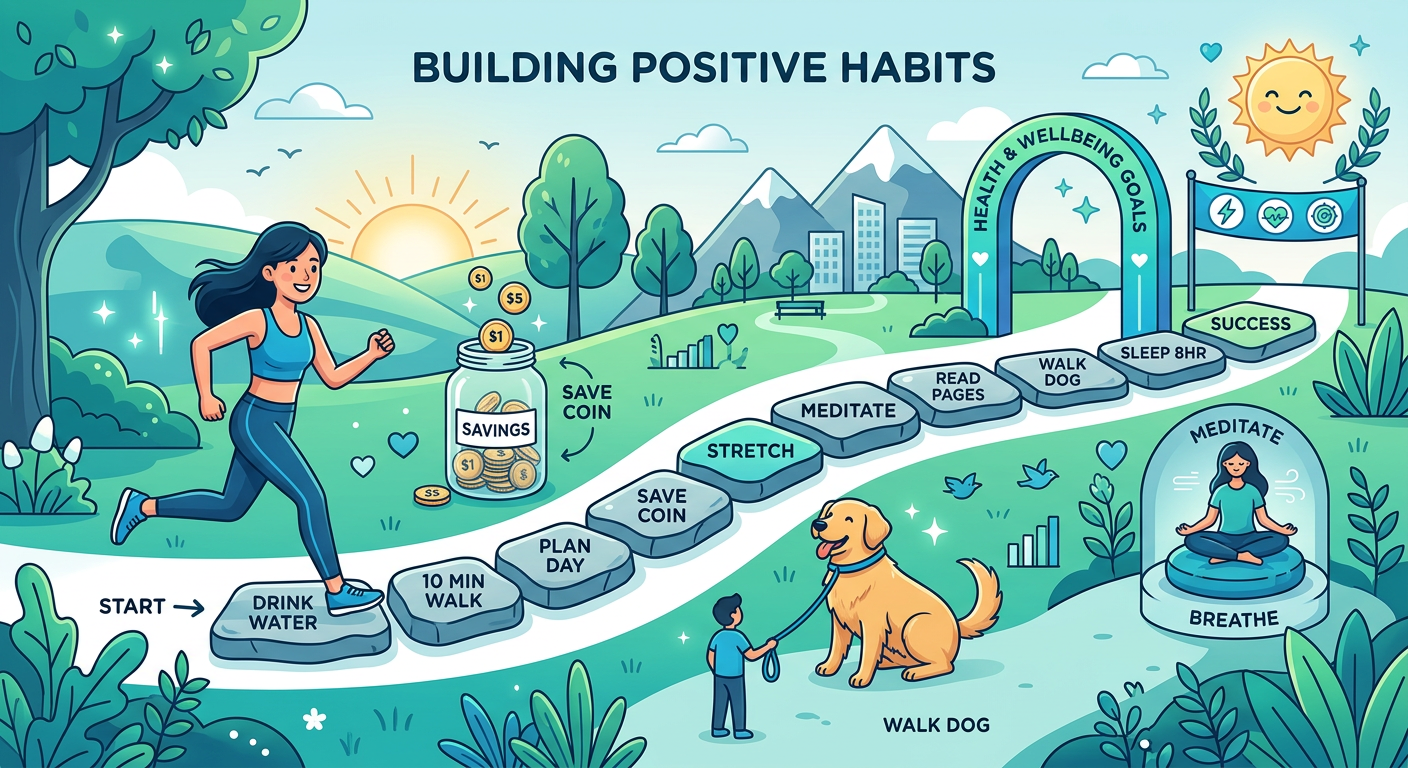
A habit should be so easy that skipping it feels almost silly. Want to read more? Start with one page. Want to exercise? Start with five minutes. Want to save money? Start with one automatic transfer.
Small wins matter because they create identity. You stop thinking, “I should do this,” and start thinking, “This is what I do.”
Attach the habit to something you already do
One of the simplest ways to make habits stick is to connect them to an existing routine. For example, after brushing your teeth, you meditate for one minute. After your morning coffee, you review your budget. After the dog’s evening walk, you spend two minutes on training.
This approach works because the cue already exists. You are not waiting for inspiration, you are using structure.
Make the habit obvious
If you have to remember the habit every day, you will forget it. Put your running shoes by the door. Leave a book on your pillow. Keep pet treats in the same place every time. Set up your savings transfer so it happens automatically.
Your environment should remind you what to do next. That is much easier than trying to remember everything in your head.
Remove as much friction as possible
The easier a habit feels, the more likely you are to repeat it. If you want to cook healthier meals, prep ingredients ahead of time. If you want to stretch in the morning, lay out a mat the night before. If you want to track spending, keep your app pinned on your phone.
Frictions are not always obvious. Sometimes the habit fails because it requires too many decisions before it begins.
Pair the habit with a reward
People repeat what feels good. The reward does not need to be huge, it just needs to matter to you. A quick checkmark on a tracker, a good playlist during a workout, or a cup of tea after journaling can reinforce the behavior.
Over time, the habit itself becomes the reward. But in the early stage, positive feedback helps a lot.
Make Consistency Easier Than Perfection
One of the biggest mindset shifts is this, you do not need a perfect streak to build a lasting habit. Missing one day does not mean failure. What matters is returning quickly.
If you skip a workout, do the next short version. If you overspend one week, review your budget the next morning. If your sleep routine breaks, restart that same night instead of waiting for Monday.
Use the never twice rule
Missing once is normal. Missing twice starts becoming a pattern. A simple rule like “never miss twice” keeps you from turning one off day into a complete reset.
That is especially useful for people who are trying to build routines around fitness, money, or self-care. Life happens. Recovery matters.
Build Habits For Different Parts Of Life
For fitness and health
If you want exercise to stick, make the first version embarrassingly small. Ten pushups, a ten-minute walk, or a short mobility routine is better than a grand plan you abandon in a week.
Sleep habits work the same way. Set a consistent wind-down time, reduce screen time before bed, and keep your bedroom environment calm and predictable.
For money management
Saving money becomes easier when you automate it. Even a small transfer every payday builds the identity of someone who saves. If you want to spend less, remove decision fatigue by setting categories and review times instead of checking every purchase emotionally.
A habit like reviewing accounts once a week can be more powerful than trying to “be better with money” in a vague way.
For pet owners
Training habits stick when they are short, frequent, and tied to daily moments. A few minutes of practice after feeding or walking is often better than one long session that leaves everyone frustrated.
Consistency matters more than intensity. Pets learn from repetition, tone, and timing, not from occasional big efforts.
For mindfulness and happiness
Mindfulness does not need to be a dramatic ritual. One minute of breathing, a short gratitude note, or a quiet pause before dinner can be enough to create momentum.
The key is to make it feel realistic on your busiest day, not just your best one.
Track Progress Without Becoming Obsessed
Tracking helps because it makes progress visible. A calendar, habit tracker, notebook, or simple phone note can remind you that small actions are adding up.
But do not let tracking become another burden. The tool should support the habit, not become the habit.
The Best Habit Strategy Is The One You Can Repeat
Here is the thing, most people do not fail because they picked the wrong habit. They fail because they picked a version of the habit that was too hard to maintain.
When you simplify the action, reduce friction, and connect the habit to a cue you already have, you make success much more likely. That is how habits shift from something you try into something you keep.
Frequently Asked Questions
How long does it take for a habit to stick?
There is no magic number that works for everyone. What matters more is repetition in a stable context, not counting days like a scoreboard.
What if I keep failing to stay consistent?
Make the habit smaller and easier. If it still keeps breaking, the problem is probably not your motivation, it is the size or timing of the habit.
Should I focus on one habit at a time?
Usually, yes. One main habit is easier to protect. Once it feels automatic, you can add another.
What is the best time of day to build a habit?
The best time is the one you can repeat regularly. Morning works for some people, evening works better for others, and the right answer depends on your real schedule.
Do rewards really help?
Yes, especially in the beginning. A small reward helps your brain associate the habit with something positive, which makes repetition easier.
What is the fastest way to restart after falling off track?
Restart with the smallest possible version of the habit right away. Do not wait for a perfect moment.
Keep Going With A Simpler System
If you want habits that actually last, stop chasing dramatic transformation and start building a system that feels manageable. That means smaller actions, clearer cues, less friction, and more forgiveness when life gets messy.
For more practical guides on routines, wellness, money, and everyday improvement, visit Content Beast and keep building a life that works in real conditions, not just ideal ones.