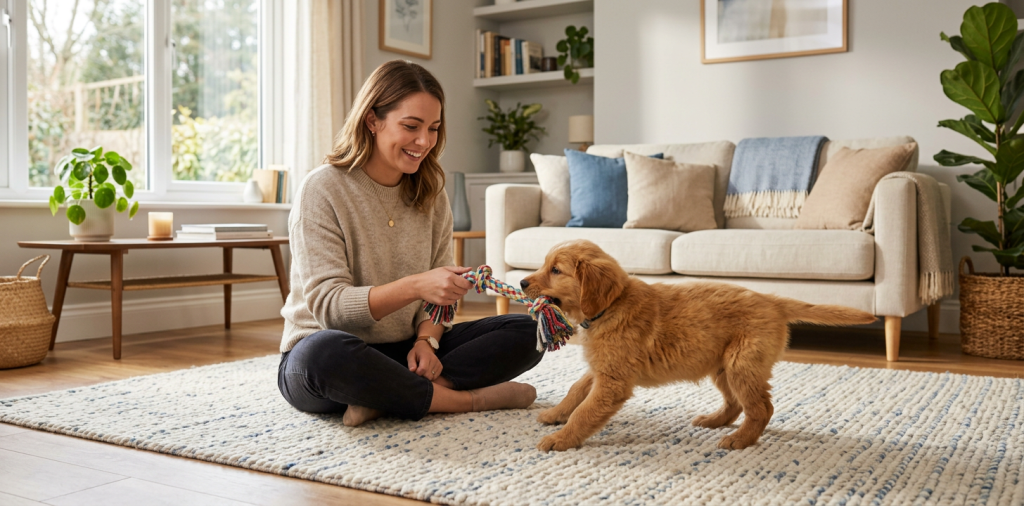
A puppy with zoomies can go from adorable to ouch in about five seconds. One minute they’re bouncing across the rug, the next they’re clamped on your sleeve like it owes them money.
If you’re wondering how to stop puppy from biting when excited, the answer isn’t punishment or panic. It’s management, redirection, calmer play, and consistent feedback that teaches your puppy what to do with all that energy.
This matters for a lot of homes. The American Pet Products Association reported that dog ownership reached 53% of U.S. households in 2025, or about 71 million households, so plenty of families are dealing with the same sharp little teeth and big feelings right now American Pet Products Association.
Quick Plan: How to Stop Puppy From Biting When Excited
| Situation | Why It Happens | Best First Move |
|---|---|---|
| Puppy bites hands | Play and curiosity | Offer a toy |
| Puppy grabs pants | Chase instinct | Freeze and redirect |
| Puppy bites harder | Too much arousal | Pause play briefly |
| Puppy bites at night | Overtired behavior | Add a nap |
| Puppy bites guests | Social excitement | Use leash and treats |
The goal is not to make your puppy “never use their mouth.” Puppies explore, play, and communicate with their mouths. The real goal is to teach softer choices before excitement spills over into nipping.
Why Puppies Bite More When They’re Excited
Puppy biting often gets worse when arousal goes up. Greeting people, rough play, new smells, children running, or a fast game of tug can push a young dog past their self-control limit.
The ASPCA explains that puppies spend a lot of time playing, chewing, and investigating objects with their mouths. That doesn’t make biting fun for you, but it does mean your puppy is not being “bad” in the human sense.
Bite inhibition is the skill you’re building. In simple terms, your puppy learns that human skin is delicate and that teeth make fun stop, while toys, calm behavior, and soft mouths keep good things going.
Use the Three-Part Calm Reset
Freeze the Fun
When teeth touch skin or clothing, immediately stop moving. Don’t yank your hand away, squeal dramatically, or wave your arms, because those reactions can look like an even better game.
Keep your body still, soften your voice, and remove the reward your puppy wanted, which is motion and attention. If your puppy releases, praise calmly and move to the next step.
Redirect to the Right Object
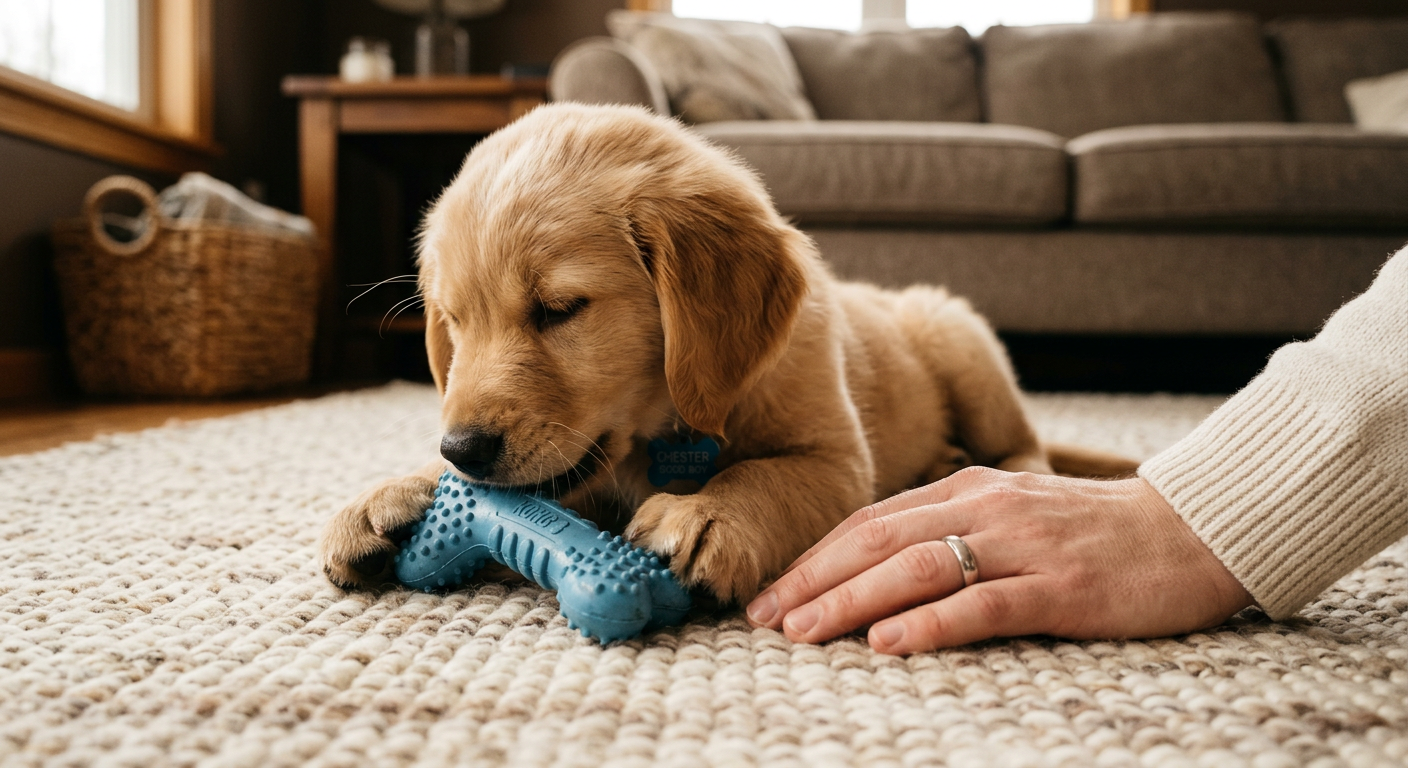
Keep a toy within reach in the rooms where biting happens most. The American Kennel Club recommends having a puppy chew toy handy so you can substitute it before your hand or furniture becomes the target.
Choose toys that create distance, like a long fleece tug, a flirt pole used gently, or a soft braided rope. Short toys put your fingers too close to the action.
Pause If the Biting Continues
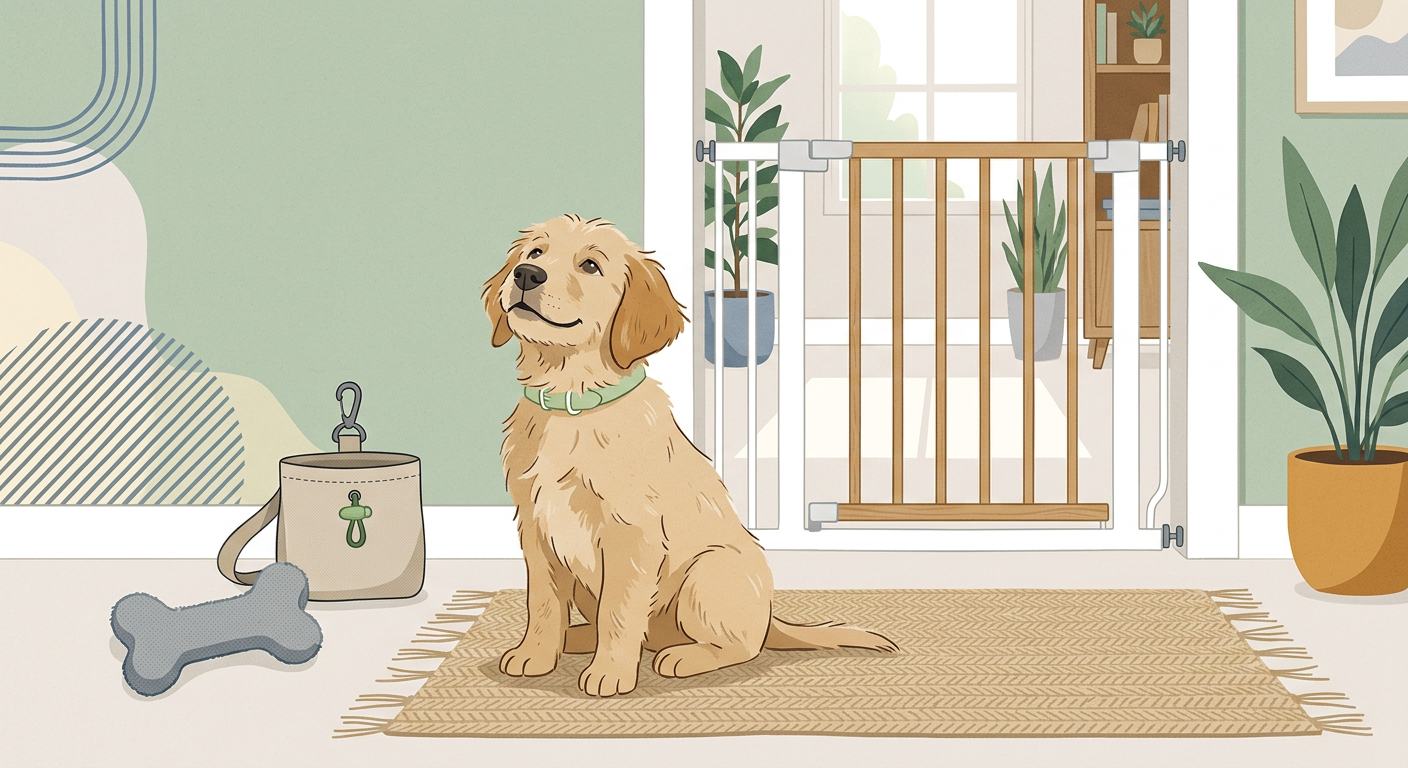
If your puppy goes right back to biting, calmly step over a baby gate or guide them to a playpen with a chew. Keep the pause short, usually 20 to 60 seconds.
This is not a punishment zone. It’s a reset space where your puppy can come down from the excitement spike and try again.
Lower the Excitement Before It Peaks
Here’s the thing, most biting episodes are predictable once you start noticing patterns. Your puppy probably has specific moments when nipping gets worse.
Common patterns include:
- After guests arrive
- During rough petting
- Around children playing fast games
- Near evening zoomies
- After missed naps
- During leash clipping or collar grabbing
- When play lasts too long
Once you know the pattern, you can intervene earlier. Ask for a sit before greeting, scatter a few treats on the floor, offer a chew before guests enter, or end play while your puppy is still successful.
Replace Rough Play With Rules-Based Play
You don’t have to stop playing with your puppy. You just need games with clear rules.
For tug, teach “take it” and “drop.” If teeth touch skin, the game pauses. If your puppy releases and grabs the toy again, the game continues.
For fetch, ask for a sit before each throw. This teaches your puppy that calm behavior makes the fun happen, not jumping and nipping.
Avoid wrestling with hands, grabbing the muzzle, pushing the puppy away playfully, or letting kids run while the puppy chases. Those games may seem harmless at eight weeks, but they teach habits you won’t enjoy in a larger adolescent dog.
Check Sleep, Chewing Needs, and Hunger
Many puppies bite harder when they’re overtired. Think toddler meltdown, but with needle teeth.
If your puppy has been awake for a long stretch and suddenly becomes wild, nippy, and unable to listen, they may need a nap more than another training session. A quiet crate, playpen, or puppy-proofed room with a safe chew can help them settle.
Teething can also increase mouthing. Offer safe chew options with different textures, such as rubber puppy chews, soft toys, and frozen wet washcloths used with supervision.
Reward Calm Greetings Before Biting Starts
Excited greeting biting is one of the most common problems owners face. The trick is to train before your puppy launches at sleeves and fingers.
Try this sequence:
- Clip on a leash before guests enter.
- Scatter small treats on the floor as the guest comes in.
- Let your puppy sniff and eat instead of jumping.
- Ask the guest to ignore jumping and reward four paws on the floor.
- End the greeting after a short success.
This gives your puppy a job. Sniff, eat, stand, and breathe. That’s much easier than expecting a baby dog to make perfect choices in a high-energy doorway moment.
What Not to Do When Puppy Biting Gets Intense
Avoid hitting, alpha rolls, muzzle grabbing, yelling, or holding the mouth closed. These methods can make puppies fearful, defensive, or even more frantic.
Also avoid accidentally rewarding the biting. If your puppy bites and you immediately start a chase game, laugh, or wrestle, they may learn that teeth are the fastest way to start fun.
The American Veterinary Society of Animal Behavior warns that “behavioral issues, not infectious diseases, are the number one cause of death” for dogs under three. That’s a serious reminder that early, kind training is not optional fluff. It’s part of responsible puppy care.
When to Get Professional Help
Most excited puppy biting improves with age, consistency, sleep, and positive training. Still, some cases need extra support.
Contact your veterinarian or a qualified trainer if your puppy:
- Breaks skin often
- Guards food, toys, or resting spaces
- Stiffens, growls, or snaps outside play
- Bites when handled gently
- Seems unusually fearful or reactive
- Is getting stronger and harder to manage
You can look for credentialed help through the CCPDT trainer directory or the IAABC consultant directory. If biting appears pain-related, start with your veterinarian.
Build a Simple Daily Puppy Biting Routine
A consistent day makes bite training much easier. Puppies do better when their needs are met before they boil over.
Try this rhythm:
- Short potty break after waking
- Five minutes of gentle training
- Calm play with a toy
- Food puzzle or chew
- Nap in a quiet space
- Repeat after the next wake-up
Keep training sessions short. A young puppy doesn’t need a boot camp. They need many tiny repetitions that show them, again and again, that calm choices work.
Keep Learning With Practical Pet Care Guides
If you enjoy clear, useful advice for everyday life, explore more pet care, wellness, finance, and habit-building content at ContentBeast. You’ll find practical guides designed for curious readers who want simple steps, not overwhelm.
Frequently Asked Questions
Why does my puppy bite me when they get excited?
Excitement lowers self-control. Your puppy may be trying to play, greet, chase, chew, or release extra energy, and biting is the easiest behavior they know so far.
Should I yelp when my puppy bites?
Sometimes it works, but many puppies get more excited when people yelp. If yelping ramps your puppy up, stay quiet, freeze, redirect to a toy, and pause play if needed.
How long does puppy biting last?
Many puppies improve significantly as they mature and finish teething, especially when owners are consistent. If biting is intense, escalating, or connected to fear or guarding, get professional guidance sooner.
What is the fastest way to stop excited biting?
The fastest practical method is to stop movement, offer a toy, and pause play if teeth touch skin again. Repeat the same response every time so your puppy gets a clear pattern.
Is my puppy being aggressive?
Most excited puppy biting is normal play and overarousal, not true aggression. Warning signs include stiff body language, hard staring, guarding, deep growling outside play, or bites that happen during gentle handling.
Can kids help train a puppy not to bite?
Kids can help with adult supervision, but they should not be responsible for managing sharp, excited puppy teeth alone. Teach children to stand still, hold toys away from fingers, and call an adult if the puppy gets too wild.
Final Takeaway
Learning how to stop puppy from biting when excited is really about teaching emotional control in tiny, repeatable moments. Your puppy needs sleep, safe chew outlets, structured play, and calm consequences when teeth touch skin.
Stay consistent, keep toys nearby, and manage excitement before it explodes. Those little teeth won’t be little forever, and the habits you build now will shape the dog you live with later.