

You do not need a large paycheck, a Wall Street vocabulary, or a perfect plan to begin building an investing habit. What you do need is a platform that makes small deposits feel practical, not pointless. The best micro investing apps for beginners on a budget remove the usual barriers with fractional shares, automation, and low opening amounts.
Still, a low minimum does not automatically make an app a smart fit. Monthly subscriptions can take a large bite from a tiny balance, and a slick trading screen can tempt new investors into choices they do not fully understand. We compared beginner-friendly apps based on minimums, automation, costs, investment range, and how well each supports a simple long-range plan.
Quick Comparison of the Leading Apps
| App | Smallest Starting Amount | Best For | Main Tradeoff |
|---|---|---|---|
| Fidelity | $1 | Low-cost, long-range investing | More choices to learn |
| Acorns | $5 | Automatic round-ups | Monthly subscription |
| Robinhood | $1 | Simple fractional stock buys | Easy to overtrade |
| Public | $5 | Goal-focused self-directed investing | Less hands-off automation |
| Charles Schwab | $5 | Traditional brokerage experience | Stock Slices limit choices |

How We Compared Micro-Investing Apps
A micro-investing app should help you invest small sums consistently without making your financial life harder. We gave more weight to low minimums, clear pricing, recurring deposits, and access to diversified funds than to flashy stock-picking tools.
That matters because a single company stock is not a diversified portfolio. The Securities and Exchange Commission explains that mutual funds and ETFs can make it easier to own a small piece of many investments, although a narrowly focused fund may still carry concentrated risk. Read its plain-English guidance on asset allocation and diversification before choosing what to buy.
We also believe investing should come after essential cash needs. Federal Reserve data show that 55% of adults had enough emergency savings to cover three months of expenses in 2025, which means many households still need a stronger cash buffer before taking market risk. See the data at the Federal Reserve Bank of St. Louis.
Fidelity, Best Overall for Low-Cost Beginners
Fidelity is our top pick for beginners who want to invest small amounts without paying a monthly app subscription. Its brokerage accounts have no account minimum or opening fee, and its fractional-share purchases can begin at $1 for eligible stocks and ETFs. That gives you room to build a simple plan around a broad-market ETF instead of feeling pressured to buy a full share of an expensive stock.
The app also supports recurring investments, which is useful when you can commit a fixed amount from every payday. Fidelity states that it offers fractional investing from $1 and zero commissions for online U.S. stock and most ETF trades, details you can review on its fractional shares page.
Who It Fits Best
We like Fidelity for someone who can set aside $10, $25, or $50 per month and wants flexibility as their income grows. It is also a strong fit if you may eventually want an IRA, cash management tools, or a larger mix of investments in one place.
The downside is choice overload. A beginner does not need to buy multiple individual stocks, options, or niche funds. Keep your first setup boring and focused.
Acorns, Best for Building an Automatic Habit
Acorns is built around friction-free investing. You can link a debit or credit card, round purchases up to the next dollar, and invest the spare change in a managed ETF portfolio. It requires $5 to begin investing, and its Bronze plan costs $3 per month, according to Acorns plan information.
That automation can be genuinely helpful if you often forget to move money manually. A coffee that costs $4.35 becomes a $5 purchase, with the extra 65 cents set aside for investing. Over many purchases, the habit can add up.
The Fee Test for Very Small Balances
Here is the catch: a flat monthly fee weighs heavily when your account is tiny. A $3 monthly charge equals $36 per year, so it can feel steep if you are only adding a few dollars each month. Acorns itself notes that its flat fee becomes more cost-effective as balances grow, and its plans range from $3 to $12 per month.
We would choose Acorns when automation is the difference between investing and not investing at all. If you already have the discipline to schedule a transfer yourself, a no-subscription brokerage may preserve more of your early dollars.
Robinhood, Best for $1 Fractional Share Purchases
Robinhood makes it easy to buy pieces of eligible stocks and ETFs in dollar amounts. Its fractional-share minimum is $1, so you can begin without waiting until you can afford a full share. Its fractional shares help page explains how dollar-based orders work.
For a budget-conscious beginner, that accessibility is valuable. You can invest a small, planned amount in a diversified ETF and gradually add to it. The app is also straightforward to use, which lowers the intimidation factor for first-time investors.
Watch the Trading Temptation
The same simplicity can create a problem. Frequent trading, trend chasing, and buying single stocks because they are popular are very different from steady investing. If you use Robinhood, we recommend disabling unnecessary alerts, skipping options, and setting a recurring amount you can afford to leave invested for years.
Public, Best for Beginners Who Want More Context
Public is a reasonable choice for beginners who want to make their own decisions but appreciate a more thoughtful investing environment. It offers fractional stock purchases with a $5 minimum, as outlined in its minimum investment policy.
A $5 minimum is still accessible for most new investors, especially if you invest weekly or after each payday. Public may fit you if you want to explore stocks, ETFs, and other available assets without a round-up system deciding every move for you.
Keep the Core Simple
More investment choices do not require a more complicated portfolio. Start with a goal, such as retirement or building wealth over a decade or longer, then make each purchase support that goal. Avoid treating a beginner account as a collection of random ideas.
Charles Schwab, Best Traditional Brokerage Alternative
Charles Schwab is worth considering if you want a large, established brokerage but still need low-dollar investing. Through Schwab Stock Slices, you can buy fractional pieces of companies in the S&P 500 for as little as $5 per slice. Details are available on the Schwab Stock Slices page.
The limitation is important: Stock Slices focus on S&P 500 stocks, not the broader range available through fractional ETFs at some competitors. That makes Schwab a better fit for beginners who value a traditional brokerage relationship and do not mind a slightly narrower fractional-stock menu.
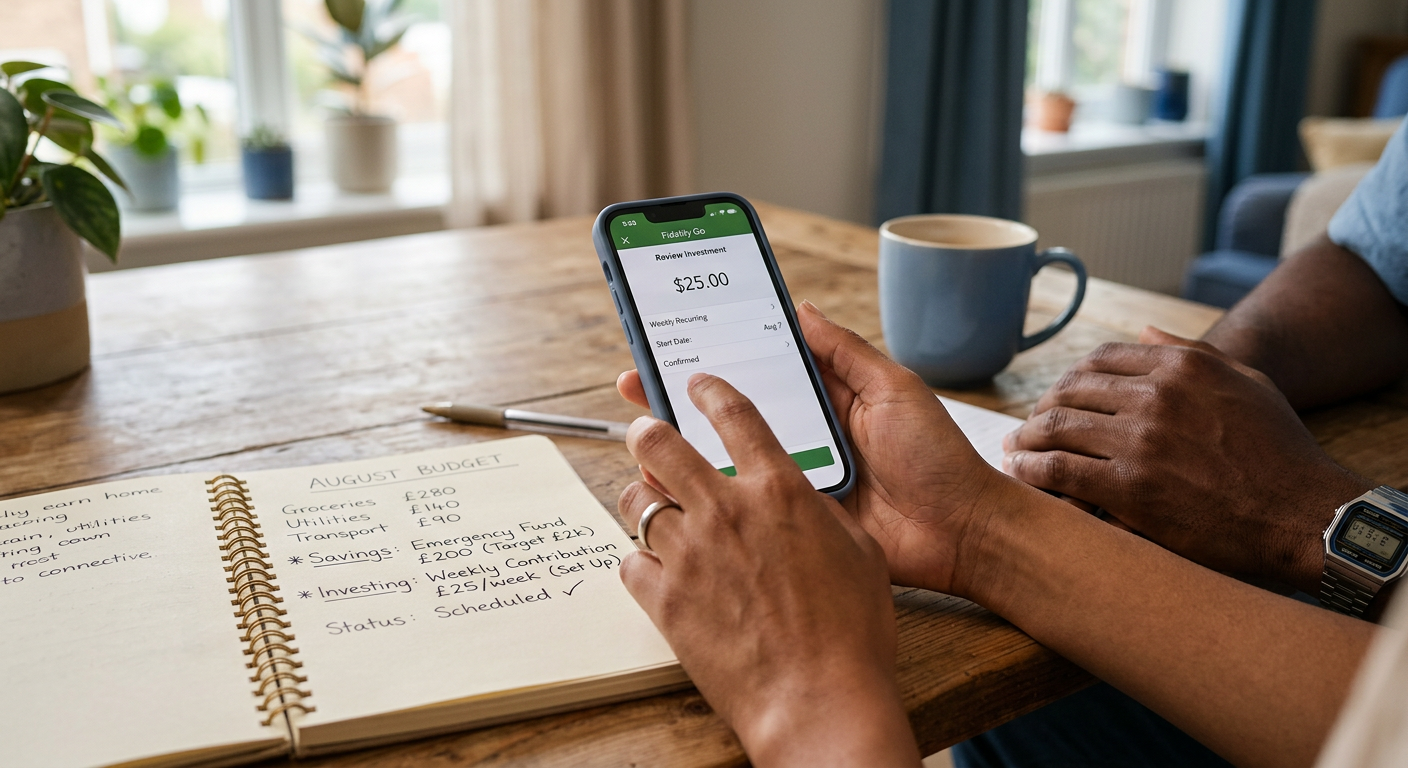
A Simple Micro-Investing Plan We Would Use
The app matters less than the system you build around it. If we were beginning with a tight budget, we would use this approach.
Build a Small Cash Cushion First
Do not invest money needed for rent, food, minimum debt payments, or a near-term emergency. Even a modest cash reserve can keep you from selling investments during a stressful month.
Pick One Automatic Amount
Start with an amount that will not strain your budget, even if it is only $5 or $10 each week. Consistency matters more than trying to make up for lost time with an amount you cannot sustain.
Choose Broad Diversification
Rather than trying to identify the next winning company, consider a broad, low-cost ETF or fund that spreads money across many companies. As the SEC puts it, diversification means not putting all your eggs in one basket. Learn more in its guide to diversifying investments.
Review Fees Once a Year
Check subscription charges, fund expense ratios, account rules, and any changes in your budget. A platform that was helpful at a $100 balance may not be your best fit once you have built momentum.
Questions Beginners Often Ask
Can we start micro-investing with only $5?
Yes. Acorns requires $5 to begin its investing account, while Fidelity and Robinhood support eligible fractional purchases from $1. The better question is whether you can add money regularly without cutting into essentials.
Is micro-investing safe?
The app may use regulated brokerage services, but investing itself involves risk. Account balances can fall when markets decline, and no legitimate app can promise profit. Keep near-term spending money in cash savings rather than the market.
Should we invest spare change or schedule deposits?
Both can work. Round-ups are useful for people who enjoy automation, while scheduled deposits give you more control over the amount and timing. We prefer scheduled deposits when your budget is tight because you know exactly what is leaving your bank account.
Are monthly app fees worth paying?
They can be, but only if the app changes your behavior for the better. A $3 monthly fee may be reasonable for someone who uses round-ups and investing tools consistently, but it can be costly relative to a very small balance.
What should beginners buy first?
Many new investors begin with a broad, diversified ETF or fund rather than individual stocks. Read the fund's objective, holdings, and expense ratio first, and make sure the investment matches your time horizon and comfort with market swings.
Build Better Money Habits With Content Beast
Small financial choices can support a much bigger life plan. Visit Content Beast for practical guidance on money habits, everyday wellness, sleep, fitness, and the routines that help you make progress without burning out.
The Small Habit Matters More Than the App
The best micro investing apps for beginners on a budget are not necessarily the ones with the most buttons or boldest promotions. They are the ones that make it easy to invest a manageable amount, keep fees in perspective, and stay focused when markets feel noisy.
For most budget-minded beginners, Fidelity offers the strongest low-cost foundation. Acorns can be a useful habit tool, while Robinhood, Public, and Schwab offer solid alternatives for people who want different levels of control. Pick one, automate a realistic amount, protect your emergency savings, and give your plan time to grow.