

Simple Mindfulness Exercises for Daily Stress Relief That Work
Stress rarely arrives as one dramatic event. More often, it builds through a packed inbox, a rushed commute, financial worries, poor sleep, and the feeling that there is never enough time to reset. We do not need a perfect morning routine or an hour of silence to create a little more space in the day.
That is where simple mindfulness exercises for daily stress relief can help. Mindfulness is the practice of noticing what is happening in the present, including thoughts, feelings, and physical sensations, without immediately judging or trying to fix everything. It is a practical skill for pausing before stress takes over.
The evidence is encouraging, but realistic expectations matter. The American Psychological Association notes that a review of more than 200 studies found mindfulness-based therapy particularly helpful for reducing stress, anxiety, and depression in healthy people. These short practices are not a replacement for professional mental health care, but they can become reliable tools for managing everyday pressure. American Psychological Association
Why Small Mindfulness Practices Can Make a Difference
A stressed mind often races ahead, replaying a difficult conversation or predicting a problem that has not happened. Mindfulness gently brings attention back to what is concrete: one breath, the support of the chair, the sounds in the room, or the sensation of walking.
This is not about eliminating thoughts. We are building the ability to notice them without treating every thought as an urgent command. With repetition, a brief pause can make it easier to choose a calmer response during a demanding workout, a tense budgeting conversation, a chaotic family moment, or a long workday.

Keep the Goal Modest
Many people stop before they begin because meditation sounds complicated. We recommend starting with one to three minutes, not twenty. A practice that fits between meetings or before bed is far more useful than an ambitious plan that never becomes part of real life.
Consistency also matters more than doing it perfectly. If your mind wanders, that is not a failure. Noticing the distraction and bringing attention back is the practice.
Seven Simple Practices to Use Throughout Your Day
1. Try a One-Minute Breathing Pause
Place both feet on the floor if you can. Inhale comfortably through your nose, then exhale a little more slowly than you inhaled. Keep going for six to ten breaths while noticing the movement of your ribs or abdomen.
When thoughts show up, quietly label them as “thinking” and return to the next exhale. This is a useful option before opening email, entering a meeting, checking your bank account, or responding to a difficult message.
2. Use the Five-Senses Reset
Look around and name five things you can see. Then identify four things you can feel, three sounds you can hear, two scents you can notice, and one taste in your mouth.
This grounding exercise gives your attention a clear job. It can be especially helpful when stress feels physical, such as a tight chest, racing thoughts, or a sense of being mentally scattered.
3. Take a Mindful Walk
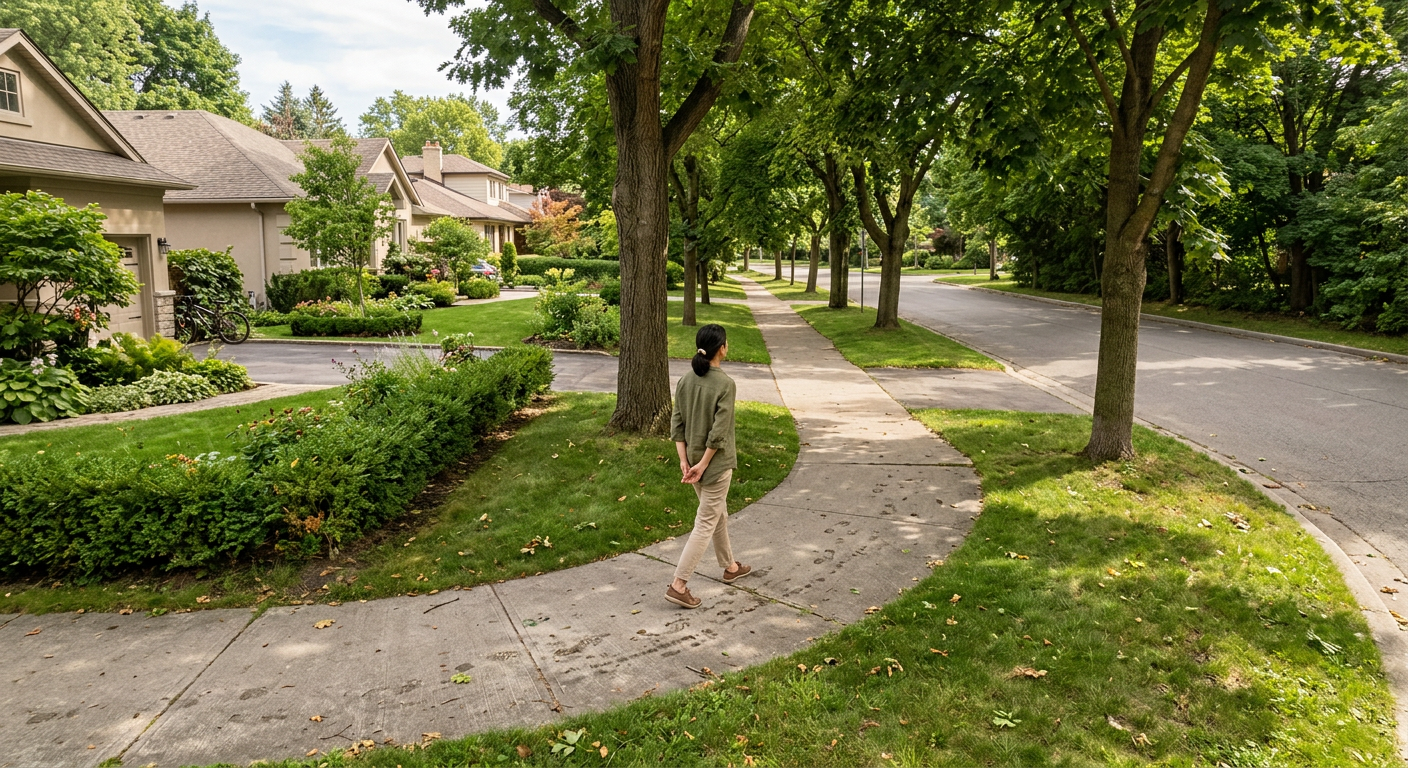
You do not need a trail, special shoes, or extra time. During a walk to the kitchen, mailbox, parking lot, or around the block, notice the pressure of each foot meeting the ground and the natural rhythm of your steps.
When your mind jumps to a task list, gently come back to the next step. For fitness-minded readers, this can be a useful cool-down after exercise because it pairs movement with a deliberate shift out of high-alert mode.
4. Do a Seated Body Scan
Sit comfortably and move attention from your forehead down to your toes. At each area, ask a simple question: “What do I feel here?” You may notice tension, warmth, numbness, fatigue, or nothing at all.
There is no need to force relaxation. The point is to become aware of the body before discomfort builds into irritability or exhaustion. A two-minute body scan after work can create a clearer boundary between work demands and home life.
5. Practice Mindful Eating for Three Bites
Choose the first three bites of a snack or meal. Before eating, notice color, texture, and smell. Take a bite, chew slowly, and observe flavor and the moment when you feel ready to swallow.
This is not a diet rule or a way to police food. It is a brief way to step out of autopilot, which can support a more settled relationship with meals during busy days.
6. Name What You Are Feeling
When emotions run high, pause and use a specific label: “I am frustrated,” “I am worried,” “I am overwhelmed,” or “I am disappointed.” Then add a steadying phrase such as, “This is difficult, and I can take one small step.”
Naming an emotion creates a little distance from it. Instead of becoming the stress, we recognize that stress is an experience moving through the moment.
7. End the Day With a Three-Question Check-In
Before sleep, write a few words in response to three prompts: What felt heavy today? What helped, even a little? What is one realistic priority for tomorrow?
Keep it short enough that you will actually do it. This small reflection can help move unfinished mental loops onto paper, which is particularly useful when financial concerns, caregiving, or work tasks tend to follow you into bed.
Build a Routine That Works in Real Life
The best time for mindfulness is not universal. We can attach it to an existing habit, which makes the practice easier to remember. Try one breath before coffee, a sensory reset after parking the car, or a body scan while waiting for the shower to warm up.
For recurring daily content, the most valuable progression is simple: first notice stress, then pause, then choose one helpful action. By day five of a new habit, many people can identify the moments when stress usually spikes. That awareness is progress, even if the day still feels messy.
Match the Exercise to the Moment
| When Stress Shows Up | Best Practice | Time Needed | Helpful Focus |
|---|---|---|---|
| Before a tough task | Breathing pause | 1 minute | Slow exhale |
| Feeling mentally scattered | Five-senses reset | 2 minutes | Present surroundings |
| After exercise or work | Mindful walk | 5 minutes | Movement and breath |
| Carrying physical tension | Body scan | 2 to 5 minutes | Muscle sensations |
| Before bed | Three-question check-in | 3 minutes | Closure and priorities |
We do not need to use every option. Choose one practice for the morning and one for the evening for a week. If a technique feels irritating or unhelpful, switch to another rather than forcing it.
Common Obstacles and Better Responses
“I cannot stop thinking” is perhaps the most common objection. Mindfulness does not require an empty mind. It asks us to spot the thought, allow it to be there, and bring attention back to an anchor like breath, sound, or physical contact with the ground.
“I do not have time” often means the routine is too large. Begin with one full breath before a familiar activity. That may sound almost too small, but a tiny practice done regularly is more useful than an ideal routine reserved for unusually quiet days.
“I feel worse when I sit still” deserves care. Some people find quiet attention uncomfortable, particularly during periods of intense anxiety, grief, trauma, or depression. Choose an externally focused method like walking or the five-senses reset, and consider speaking with a licensed mental health professional if distress feels persistent, severe, or unsafe.
Frequently Asked Questions
How long should mindfulness exercises take?
One to five minutes is enough to begin. Longer sessions can be valuable, but a short practice repeated most days is a realistic foundation for stress management.
Is mindfulness the same as meditation?
Meditation is a formal way to practice mindfulness, often while sitting quietly for a planned period. Mindfulness can also happen during ordinary activities such as walking, eating, stretching, or washing dishes.
Can we use mindfulness during a stressful workday?
Yes. Try a one-minute breathing pause before a meeting, a five-senses reset after a difficult interaction, or a mindful walk between tasks. These practices are discreet and do not require special equipment.
What if mindfulness makes us feel restless?
Restlessness is common, especially at first. Use a movement-based option, keep the practice brief, and focus on what you can see or hear rather than closing your eyes.
Does mindfulness help with sleep?
A short body scan or written evening check-in may make it easier to settle by shifting attention away from unfinished tasks. It is not a guaranteed sleep solution, but it can support a calmer bedtime routine.
When should we seek more support for stress?
Reach out to a qualified health professional when stress interferes with sleep, work, relationships, appetite, or daily functioning, or when you feel hopeless or unsafe. Mindfulness can complement care, but it should not carry the full load alone.
Make Space for a Calmer Daily Rhythm
We share practical guidance on habits, sleep, well-being, fitness, money, and everyday life because small skills can create meaningful change over time. Visit ContentBeast for more clear, useful ideas that fit into real schedules and support a healthier daily routine.
A Calmer Day Starts With One Noticeable Moment
Stress may not disappear simply because we pause for a breath. Still, those pauses can change what happens next. We become more able to notice tension, soften our response, and make one grounded choice instead of reacting on instinct.
Start with the exercise that feels easiest, practice it in one predictable moment each day, and let the habit grow from there. The most effective mindfulness routine is not the most impressive one. It is the one we can use when life is busy and calm feels out of reach.