Building muscle does not require living on bland chicken breasts or relying on powders for every meal. The most useful snacks are portable, enjoyable, and substantial enough to help us hit daily protein goals without leaving us overly full before training.
When we ask what are good high protein snacks for muscle gain, we should look beyond protein grams alone. A smart snack also fits our calorie target, supplies useful nutrients, and works at the time we actually need it, whether that is between meetings, after lifting, or before bed.
For healthy people who train regularly, the International Society of Sports Nutrition states that roughly 1.4 to 2.0 grams of protein per kilogram of body weight per day is sufficient for most exercising individuals pursuing muscle growth. It also notes that a practical serving target is often about 20 to 40 grams of high-quality protein, depending on body size and training context. Read the position stand. (pmc.ncbi.nlm.nih.gov)
Quick Comparison of High-Protein Snack Options
| Snack | Typical Protein | Best Fit | Simple Upgrade |
|---|---|---|---|
| Greek yogurt | 15 to 20 g | Any time | Add berries and cereal |
| Cottage cheese | 20 to 25 g | Evening snack | Add fruit or tomatoes |
| Protein shake | 20 to 30 g | Post-workout | Blend with banana |
| Eggs | 12 to 18 g | Savory snack | Pair with whole-grain toast |
| Tuna pouch | 15 to 20 g | On the go | Add crackers and fruit |
| Edamame | 12 to 17 g | Plant-based | Season with sea salt |
| Jerky | 9 to 15 g | Travel | Choose lower-sodium options |
| Tofu | 15 to 20 g | Plant-based | Crisp in an air fryer |
The numbers vary by brand and serving size, so we should always check the package label. Think of this table as a practical starting point, not a rigid meal plan.
12 High-Protein Snacks That Support Muscle Gain
1. Greek Yogurt With Fruit and Crunch
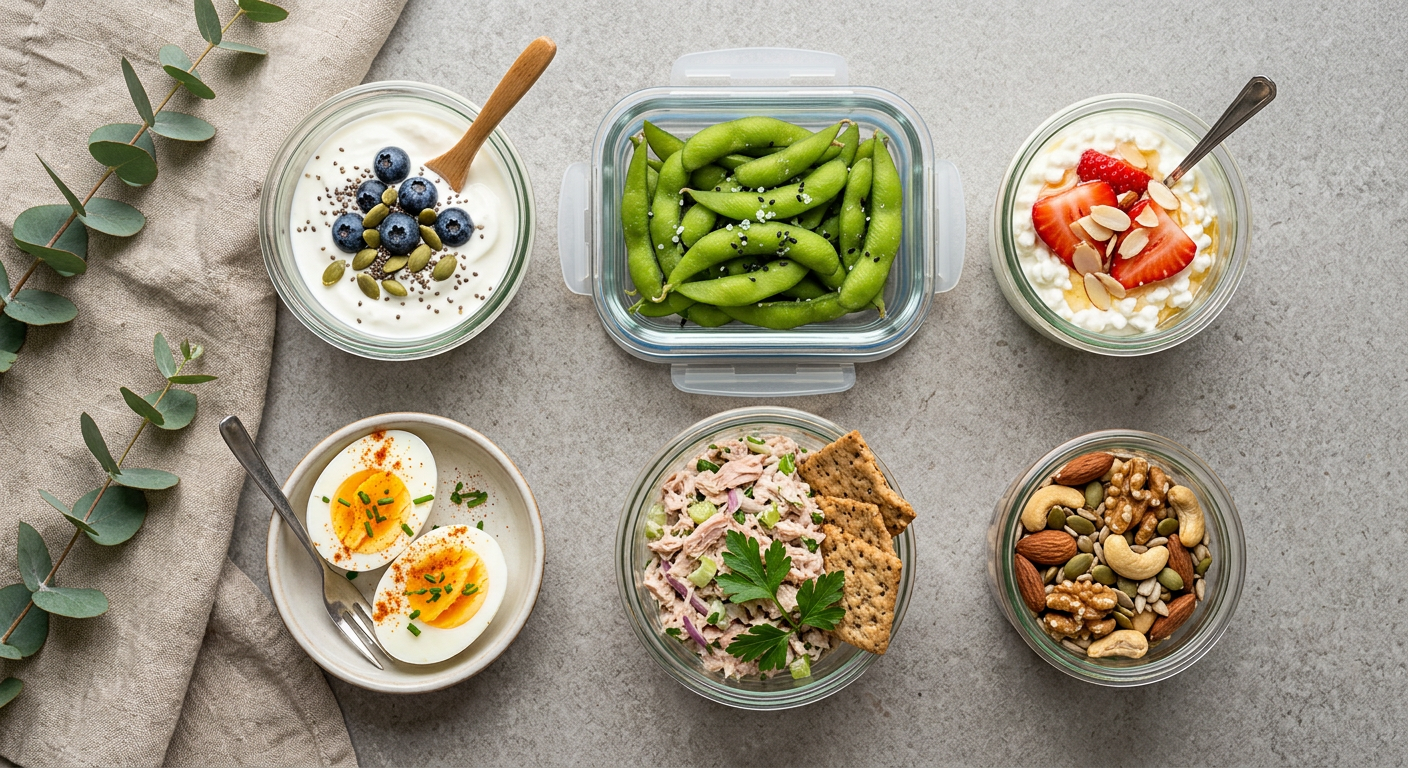
Plain Greek yogurt is one of the easiest answers because it is protein-dense, widely available, and flexible. Add berries, a sliced banana, or a small handful of high-fiber cereal for carbohydrates that make the snack more satisfying.
We prefer plain varieties when possible, then add our own flavor. That approach makes it easier to manage added sugar while keeping the snack enjoyable.
2. Cottage Cheese With Pineapple or Savory Toppings
Cottage cheese delivers a substantial amount of protein in a small bowl and works especially well when we need something more filling than a bar. For a sweet version, add pineapple, peaches, or cinnamon. For a savory option, use cherry tomatoes, black pepper, and a drizzle of olive oil.
It is also a convenient evening snack for people who struggle to reach their protein goal by dinner. The key is consistency, not finding a perfect bedtime formula.
3. A Protein Shake With a Carb Source
A ready-to-drink shake or whey, soy, or pea protein powder can be the most convenient option after training or during a rushed day. Pair it with a banana, oats, pretzels, or toast if the workout was demanding and we also need carbohydrate for overall energy intake.
Protein powder is a tool, not a requirement. Whole foods can cover the same job, but shakes make the plan easier when appetite, travel, or schedule gets in the way.
4. Hard-Boiled Eggs and Whole-Grain Toast
Eggs are affordable, portable, and easy to prepare ahead. Two or three hard-boiled eggs with whole-grain toast, a piece of fruit, or a few crackers create a more complete mini-meal than eggs alone.
This is a useful choice when we want real food rather than a sweet snack. Prepare a batch at the start of the week, then keep them ready for fast meals.
5. Tuna or Salmon Pouch With Crackers
Single-serve tuna and salmon pouches are underrated muscle-building snacks. They require no can opener, travel well, and pair easily with whole-grain crackers, rice cakes, or a microwavable cup of rice.
Choose flavored packets carefully because sodium can climb quickly. If we eat packaged fish frequently, rotating tuna with salmon, chicken, beans, and dairy adds more variety to the week.
6. Edamame With Fruit
Edamame is a strong plant-forward option with protein, fiber, and a satisfying texture. Keep frozen shelled edamame in the freezer, microwave a portion, season it simply, and add an orange or apple on the side.
This combination works well for people who want a less processed snack. It also proves that plant-based eating does not have to mean settling for low-protein choices.
7. Turkey Roll-Ups With Cheese and Veggies
Roll sliced turkey around a cheese stick, cucumber strips, or bell pepper slices for a fast savory snack. It is easy to portion and requires almost no prep beyond keeping a few staples in the refrigerator.
We should treat deli meat as one convenient option among many, rather than the foundation of every day. Rotating protein sources makes meals more interesting and supports a broader nutrient intake.
8. Tofu Bites or Tempeh Strips
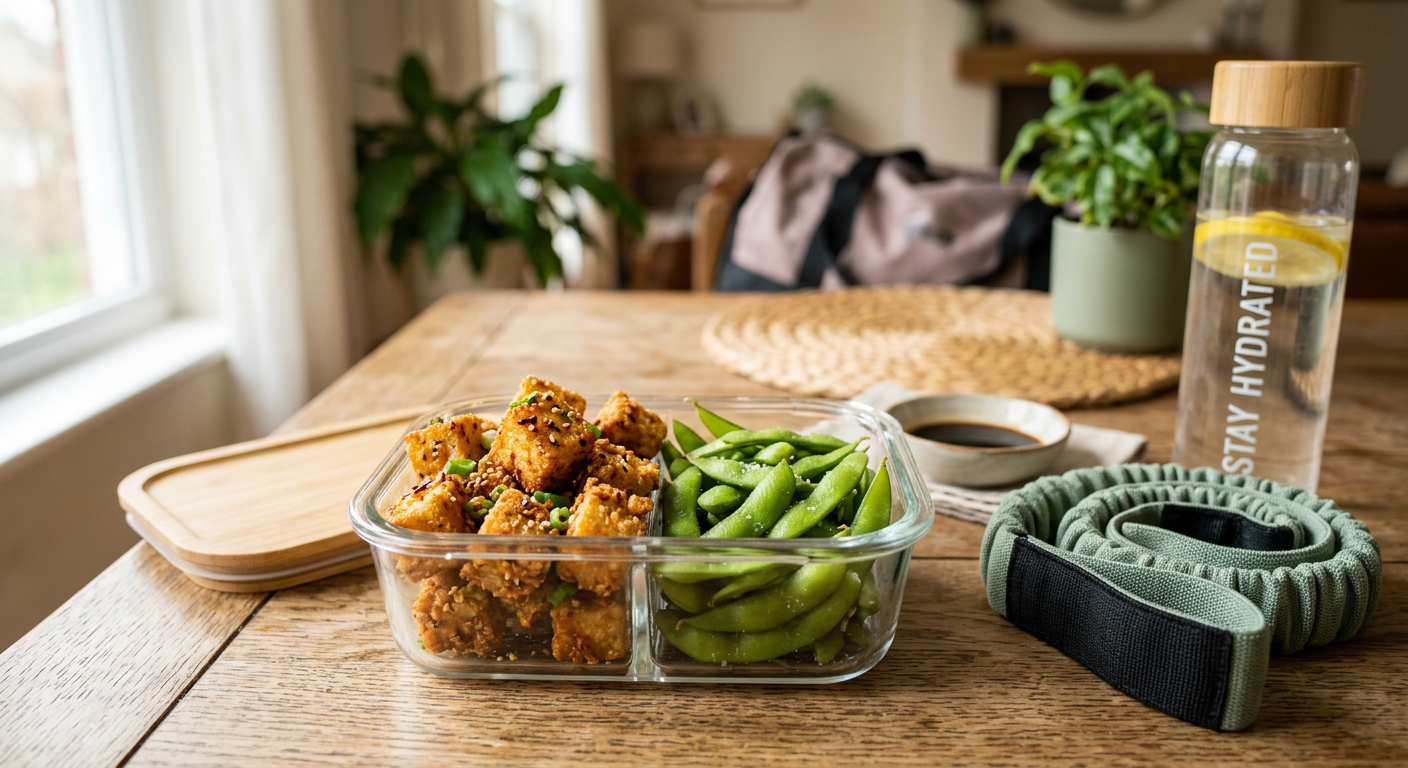
Air-fried tofu cubes and pan-seared tempeh strips are excellent make-ahead snacks for plant-based lifters. Toss them with soy sauce, garlic, smoked paprika, or a favorite low-sugar sauce, then pair with rice, fruit, or roasted vegetables.
Soy foods are particularly practical because they provide complete protein. If we are new to tofu, pressing it briefly and cooking it until crisp makes a major difference in texture.
9. Beef Jerky or Turkey Jerky With an Apple
Jerky is useful when refrigeration is not available, such as on road trips, at work, or after an afternoon gym session. Add an apple, banana, or whole-grain crackers to provide carbohydrate and make the snack feel less like an emergency ration.
Check the nutrition label for sodium and added sugar, particularly with flavored varieties. A protein snack should support our routine, not create a thirst problem we ignore all day.
10. Roasted Chickpeas and a Protein-Rich Dip
Roasted chickpeas are crunchy, shelf-stable, and easy to season. Pair them with Greek-yogurt dip, cottage-cheese dip, or hummus for a more satisfying snack that brings protein, fiber, and flavor together.
This option is especially helpful for anyone tired of dairy-heavy snack plans. It is not the highest-protein choice on the list, but it can still contribute meaningfully when combined thoughtfully.
11. High-Protein Overnight Oats
Overnight oats become a muscle-gain-friendly snack when we stir Greek yogurt, milk, soy milk, or protein powder into the base. Add oats, chia seeds, berries, and a spoonful of peanut butter for a portable option that contains protein, carbohydrates, and healthy fats.
Use this when we need extra calories as well as protein. For many people trying to gain muscle, the challenge is not just protein intake, it is eating enough consistently to support hard training.
12. A Simple Leftover Mini-Meal
Sometimes the best snack is not a snack food at all. Leftover chicken with rice, turkey chili, lentil soup, or a small burrito bowl may be more filling, more affordable, and more nutrient-dense than another packaged bar.
Here is the practical rule: if a planned snack is not keeping us satisfied or helping us meet our intake, use a small meal instead. Muscle gain rewards repeatable habits, not snack-category purity.
How We Build a Snack Around Training
Protein matters, but timing should serve our schedule instead of creating anxiety. Resistance training and protein intake work together to stimulate muscle protein synthesis, and having protein before or after training can be a practical recovery habit. The ISSN review emphasizes the value of total daily intake alongside protein consumed around training. (pmc.ncbi.nlm.nih.gov)
A simple framework works well:
- Before training: Choose something easy to digest, such as Greek yogurt with fruit, a shake with a banana, or eggs with toast.
- After training: Aim for a protein-centered snack or meal, then include carbohydrates if the workout was long, hard, or followed by another active session.
- Between meals: Use portable options like cottage cheese, tuna packets, edamame, or turkey roll-ups to close a protein gap.
- At night: Choose a satisfying option such as cottage cheese, yogurt, tofu, or leftovers if dinner was light on protein.
We do not need to chase a narrow post-workout window. What matters most is that our daily meals and snacks reliably add up.
Common Mistakes That Make High-Protein Snacking Less Useful
Relying on Bars for Every Snack
Protein bars are convenient, but they can become expensive and monotonous. Many are little more than a sweet snack with added protein, so use them strategically rather than automatically.
Ignoring Total Calories
Muscle gain usually requires hard training, adequate protein, and enough overall energy. If our body weight, strength progress, and recovery remain flat for weeks, a snack may need more carbohydrate or fat, not merely more protein.
Forgetting Fiber, Produce, and Hydration
A day built entirely around shakes, jerky, and bars can leave nutrition gaps. Add fruit, vegetables, whole grains, legumes, and fluids so the plan supports training performance and everyday health as well.
Treating Protein Needs as One-Size-Fits-All
The general adult protein RDA is based on 0.8 grams per kilogram of body weight, while sports nutrition guidance for regularly exercising people is higher. Our ideal target depends on body size, training volume, total calories, goals, and medical history. National Academies guidance and the ISSN position stand provide useful context. (ncbi.nlm.nih.gov)
Anyone with kidney disease, a prescribed diet, food allergies, or a history of disordered eating should get personalized advice from a qualified clinician or registered dietitian before making major dietary changes.
Frequently Asked Questions
How much protein should a snack have for muscle gain?
A practical target is often 20 to 40 grams, especially when the snack replaces a missed meal or follows training. Smaller protein servings can still be useful if we distribute protein across meals and snacks throughout the day.
Are protein shakes better than whole-food snacks?
No. Shakes win on convenience, while whole foods can offer more fiber, vitamins, minerals, and satisfaction. We can use both depending on our schedule, appetite, budget, and food preferences.
Can we build muscle with vegetarian high-protein snacks?
Yes. Greek yogurt, cottage cheese, eggs, edamame, tofu, tempeh, soy milk, lentils, beans, and plant protein powders can all contribute. Variety helps us reach protein targets without eating the same food repeatedly.
Is it okay to eat high-protein snacks before bed?
For most people, yes. If it helps us meet our daily intake and does not disrupt sleep or digestion, an evening snack can fit well. Choose a portion that feels comfortable rather than forcing food when we are not hungry.
What are affordable high-protein snacks for muscle gain?
Eggs, cottage cheese, plain Greek yogurt, canned tuna, dry beans, lentils, tofu, milk, and frozen edamame are often more budget-friendly than single-serve shakes and bars. Buying larger containers and preparing portions at home can lower the cost further.
Do we need a snack after every workout?
Not necessarily. If a balanced protein-rich meal is coming soon, a separate snack may not add much. Use one when it is practical, when hunger calls for it, or when it helps us keep daily nutrition consistent.
Build a Stronger Routine Beyond One Snack
For readers who want practical, evidence-aware guidance on fitness, habits, sleep, and everyday wellbeing, ContentBeast offers clear articles built around real questions and usable next steps. Explore the resources, choose one snack strategy that fits your week, and make it easy enough to repeat.
The Bottom Line
The best answer to what are good high protein snacks for muscle gain is not a single product. It is a flexible shortlist of protein-rich foods we enjoy, can afford, and can keep available when busy days threaten to derail our nutrition.
Start with two or three options from this guide, prepare them in advance, and match them to the moments when we most often miss protein. Combined with progressive resistance training, adequate calories, recovery, and patience, that simple system is far more powerful than chasing the latest snack trend.