

Most people don’t need a harder cardio plan. They need a smarter one they can actually repeat next week, next month, and six months from now.
That’s why zone 2 cardio vs high intensity interval training is such a useful comparison. One builds your aerobic base with steady, manageable effort. The other pushes your top-end fitness with short bursts that feel challenging fast.
The best choice isn’t about which method wins forever. It’s about matching the workout to your goal, schedule, recovery, and current fitness level.
Quick Comparison: Zone 2 Cardio vs High Intensity Interval Training
| Category | Zone 2 Cardio | HIIT |
|---|---|---|
| Effort Level | Easy to moderate | Hard to very hard |
| Best For | Endurance and consistency | VO2 max and time efficiency |
| Session Feel | Conversational pace | Breathless intervals |
| Recovery Demand | Lower | Higher |
| Beginner Friendly | Usually yes | With caution |
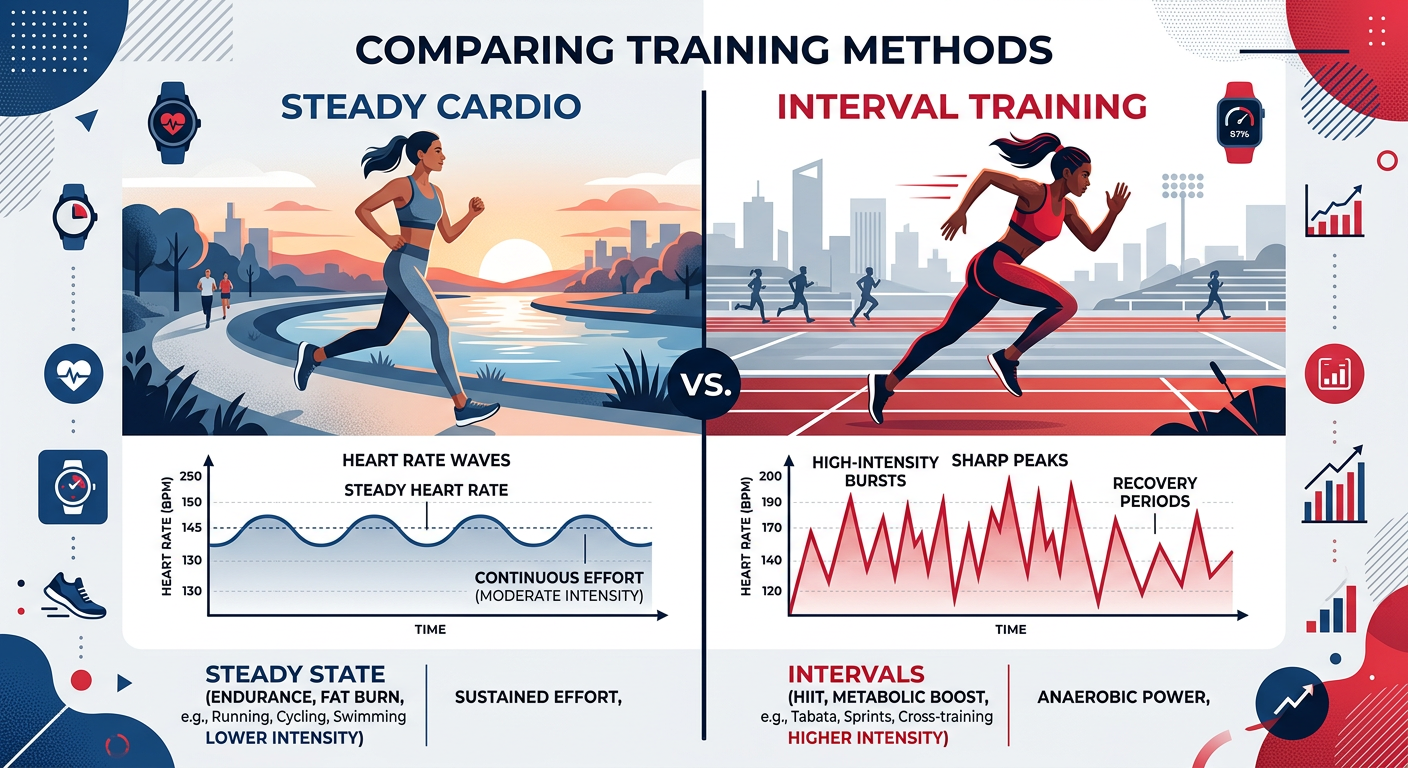
What Zone 2 Cardio Actually Means
Zone 2 cardio is steady aerobic exercise performed at a pace where you can speak in short sentences without gasping. For many people, that’s an easy run, brisk walk, cycling session, row, incline treadmill walk, or elliptical workout.
The goal is not to crush yourself. The goal is to spend enough time in a sustainable intensity range to improve your aerobic engine. Mayo Clinic Press describes zone 2 as exercise that requires effort but isn’t too grueling, and it’s often linked to better endurance and metabolic health habits through consistent practice: Mayo Clinic Press.
A simple field test works well. If you can hold a calm conversation, you’re likely close. If every sentence feels like a negotiation with your lungs, you’re probably too high.
Best Zone 2 Examples
Good zone 2 workouts are almost boring on purpose. Try:
- 40 minutes of brisk walking on a slight incline
- 45 minutes of easy cycling
- 30 to 60 minutes of relaxed jogging
- 35 minutes on an elliptical at a steady pace
- A weekend hike where breathing stays controlled
Here’s the thing, boring isn’t bad. In cardio training, repeatable often beats dramatic.
What High Intensity Interval Training Actually Means
High intensity interval training, usually called HIIT, alternates hard efforts with easier recovery periods. A session might include 30 seconds hard, 90 seconds easy, repeated several times. Another version could be four-minute hard intervals separated by active recovery.
The American College of Sports Medicine notes that HIIT has long been used to improve fitness and performance, and it continues to be studied for health outcomes: ACSM. The appeal is obvious. You can get a serious cardiovascular stimulus in less time.
But HIIT has a cost. It creates more fatigue, demands more recovery, and can be easier to overdo if you’re already stressed, sleep deprived, or new to structured training.
Best HIIT Examples
Good HIIT is structured, not random suffering. Try:
- 8 rounds of 30 seconds hard, 90 seconds easy
- 6 rounds of 1 minute hard, 2 minutes easy
- 4 rounds of 4 minutes hard, 3 minutes easy
- Bike sprints with full recovery between efforts
- Hill repeats with walking recovery
The hard parts should feel hard, but your form should stay clean. If your technique collapses, the interval is too long or too intense.
Which Is Better for Fat Loss?
For fat loss, neither workout is magic. The real drivers are calorie balance, protein intake, daily movement, sleep, strength training, and consistency.
Zone 2 can help because it’s easier to do more often without feeling wrecked. That makes it useful for increasing weekly activity volume. It also tends to be friendlier when you’re dieting because it doesn’t spike fatigue as aggressively.
HIIT can help because it’s time efficient and challenging. But if it makes you hungrier, sore, or less active the rest of the day, the advantage can disappear quickly.
The practical answer: use zone 2 as your base, then add HIIT sparingly if you recover well.
Which Is Better for Heart Health?
Both can support cardiovascular health when programmed well. The CDC recommends adults get at least 150 minutes of moderate-intensity aerobic activity per week, or 75 minutes of vigorous-intensity aerobic activity per week: CDC.
Zone 2 fits nicely into the moderate-intensity bucket for many people. HIIT fits closer to vigorous work, depending on how hard the intervals are.
Mayo Clinic Health System explains that interval training can improve cardiorespiratory fitness by helping the heart and lungs become stronger and more efficient: Mayo Clinic Health System. Still, if you have chest pain, uncontrolled blood pressure, heart disease, or a medical condition, get professional guidance before adding intense intervals.
Which Is Better for VO2 Max?
HIIT usually has the edge for improving VO2 max, especially when the intervals are hard enough and repeated consistently. VO2 max is your body’s ability to use oxygen during intense exercise, and it’s one of the most useful markers of cardiorespiratory fitness.
That said, zone 2 still matters. You can’t build a durable aerobic system with only occasional all-out workouts. Easy volume supports endurance, recovery, and the ability to handle harder training later.
A smart program uses both. Zone 2 builds the floor. HIIT raises the ceiling.
How to Choose Based on Your Goal
Choose Zone 2 If You Want Consistency
Pick zone 2 if you’re rebuilding fitness, managing stress, training for general health, or trying to create a habit that doesn’t drain you. It’s also a strong fit if you already lift weights and don’t want cardio to interfere with recovery.
Zone 2 is especially useful for people who have been stuck in the “too hard to be easy, too easy to be hard” middle zone. Slowing down can feel strange at first, but it often makes training more sustainable.
Choose HIIT If You’re Short on Time
Pick HIIT if you have a solid fitness base, limited time, and enough recovery capacity. Two short sessions per week can be plenty for most recreational exercisers.
Just don’t treat HIIT like seasoning you can dump on everything. More isn’t always better. If your sleep, mood, joints, or motivation drop, cut back.
Choose Both If You Want Balanced Fitness
For most fitness and health enthusiasts, the answer to zone 2 cardio vs high intensity interval training is not either-or. It’s both, with different jobs.
A balanced weekly plan might look like this:
- Monday: Strength training
- Tuesday: Zone 2 cardio for 35 to 45 minutes
- Wednesday: Strength training
- Thursday: HIIT for 20 to 30 minutes
- Friday: Rest or mobility
- Saturday: Zone 2 cardio for 45 to 60 minutes
- Sunday: Easy walk or recovery
This approach gives you endurance, intensity, and recovery without making every session feel like a test.
A Progressive Day 2 Cardio Strategy
If you’re following a recurring fitness plan, Day 2 is a great place for zone 2. It builds momentum without crushing your legs after Day 1 strength work or a harder session.
Start with 25 to 35 minutes at conversational pace. After two to three weeks, add 5 to 10 minutes. Once that feels easy, add one short HIIT session later in the week instead of making every cardio day harder.
For readers building broader wellness habits around sleep, mindfulness, money stress, pets, and health routines, a progressive approach matters. Sustainable training works best when it supports your life, not when it competes with everything else.
Build Smarter Wellness Content With ContentBeast
If you publish health, fitness, finance, pet care, or happiness content, consistency is what helps readers trust you. ContentBeast helps create structured, helpful articles that fit your audience and publishing rhythm.
Use it to build topic clusters, answer practical reader questions, and keep your blog active without losing a professional voice.
FAQs
Is Zone 2 Better Than HIIT for Beginners?
Usually, yes. Zone 2 is easier to control, easier to recover from, and less intimidating. Beginners can still use gentle intervals, but true HIIT should be added gradually.
Can I Do Zone 2 and HIIT on the Same Day?
You can, but it’s not always necessary. If you combine them, do HIIT first after a proper warmup, then finish with easy aerobic work. Keep the total workload reasonable.
How Many Zone 2 Sessions Should I Do Per Week?
Two to four sessions per week works well for many people. Start with what you can repeat consistently, even if that’s just two 30-minute sessions.
How Many HIIT Sessions Should I Do Per Week?
One to two sessions per week is enough for most recreational exercisers. Three can work for advanced athletes, but recovery needs to be excellent.
What Heart Rate Is Zone 2?
Many people estimate zone 2 around 60 to 70 percent of max heart rate, but formulas vary. The talk test is often more practical: you should be able to speak in short sentences without gasping.
Is HIIT Bad for You?
HIIT is not bad by default. The risk comes from doing too much, going too hard too soon, ignoring pain, or using it when your body needs recovery. If you have health concerns, ask a qualified clinician before starting.
The Bottom Line
Zone 2 cardio and HIIT are not enemies. They’re tools. Zone 2 helps you build a strong aerobic base, while HIIT helps you push your upper fitness limits in less time.
If you’re unsure where to start, choose zone 2 first. Once you’ve built consistency, add one well-planned HIIT session per week and monitor how you feel. The best cardio plan is the one that improves your health without making you dread the next workout.